

So you want to start a franchise business in India? You’re not alone. Every year, thousands of entrepreneurs across the country look at franchise models as a smarter way to enter the market — and for good reason. You get a brand people already trust, a system that’s already been tested, and a roadmap to follow from day one.
But here’s what most people don’t tell you: franchising is not a shortcut to easy money. It is a serious business commitment with legal agreements, financial responsibilities, and operational expectations. If you go in without understanding what you’re signing up for, things can go wrong quickly.
This guide explains everything you need to know about starting a franchise in India — whether you’re a business owner looking to expand your brand through franchising, or someone who wants to buy into an established franchise.
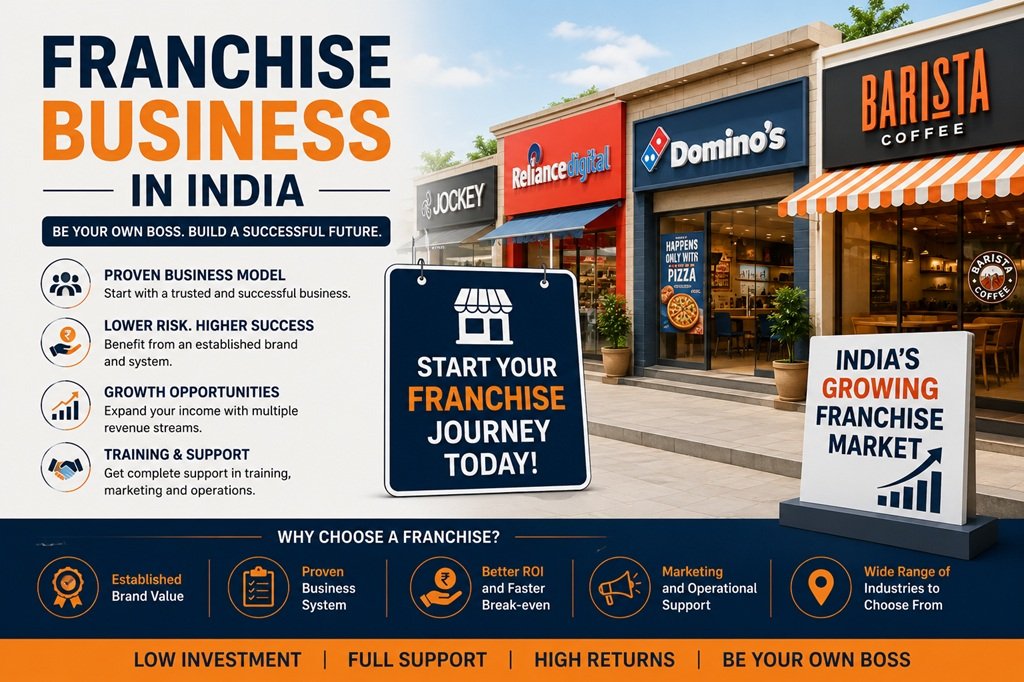
What Does “Franchising a Business” Actually Mean?
Let’s keep it simple. Franchising is when a brand owner (called the franchisor) allows another person or business (called the franchisee) to run a business using their brand name, system, and products.
Think of it like this: McDonald’s owns the recipe, the branding, and the playbook. A franchisee pays to use all of that, follows the rules, and runs a McDonald’s outlet in their city.
Here’s what the franchisee typically gets in return for their investment:
- The right to use the brand name and logo
- A ready-made business model with operating procedures
- Initial training before the business opens
- Ongoing support (to varying degrees, depending on the brand)
- Marketing materials and brand guidelines
In return, the franchisee pays an upfront franchise fee and often an ongoing royalty — usually a percentage of monthly revenue.
One important thing to remember: everything you expect from the franchisor must be written in the franchise agreement. If it’s not on paper, it’s generally not enforceable. Verbal promises mean very little in business disputes.
India does not have a dedicated franchise law. This means franchising is governed by a mix of the Indian Contract Act, intellectual property laws, GST regulations, and sector-specific rules. This makes legal documentation absolutely critical.
Types of Franchise Models in India
Not all franchise businesses work the same way. There are four main types, and each suits a different kind of business owner.
- Product Distribution Franchise
This is a straightforward model where the franchisee sells products manufactured or supplied by the franchisor. The brand is prominent, but the franchisor doesn’t control every aspect of how the business is run.
You’ll commonly see this in automobile dealerships, electronics showrooms, and home appliance stores. If you’re someone who is good at sales and wants flexibility in daily operations, this could be a good fit.
- Business Format Franchise
This is the most common and most structured type of franchise you’ll come across in India. Here, the franchisee follows a complete operating system defined by the franchisor — from how the store looks to how staff should greet customers.
Food chains like Subway, café brands, coaching institutes, and retail stores typically work on this model. If you want a proven system where every step is laid out for you, this is the one to look at. The trade-off is that you have less freedom to do things your own way.
- Manufacturing Franchise
Here, the franchisee is not just selling — they’re also producing the product using the franchisor’s formula or process. The finished goods are then sold under the franchisor’s brand.
This model is common in food processing, pharmaceuticals, and industrial manufacturing. It requires more investment and comes with strict quality control requirements.
- Job or Service Franchise
This is a low-investment model, often without a physical storefront. The franchisee provides a service — like courier pickup and delivery, cleaning, or repair work — under the franchisor’s brand.
If you’re just starting out and don’t have a large budget, service franchises are worth exploring. They have lower setup costs and can be started relatively quickly.
How Long Does It Take to Set Up a Franchise?
If you’re planning to expand your own business through franchising, expect it to take anywhere from 6 months to 2 years before you’re ready to sign your first franchisee.
This timeline depends on several factors:
- Whether your business systems and processes are clearly documented
- Whether your trademark is registered
- Whether you’ve drafted the legal agreements
- Whether you’ve identified the right franchise partners
- The kind of industry you’re in and what regulations apply
Many business owners underestimate this preparation phase. They assume that because their own outlet is doing well, they’re ready to franchise. That’s rarely true. Consistency across multiple locations takes real planning.
How Much Does It Cost?
This depends on which side of the table you’re sitting on.
If you’re the franchisor (expanding your brand), the costs are mainly about building systems — not setting up outlets. You’ll spend on:
- Drafting franchise agreements and disclosure documents
- Trademark registration and brand protection
- Business registration and legal structuring
- Creating training programs and operations manuals
- Setting up compliance systems and quality audits
These are largely one-time or periodic costs. Cutting corners here almost always causes problems later when you have multiple locations and inconsistent quality.
If you’re the franchisee (buying into a brand), the investment varies widely based on the brand, city, and format. Some key costs include:
- The upfront franchise fee (can range from ₹1 lakh to several lakhs depending on the brand)
- Store setup, interiors, and equipment
- Rent or lease deposit
- Initial inventory
- Staff salaries and training costs
Here are some real-world examples to give you a sense of what to expect:
| Brand | Sector | Approximate Investment |
| Subway | Quick Service Restaurant | ₹25 – ₹40 lakhs |
| DTDC | Courier & Logistics | ₹1 – ₹5 lakhs |
| Apollo Pharmacy | Retail Pharmacy | ₹20 – ₹30 lakhs |
These numbers are indicative and can vary based on city, location, and the specific terms of your agreement.
Franchise vs Licensing: What’s the Difference?
People often confuse franchising with licensing. Both allow someone else to use your brand, but they’re very different arrangements.
| Aspect | Franchising | Licensing |
| Control over operations | High — you define pricing, look, and processes | Low — you hand over brand rights and step back |
| Support provided | Training, audits, and ongoing monitoring | Minimal or none |
| Legal structure | Detailed operational agreement | Primarily an intellectual property agreement |
| Revenue model | Ongoing royalties and service fees | Fixed or periodic licence fee |
| Brand standards | Strictly enforced | Flexible |
If you want to grow while maintaining control over quality and brand experience, franchising is the right route. Licensing makes more sense when you simply want to monetise a brand without being involved in day-to-day operations.
Step-by-Step: How to Start a Franchise Business in India
Step 1: Check If Your Business Is Ready
Before you can franchise your business, you need to be honest with yourself about whether your business is truly ready to be replicated.
Ask yourself: if you handed your business manual to a capable person who had never met you, could they run the outlet successfully without you being there every day?
If the answer is no, the business isn’t ready.
To be franchise-ready, your business should have:
- Consistent revenue that isn’t dependent on your personal involvement
- Documented processes for every key function
- A clear system that others can follow without constant hand-holding
- Unit economics that work for the franchisee — meaning the outlet should be profitable for them even after paying royalties and fees
The franchise model must make financial sense for the franchisee, not just for you. If only the brand makes money and the franchisee struggles, the model won’t last.
Step 2: Protect Your Brand Through IP Registration
Your brand is what you’re selling. If it’s not legally protected, you have very little to offer — and even less recourse if someone copies you.
Before you franchise, make sure the following are registered:
- Your brand name (trademark)
- Your logo
- Any key taglines or slogans that are central to your identity
Critically, the same legal entity that will sign franchise agreements must be the one that owns these trademarks. If your trademark is registered under your personal name but your company is signing agreements, that’s a legal gap that can cause serious problems later.
Don’t wait until you’ve found franchisees to get your IP sorted. Get it done first.
Step 3: Prepare a Franchise Disclosure Document
Before anyone signs anything, you need to give potential franchisees a clear picture of what they’re getting into. This is called a Franchise Disclosure Document (FDD).
India doesn’t mandate a specific FDD format by law, but creating one is a professional and ethical practice that protects both sides.
Your disclosure document should cover:
- All upfront fees, deposits, and what they cover
- Ongoing royalty and service fee structure
- What support you will provide and what you won’t
- Territory rights — whether the franchisee gets an exclusive zone
- Duration of the agreement and renewal terms
- Conditions under which the agreement can be terminated
- Key risks involved in the business
Being transparent here builds trust and filters out partners who aren’t a good fit — before money changes hands.
Step 4: Draft a Solid Franchise Agreement
The franchise agreement is the single most important document in your entire franchise system. It defines the relationship, the rules, and what happens when things go wrong.
At minimum, your agreement should clearly cover:
- The territory the franchisee can operate in, and whether it’s exclusive
- Performance benchmarks and reporting requirements
- Training obligations on both sides
- Brand usage rules and what happens if they’re violated
- Duration of the agreement
- Renewal and exit terms
This is not a document you should rush or download from the internet. A poorly drafted agreement creates confusion, enables disputes, and weakens your ability to enforce standards.
Get a legal professional experienced in franchise law to draft or review this document. It’s one of the best investments you can make.
Step 5: Complete Your Business and Tax Registrations
Before you offer your first franchise, your compliance house needs to be in order.
Most franchisors either register a Private Limited Company or an LLP (Limited Liability Partnership). A private limited company is often preferred for scaling, as it provides better credibility, limited liability, and is easier to bring investors into later.
Make sure:
- The same entity that owns your trademark is signing franchise agreements
- You have GST registration (your franchisees will need it too once they cross the turnover threshold)
- Royalty invoicing and supply billing are clearly structured to avoid tax classification disputes
Weak entity setup or incorrect tax structuring affects not just your business — it creates problems across your entire franchise network.
Step 6: Build a Detailed Operations Manual
The operations manual is the day-to-day bible for your franchisees. It’s how you ensure that a customer in Surat gets the same experience as a customer in Delhi.
Your manual should document:
- Daily opening and closing procedures
- Customer service standards and scripts
- Product preparation or service delivery steps
- Inventory management and ordering processes
- Staff hiring criteria and training schedules
- Reporting formats and frequency
- Quality checklists and audit procedures
This isn’t just a “nice to have” document. It’s how you enforce consistency without being present at every location. Without it, every franchisee will do things differently, and your brand will suffer.
Step 7: Keep Your Documents Updated
Franchise systems are not static. Business conditions change, regulations get updated, and what worked two years ago may need to be adjusted today.
Make it a practice to:
- Review franchise agreements every year or two for legal relevance
- Update the operations manual when processes change
- Formally communicate all updates to franchise partners in writing
Outdated documents create enforcement gaps. When a dispute arises — and in a large enough network, one eventually will — you want your paperwork to support your position.
Common Mistakes to Avoid
Before you dive in, here are a few mistakes that first-time franchisors often make:
Franchising too early. Just because your one outlet is doing well doesn’t mean you’re ready. Make sure the model is replicable first.
Skipping trademark registration. If your brand isn’t protected, you can’t stop someone else from using it — even after they’ve left your franchise network.
Choosing franchisees only based on money. A franchisee who can invest the required amount but doesn’t understand or respect your brand can do more damage than good.
Ignoring the franchisee’s profitability. If the franchisee isn’t making money, they’ll cut corners, create problems, or exit. Their success is your success.
Treating the franchise agreement as a formality. Every clause matters. Read it carefully. Negotiate where needed.
Is a Franchise Right for You?
Franchising — whether as a franchisor or franchisee — offers a real path to business growth. It gives franchisors scale without having to fund every new outlet. It gives franchisees a head start with an established brand and a proven system.
But it comes with genuine responsibilities on both sides. As a franchisee, you give up some freedom in how you run your business. As a franchisor, you take on the responsibility of supporting your network and maintaining your brand.
If you go in with clear expectations, proper documentation, and the right partners, franchising can be one of the smartest business decisions you make in India today.
Frequently Asked Questions
Is there a specific law for franchising in India?
No, there is no dedicated franchise law in India. Franchising is governed by contract law, intellectual property laws, GST regulations, and sector-specific rules.
Do I need to register my business before franchising?
Yes. Most franchisors register as a Private Limited Company or LLP before offering franchises.
Can an individual (not a company) take on a franchise?
Some brands allow individuals, but many prefer to deal with registered business entities. Check with the specific brand.
Are franchise fees refundable if I change my mind?
Typically no. Franchise fees cover brand access, training, and onboarding. Most agreements treat them as non-refundable.
Does a franchisee need GST registration?
Yes, once turnover crosses the prescribed threshold, or if the franchisor requires it as part of the agreement — which most do.
Can a franchise agreement be terminated before its expiry?
Only under conditions specifically mentioned in the agreement. Read the exit and termination clauses carefully before signing.

