

Have you ever logged into your bank account and noticed that your available balance is less than your actual balance? And the bank shows something called a “lien amount” against your account — but gives no clear explanation? If this has happened to you, you are not alone. Thousands of people across India encounter this situation every year, and most of them have no idea what it means or what they should do next.
This guide explains everything you need to know about lien amounts — in simple, everyday language. We will cover what a lien is, why banks place it on your account, how it affects your money, and most importantly, how you can get it removed.
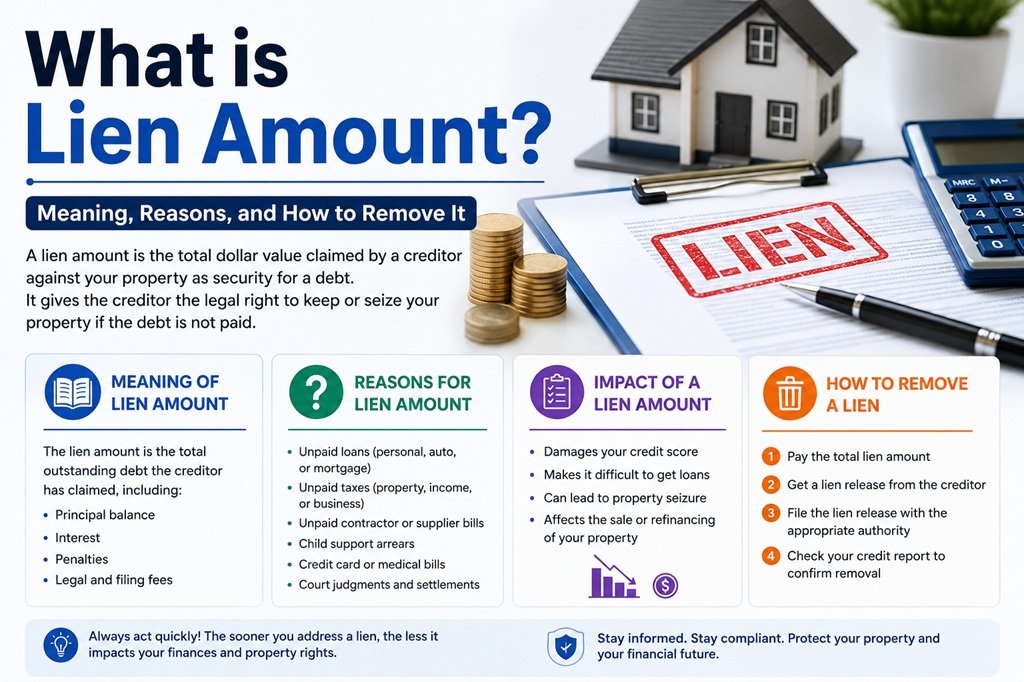
What Is a Lien Amount?
Let us start with the basics. A lien amount is a portion of money in your bank account that the bank has temporarily frozen. You can see this money in your account balance, but you cannot withdraw it, transfer it, or use it in any way — until the lien is lifted.
Think of it this way: imagine you have Rs. 50,000 in your savings account. The bank places a lien of Rs. 15,000 on your account. Your total balance still shows Rs. 50,000, but your “available balance” drops to Rs. 35,000. The Rs. 15,000 is locked — you cannot touch it.
Banks do this as a safety measure. When you owe money to the bank — whether it is an unpaid loan EMI, a pending credit card bill, or something else — the bank wants to make sure it can recover what is owed. Freezing a portion of your funds is their way of protecting themselves.
Lien Amount in Banking
In the world of banking and finance, the term “lien” has a broader meaning. It refers to a legal right that one party (usually a lender or government authority) has over someone else’s property or funds, to secure the repayment of a debt or fulfilment of an obligation.
When it comes to home loans, for example, the bank does not just freeze cash in your account — it places a lien on the property itself. This means the bank has a legal claim on your house until the entire loan is repaid. In India, the Reserve Bank of India (RBI) oversees the rules around liens, and banks are required to follow strict guidelines about when and how they can place one.
For savings or current accounts, a lien is usually a temporary hold on a specific sum of money. Once the underlying issue is resolved — such as clearing an overdue bill — the bank removes the lien and your full balance becomes available again.
Common Reasons Why Banks Place a Lien on Your Account
There are several reasons why your bank might freeze a portion of your funds. Here are the most common ones, explained in plain language:
- Unpaid Loan EMIs: If you have taken a home loan, personal loan, or any other type of loan, and you miss an EMI payment, the bank may place a lien on your linked savings account. This ensures that the bank can recover the overdue amount directly from your account if needed.
- Overdue Credit Card Bills: If your credit card outstanding balance remains unpaid for a long time, the bank may freeze an equivalent amount in your savings account. This is especially common when your credit card and savings account are with the same bank.
- Minimum Balance Violations: Some savings accounts require you to maintain a minimum monthly average balance. If you fall below this threshold repeatedly and fail to pay the resulting penalty, the bank may place a lien on your account.
- Unpaid Taxes or Government Dues: Government authorities like the Income Tax Department can instruct banks to place a lien on your account if you have outstanding tax liabilities or unpaid government dues. This is a legal measure and the bank has no choice but to comply.
- Fixed Deposit (FD) Linked Overdraft: If you have taken an overdraft or loan against your fixed deposit and have not repaid it, the bank may mark a lien on the FD amount. In some cases, it can extend to your savings account as well.
- Fraudulent or Suspicious Transactions: If the bank detects unusual activity in your account — such as large unexplained transfers or suspected fraud — it may temporarily freeze a portion of your funds while it investigates the matter.
- Court Orders or Legal Disputes: In cases where you are involved in a legal dispute, a court may direct the bank to freeze your account or a specific amount within it. This is an involuntary lien and remains in place until the court issues a new order.
- Cheque Dishonour Penalties: If you have issued a cheque that bounced due to insufficient funds and the resulting penalty or legal dues remain unpaid, a lien may be placed on your account.
Types of Liens — Understanding the Difference
Not all liens are the same. Depending on how and why a lien is created, it can be classified into several types:
| Type of Lien | How It Is Created | Common Example |
| Voluntary Lien | Created with the borrower’s consent | Pledging property as collateral for a home loan |
| Involuntary Lien | Imposed without consent, by law or court order | Tax lien imposed by the Income Tax Department |
| Specific Lien | Applies to one particular asset | Bank’s claim on a car in a vehicle loan default |
| General Lien | Applies to all assets held by the bank | Bank recovers dues from any account in the bank |
| Statutory Lien | Created by law or regulation | Lien by GST authorities for unpaid indirect taxes |
| Equitable Lien | Imposed by a court in case of fraud or breach | Court-ordered freeze in a property dispute case |
How Does a Lien Affect You?
A lien does not just limit your access to funds — it can create a ripple effect across your financial life. Here is how it may impact you:
- Restricted Access to Funds: The most immediate effect is that a portion of your money becomes inaccessible. You cannot withdraw, transfer, or spend the frozen amount.
- Failed Auto-Debit Transactions: If you have set up automatic payments for EMIs, insurance premiums, or utility bills, and your available balance drops below the required amount due to the lien, these transactions may fail. This can lead to late payment charges and further damage your financial standing.
- Impact on Your Credit Score: If the lien is the result of missed EMI payments or loan defaults, it will likely be reported to credit bureaus like CIBIL, CRIF, or Equifax. This can cause your credit score to fall, making it harder to get loans or credit cards in the future.
- Difficulty in Closing Accounts: You cannot close a bank account if there is an active lien on it. The lien must be removed first before any account closure can happen.
- Psychological Stress: Seeing money in your account that you cannot use is stressful, especially during a financial emergency. Understanding and resolving the lien quickly is important for your peace of mind.
How to Check If Your Account Has a Lien
Before you can resolve a lien, you need to confirm that one exists and find out the reason behind it. Here are three easy ways to check:
- Net Banking: Log in to your bank’s internet banking portal. Go to the account summary or balance details page. If a lien is active, you will see a separate line item showing the lien amount alongside your available balance.
- Mobile Banking App: Open your bank’s official app and check your account balance. If the “total balance” and the “available balance” are different, the difference is typically the lien amount. Some apps also show a dedicated “lien details” section.
- Visit the Branch: If you are unsure about what you see online, visit your nearest bank branch and speak to the customer service officer. Ask them specifically why a lien has been placed and what the exact amount is.
- Passbook or Bank Statement: Request a physical passbook update or download your bank statement. Lien markings may appear as a notation or in the remarks column of recent transactions.
Step-by-Step Process to Remove a Lien Amount
Now for the part that matters most — how do you actually get the lien removed? Follow these steps carefully:
Step 1 — Find Out Why the Lien Was Placed: Contact your bank (by phone, app, or in person) and ask for a clear explanation. You need to know the exact reason and the amount before you can take any action.
Step 2 — Clear Your Outstanding Dues: If the lien is due to unpaid EMIs, credit card bills, or penalty charges, settle the full outstanding amount as soon as possible. Keep the payment receipt or transaction reference number safely.
Step 3 — Obtain the Required Clearance Documents: If the lien is due to unpaid taxes or a legal order, you will need to submit a no-dues certificate or court clearance to the bank. Get these documents from the relevant authority (such as the Income Tax Department or the court).
Step 4 — Submit a Written Request to the Bank: Write a formal letter or submit a written application to the bank, stating that you have cleared your dues and requesting removal of the lien. Attach all relevant payment proofs and clearance documents.
Step 5 — Follow Up and Confirm: After submitting your request, follow up with the bank to track the progress. Ask for a confirmation or acknowledgement in writing once the lien is removed.
Step 6 — Verify the Update on Your Account: After the bank confirms the removal, log in to your account and verify that the available balance now matches your total balance. If the lien amount is still showing, contact the bank immediately.
How Long Does It Take to Remove a Lien?
The time required to remove a lien depends on the type of lien and the bank involved. Here is a general guide:
| Bank Type | Typical Processing Time |
| Public Sector Banks (e.g., SBI, PNB, Bank of Baroda) | 5 to 7 working days |
| Private Banks (e.g., HDFC, ICICI, Axis Bank) | 3 to 5 working days |
| Small Finance Banks and Digital Banks | 24 to 72 hours |
| Lien placed by court order | Depends on court — can take weeks or months |
| Lien placed by Income Tax Department | 7 to 30 days after clearance is filed |
Keep in mind that delays can happen if there are missing documents, processing backlogs, or discrepancies in the payment records. Always follow up proactively and do not assume the lien has been removed without verifying it yourself.
What Happens If the Lien Is Not Removed Even After You’ve Paid?
Sometimes, even after you have cleared your dues, the lien may not be removed automatically. This is a common frustration that many customers face. If this happens to you, here is what you should do:
- Contact the bank in writing: Send a formal email or letter to the branch manager and escalate to the grievance redressal officer if necessary.
- Quote your payment reference: Always mention the transaction ID, date, and amount when following up. This makes it easier for the bank to verify your payment.
- Approach the Banking Ombudsman: If the bank does not resolve the issue within 30 days of your complaint, you have the right to approach the Reserve Bank of India’s Banking Ombudsman.
- Seek legal advice: In extreme cases — especially if the lien is linked to a court dispute — you may need to consult a lawyer to get the hold lifted.
A lien that remains after the debt is cleared can block you from selling property, refinancing a loan, or even closing your account. It is important to act quickly and not let the matter drag on.
Lien vs. Account Freeze
Many people confuse a lien with a complete account freeze. While they are similar in some ways, there is an important difference:
| Feature | Lien Amount | Account Freeze |
| What is blocked? | Only a specific portion of funds | The entire account and all transactions |
| Can you use remaining funds? | Yes, you can use balance above the lien | No, all transactions are blocked |
| Who imposes it? | Bank, government, or courts | Usually courts or regulatory authorities |
| Common cause | Unpaid EMIs, bills, or taxes | Serious legal disputes, suspected fraud, or RBI orders |
| Resolution | Clear dues or provide documents | Requires court order or regulatory clearance |
Tips to Avoid a Lien on Your Bank Account
Prevention is always better than cure. Here is how you can avoid a lien being placed on your account in the first place:
- Pay your EMIs and credit card bills on time: Set up auto-debit or reminders to ensure you never miss a due date.
- Maintain the minimum balance: Always keep your account balance above the required minimum to avoid penalties.
- File your taxes on time: Delayed or incorrect tax filings can attract penalties and government-imposed liens.
- Monitor your accounts regularly: Check your bank account at least once a week to spot any unusual deductions or lien markings early.
- Keep your contact details updated: If your bank has your correct phone number and email address, they can alert you before a lien is placed.
- Avoid dormant accounts: Dormant accounts are more prone to compliance-related holds. Keep all your accounts active.
- Resolve disputes quickly: If you are in any financial or legal dispute, try to resolve it as early as possible to prevent a court-imposed freeze or lien.
Frequently Asked Questions (FAQs)
Q: Can a bank place a lien without informing me?
Yes, technically a bank can place a lien without prior notice in some situations, especially when it is required by a court or government authority. However, most banks will send an SMS or email notification. If you notice a lien on your account without any communication, contact the bank immediately.
Q: Will a lien amount affect my credit score directly?
A lien itself does not appear on your CIBIL report. However, the underlying cause — such as missed EMIs or loan defaults — does affect your credit score negatively. Resolving the reason for the lien quickly will prevent further credit score damage.
Q: Can I withdraw the lien amount in an emergency?
No. The lien amount is completely inaccessible until the bank removes it. Even in a genuine emergency, the bank cannot allow withdrawal of the frozen funds. You can only use the balance above the lien amount. This is why it is important to resolve liens as quickly as possible.
Q: How do I know the lien has been successfully removed?
The simplest way is to check your net banking or mobile app. If the available balance equals your total balance, the lien has been removed. You can also visit the branch and ask for a written confirmation.
Q: Can a lien be placed on a joint account?
Yes. If one of the account holders has a financial obligation that triggers a lien, the bank may freeze the joint account even though the other holder has no dues. This is an important risk to keep in mind when operating a joint account.
Conclusion
A lien amount can be confusing and stressful when you first encounter it, especially if no one explains what it means. But as you now know, it is simply a temporary hold placed by the bank to secure an unpaid obligation — and it can be resolved by addressing the root cause.
The key steps are straightforward: find out why the lien was placed, clear your dues or provide the necessary documents, and formally request the bank to lift the hold. Most liens are resolved within a week once you take the right action.
The best long-term strategy is to stay on top of your financial obligations — pay your EMIs on time, clear your credit card bills before the due date, file your taxes correctly, and monitor your bank accounts regularly. If you do these things consistently, you are unlikely to ever face a lien on your account.
And if a lien does appear, remember — it is not the end of the world. It is a solvable problem. Act quickly, stay informed, and do not hesitate to escalate to the RBI Ombudsman if the bank is not cooperative.

