

Blog Page 467

Similarities of IPL T20 and Investing

IPL T20

IPL T20 is perhaps widely accept and most watch premiere league across world. Some time back it was also called as “Cricket Ka Baap”.  Interestingly IPL T20 and investments share lot of similarities.

Let’s try to relate your investment and financial planning strategy with that of IPL T20 cricket format.

IPL T20 and Investing:-

Start early:-  

In IPLT 20 game starting early always pays. As inning is short, team starting early can get more runs, which increases chance of winning game.

Similar to this one should start investments at early age. Starting early and investing regularly means taking advantage of power of compounding to generate more wealth.

More run in less over:-

In IPL team has to make more run in less overs. This will increase their chance of winning the game.

Similar to that in investment you should try to get more return in less time. Getting more return in less time means accumulating wealth faster.

Be ready for surprise:-

In case of situation like rain or weather delays method used to declare result in IPL is Duckworth-Lewis method which sometime gives surprise. A team must be prepared for all surprise and the only way is through having already scored enough runs whatever the stage of the game.

Similar to IPL life can give surprise at any time we have to be ready to deal with all unexpected that comes in life. So invest money only after keeping emergency fund aside.

Strategic Break:-

In IPL strategic break is taken after completion of 10th over. This strategy break is to decide what to do next in game.

Similar to IPL one should take strategic break regularly to review portfolio and financial plan to decide what to do next to achieve financial goals.

Offensive Play:-

IPL is widely accepted because it is fast game in 20 overs everything is over. In order to win IPL team has to play offensive match.

Similar to IPL in real life in order to win financial game sometime you have to play offensive and do risky investments.

Bad over:-

Bad over in IPL can change direction of game. If team does not have enough run on hand you may lose the tame.

Similarly in real life you may come across bad over like bad time in term of job loss or illness if you are not ready with good financial score card situation may take you on toss.

Consistency give rewards:-

In IPL consistency in performance is preferred. Player who is performing consistently well in one season will get good reward not in current season but also in future IPL seasons.

Similarly in real life we have to select consistent performer as investment asset.

E.g Stock performing just for one year in your portfolio will not make any sense but consistent performer stock in your portfolio will give you good consistent reward. 

Coaching helps:-

In IPL T20 match team keeps special coach for batting, bowling and fielding. Coach gives guidance and direction which will help team to perform well.

Similar to this your investment can also get benefited if you take help from experts or financial planner while investing your money.

Distraction and Entertainment should not affect your score:-

IPL T 20 is highly entertaining in nature. All dance music and models dancing in stadium can make distraction to player, but player has to make sure that distraction and entertainment should not affect score card.

Similarly in real life when it comes to investing emotional distraction can make big mistake. You need to control your emotion fear & greed while making investment decision.

Hope you enjoy reading this article. Do share your comments in section given below.

15 Tips for Young Entrepreneurs

An entrepreneur is a businessman who manages the risk-reward equation of business very well. Becoming an entrepreneur is not everyone’s cup of tea especially for a middle-class person, because the mindset of middle-class people is different. They see the world from a different angle, they study hard, get a good job & remain happy with a safe and secure job. They don’t want to take any chance, they just want to be a prisoner of visiting card and the logo on it.

For all these people I would like to say: “Please imagine your future if you have joined any company as a manager in the corporate sector. Five years down the line you will be senior product manager if you are too good in 8 years you will become marketing manager …In 25 years you might become CEO somewhere.

Ask yourself: – “Is this what I want in life?”

small_big

If your answer is no & If you don’t want to sign any complex agreement to become a prisoner of 9 to 5 jobs.

If you have a burning desire to become an Entrepreneur we are here with proven tips that will help you as an entrepreneur.

Before we dive into these tips, it’s essential to understand the qualities that define successful entrepreneurs. In addition to resilience and strategic thinking, adopting a mindset of continuous growth and ambition is what separates them from the rest.

As john rockefeller quotes so aptly put it, “Don’t be afraid to give up the good to go for the great.” This mindset encourages entrepreneurs to pursue opportunities that may seem daunting but offer greater rewards.

15 Tips for Young Entrepreneur

15 Tips to entrepreneurs

#1 You don’t need any capital to start, you can start with zero capital. If you have capital, great. If you don’t, it doesn’t mean you can’t start. 

#2 Don’t just think about it, don’t just wish for it, jump into it and do it, if you are serious.

#3 If you believe in a product, never give it up. You will succeed. It may take time, it will cost money.

#4 Choose your field very carefully – there must be a ‘huge’ (large is not good enough) market and potential.

#5 You have to be a Good Team leader –

team_india

#6 If you are not passionate about what you are doing, then you are in the wrong place.

#7 Be early. You can make your mistakes while it is cheap to make them when there is no competition.

#8 Do not exaggerate in your business plan. Under commit and over-deliver.

#9 Get great people – sell them the vision, the idea and share the wealth, be generous with offering stock.

#10 Make plans but remain open to all possibilities as events unfold in the marketplace.

#11 Keep thinking about how to grow the business.

#12 In every business more you know about the grassroots, the better.

#13 Entrepreneurship is risky. So you should have a mindset, should be prepared to fail. If you are not prepared to fail and can’t handle failure then this is not your cup of tea.

#14 If you are starting a business to make money, don’t do it. Chances are that you will fail because there will be hard times. And if your motivation is not something beyond money, those hard times will test you. You will quit and go back to your job. But if you are doing something other than money, you will rough it through the hard times.

enterpreneur

#15 Don’t be an entrepreneur without very good financial knowledge. Or have a trusted partner who knows all about this.

BONUS TIPS to YOUNG Entrepreneurs

#16 Keep patience during difficult times. Don’t lose your balance, and try to carry the team with you.

#17 You can achieve beyond your dreams, so it’s OK to dream and make an action plan to turn it into reality.

Over to you –

If you have decided to become an entrepreneur here are 100 Business Ideas that will help you in starting your own business.

Top 10 Personal Finance Blog India – 2025

Top Personal Financial Blog – Do you want to update your financial knowledge?

Do you want to make more money and manage your finances effectively?  If Yes!

You should follow personal finance blogs. In this post, I will share details of the top 10 personal finance blogs of 2025 (India).

personal finance blog india

Please follow these blogs regularly if you want to keep yourself updated about the latest happening in the financial market. 

These blogs provide information about financial planning, investment, insurance, retirement, stock market, loans, gold, real estate, income tax & review of various financial products.

These blogs are authored by diverse personalities some of them are financial experts but others are IT professionals, Engineers, or Homemakers.

Top 10 Personal Finance Blog India 2025

#1  Jagoinvestor

Jagoinvestor is top on the list. This blog covers all aspects of personal finance right from investment, insurance, stock market, product reviews, and much more. This site also provides various services such as financial planning, investment advice, and retirement planning services.

About Author 

The author of this blog is Manish Chauhan who is from an IT background. Manish has also written multiple books on finance.

List of Certified Financial Planners (CFP) in India

#2  TaxGuru

Tax Guru as the name suggests this blog provides all information about taxes. Income Tax, GTS, Excise & all types of legal advice.

About Author 

The author of this blog is CA Sandeep Kanoi. As Sandeep is a CA by profession he carries a good amount of subject knowledge & legal aspects.

#3 Basu Nivesh

Basunivesh is a personal finance blog that aims to educate each individual in dealing with their financial life, making him/her aware of mis-selling which may come into his/her life at any time through any means.

About Author 

The author of this blog is Basavaraj Tonagatti he is from Bangalore. Basavraj is a Certified Financial Planner and shares a lot of insight about every topic.

#4 My Investment Ideas

My Investment Ideas is a blog sharing the Best investment plans and new investment ideas. Not only that this blog provides information about the stock market, mutual funds, and IPO. 

About Author 

This blog is managed by Suresh KP from Hyderabad. Suresh KP had 15 years of rich experience in the field of investments and financial planning.

#5  Bemoney aware

Bemoney Aware is blog covering multiple topics on finance like investing, loan, income tax. This blog contains more than 270+ articles.

About Author 

This blog is handled by Kirti, a software consultant, a woman, residing in Bangalore. Kirti is not from finance stream but carries good amount of knowledge about finance. 

#6 Get Money Rich

Get Money Rich blog that shares information about the stock market, investment, personal finance, real estate, gold, and mutual funds.

About Author:-

The author of Get Money Rich is Manish Choudhary. He is Project Manager by profession and manages the construction part of the steel plant. Although he is not from the finance field he shares a good amount of information about finance on his blog.

#7  Freefincal

Freefincal.com is a reader-funded blog. This blog provides various free tools for managing your finance such as a stock screener, MF screener, and Portfolio tracker.

About Author  

Freefincal was started as a repository of personal finance calculators. It is run by Pattu, a physicist with an interest in money management. 

#8 Chartered Club

Chartered Club is one of the best personal finance blogs. Chartered Club started with the intention of simplifying various taxes which are levied in India. Apart from gaining knowledge through our articles section, the users can also interact with CA via this blog

About Author 

Chartered Club was officially started by Karan Batra who is All India Rank 22 in CA Exams. He also provides tax advisory and tax filing services on his blog.

#9 MoneyExcel

Moneyexcel is the best personal finance blog in India. We offer unbiased advice on financial products & investment options like the stock market, mutual funds, insurance, credit cards, etc. You will find more than 1600+ articles here. You will also find money market tools and currency converter on this blog.

About Author:-

MoneyExcel Blog is owned and maintained by Shitanshu Kapadia. The basic idea behind Money Excel is to help people in achieving excellence for money. 

Other Personal Finance Blogs

  1. Cashoverflow.in by Pradeep Goyal
  2. Capitalmind.in by Deepak Shenoy
  3. Apnaplan by Amit Kumar
  4. Relakhs.com by Shreekanth
  5. Safalniveshak.com by Vishal Khandelwal

Way ahead:

We have done enough research to make a list of the Top 10 personal finance blogs 2025 India. If you find any discrepancy in the given information please write back to us.

If we missed any personal finance blog and if you feel that should be added here please write back to us (info@moneyexcel.com) and we will try to include it here.

 Do share this information with your friends on Facebook and Twitter!

10 Best Saving Bank Accounts to Earn Maximum Interest

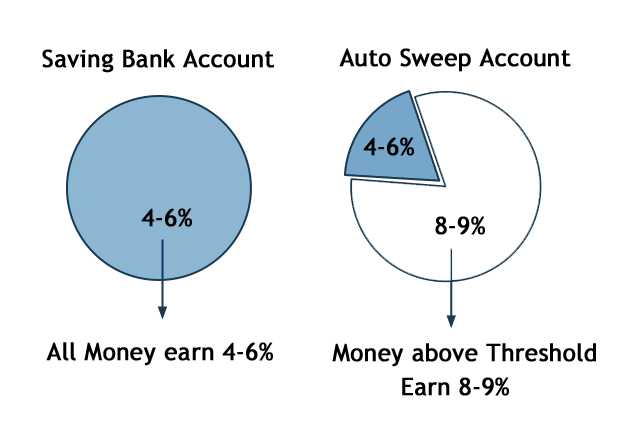
Saving bank account is the most preferred method to keep extra money but saving bank accounts only gives interest in a range of 4-6%.  What to do to earn maximum interest. Well, today we will discuss 10 best savings bank accounts with an auto sweep facility that can earn more interest.

Saving bank accounts are a crucial aspect of personal finance, offering a safe and convenient way to store money while earning interest. In a country like India, where financial stability is highly valued, choosing the right saving bank account can make a significant difference in optimizing one’s savings.

Saving bank accounts are designed to encourage saving habits among individuals by providing them with a secure place to deposit their funds. These accounts offer a modest interest rate on the deposited amount, making them an ideal choice for short-term savings goals and emergency funds.

Importance of Earning Maximum Interest

Earning maximum interest on your savings can help your money grow over time, outpacing inflation and increasing your purchasing power. With the right saving bank account, you can harness the power of compounding and watch your wealth accumulate steadily.

Factors to Consider Before Choosing a Saving Bank Account

Interest Rate

The interest rate offered by the bank is one of the primary factors to consider when selecting a saving account. Higher interest rates mean more significant returns on your deposits, allowing you to maximize your savings potential.

Minimum Balance Requirement

Some banks impose a minimum balance requirement on saving accounts. It’s essential to choose an account with a minimum balance that aligns with your financial situation to avoid unnecessary charges or penalties.

Additional Benefits

Apart from interest rates and minimum balance requirements, consider other perks offered by the bank, such as cashback rewards, discounts on shopping, or complimentary services like insurance and bill payments.

Auto Sweep Facility

Auto sweep facility provides the combined benefit of saving bank accounts and fixed deposits. This facility interlinks your saving bank account with a fixed deposit account.

This facility makes sure that extra money crossing the threshold limit defined by you will automatically get transferred to a fixed deposit account and you will earn a better returns.

5 Best Kids Saving Account

Auto Sweep

Example How Auto sweep facility can earn you more return?

Suppose your saving bank account has Rs. 1 lac for 1 year. In a normal saving bank account, it will earn interest 4% which is Rs.4000 for year.

If you have an auto sweep facility with a threshold limit of Rs. 10,000 than an additional Rs.90000 will form a fixed deposit and earn 8% interest.

At year-end you will earn Rs. 400 interest earned from Rs. 10,000 plus Rs.7200 interest earn from Rs.90000. So Total interest will be Rs.7600 which is far greater than the interest earned in the first case.

Accessibility and Convenience

Consider the bank’s accessibility and convenience, including online banking features, ATM networks, and customer service availability. Easy access to your funds and account management tools can enhance your saving experience.

Difference between MICR and IFSC Code

10 Best Saving Bank Accounts to earn maximum interest

Today multiple banks provide auto sweep facility but they name it differently. HDFC bank calls it Sweep-in. ICICI bank calls it money multiplier and SBI calls it saving plus. Below is list of 10 Best Saving accounts which can earn maximum interest.

  • SBI –  Saving Plus Account – Multi Option Deposit
  • ICICI – Money Multiplier Account
  • HDFC – Sweep –in
  • Axis Bank – Encash 24
  • Union Bank – Union Flexi Saving Account
  • Bank of India – BOI Savings Plus Scheme
  • Bank of Maharashtra – Mixie Deposit Scheme
  • United Bank of India – United Bonanza Savings Scheme

How to Open a Saving Bank Account

Opening a saving bank account is a straightforward process that can be done online or by visiting the nearest branch of the bank of your choice. You will need to provide certain documents, such as identity proof, address proof, and passport-sized photographs, as per the bank’s requirements.

Tips to Maximize Savings

  • Set up automated transfers to your saving account to ensure regular deposits.
  • Take advantage of promotional offers and bonuses offered by the bank.
  • Monitor your account regularly and review your financial goals to adjust your savings strategy accordingly.
  • Consider diversifying your savings portfolio by investing in other financial instruments like mutual funds or fixed deposits.

Conclusion

Choosing the right saving bank account is essential for maximizing your savings and achieving your financial goals. By considering factors such as interest rates, minimum balance requirements, and additional benefits, you can select an account that suits your needs and helps you grow your wealth over time.

FAQs

  1. Are saving bank accounts safe? Yes, saving bank accounts are considered safe as they are regulated by the Reserve Bank of India (RBI) and offer deposit insurance up to a certain limit.

  2. Can I open multiple saving bank accounts? Yes, you can open multiple saving bank accounts with different banks to diversify your savings or take advantage of various offers.
  3. Is there a penalty for not maintaining the minimum balance? Yes, some banks may impose penalties or charges for not maintaining the minimum balance required in the saving account.
  4. Can I withdraw money from my saving account anytime? Yes, saving accounts offer liquidity, allowing you to withdraw money whenever needed through ATMs, branches, or online banking.
  5. How often do saving account interest rates change? Saving account interest rates can vary depending on economic conditions and bank policies, but they typically don’t fluctuate as frequently as other interest rates.