
Blog Page 386

LIC Aadhaar Stambh Plan (843) – Features and Benefit Review

LIC Aadhaar Stambh Plan

LIC Aadhaar Stambh plan (Table 843) is new Aadhaar based life insurance plan. This plan is exclusively designed by LIC, for the male candidate having Aadhaar Card. The main reason of keeping policy name Aadhaar Stambh is to take benefit of growing popularity of Aadhaar Card.

LIC Aadhaar Stambh policy is non-linked with profit regular endowment plan. It is a first plan launched by LIC in the year 2017. This plan is available from 24th April 2017. The key features, benefits and other detail about this plan is given below.

Also Read – LIC Bima Shree (Plan 848) – Key Features, Benefits & Review

LIC Aadhaar Stambh Plan Key Features

  • Aadhaar Stambh policy can be taken without undergoing any medical checkup.
  • Holding Aadhaar Card is mandatory for this policy.
  • It is low premium policy and maximum cover available under this policy is 3 Lakh.
  • This plan provides the auto cover facility.
  • All premium paid under this policy is exempted from Income tax under section 80C.
  • A maturity amount under this policy is tax-free under 10D.

Minimum Sum Assured – Rs.75,000

Maximum Sum Assured – Rs.3,00,000

Age Group – 8 Years (Completed) to 55 Years nearest Birthday

Policy term – 10 Years to 20 Years

Maximum Maturity Age – 70 Years

Gender – Male only

Rider – Optional Accidental Benefit Rider

Loan Facility – Available

Also Read – LIC Premium Paid Certificate Download For Income Tax Purpose

Download Premium Ready Reckoner of Aadhaar Stambh

Benefits of LIC Aadhaar Stambh Plan

Maturity Benefit – On survival till policy term, maturity benefit will be payable to the policy holder. So, maturity benefit on survival will be Basic Sum Assured + Loyalty Addition

Death Benefit – In the case of unfortunate death of policy holder during first five years of the policy, basic sum assured shall be payable as a death claim. On death after five years of the policy, basic sum assured and loyalty addition shall be payable as a death claim.

Auto Cover Benefit – Auto cover benefit provide insurance coverage in case you forgot to pay a premium of the policy. If you have paid 3 years premium, you will get 1-year auto cover benefit from first unpaid premium. If you have paid 5 years premium, you will get 2 years auto cover benefit from first unpaid premium.

Optional Accidental Benefit Rider – You can avail additional accidental benefit rider under this policy. You need to pay an extra premium for the same. In the case of accidental death, accidental rider benefit along with basic sum assured shall be payable.

Example of LIC Aadhaar Stambh Plan

Let’s take an example of Aadhaar Stambh Plan with following details.

Mr.Ravi age 30 years decide to purchase LIC Aadhaar Stambh Plan (Table 843) with a policy term of 20 years. He needs to pay Rs. 10880 yearly premium for this policy. Total premium paying term will 20 years. In 20 years he will pay a total premium of Rs.2,17,600. If he survives till maturity. The total maturity benefit payable will be Rs.3,00,000 + Loyalty addition.

Total risk cover in above case will Rs.3,00,000. In a case of unfortunate death of policy holder during premium paying term. The same benefit Rs.3,00,000 + Loyalty addition shall be payable.

LIC Aadhaar Stambh

My Views

Insurance and risk cover –

If you are planning to purchase LIC Aadhaar Stambh for insurance cover you should think twice. The maximum sum assured under this policy is Rs. 3 Lakh. This sum assured is not enough. The value of 3 Lakh after 20 years (policy term) will be very less. The Premium paid for this policy is very high compared to typical term plan. In this value, you can get an insurance cover of Rs.50 Lakh or above.

If you are looking for risk cover Pradhan Mantri Jeevan Jyoti Bima Yojana offers risk cover of Rs.2 Lakh at an annual premium of Rs.330, which is much cheaper than this policy.

Investment –

LIC Aadhaar Stambh is like typical endowment plan that will end up giving you return in the range of 5-6%. This plan offers loyalty addition after 5 years. However, No bonus is payable on this plan. So it is a big no for this plan from an investment point of view.

The only benefit offered by this plan is auto cover option and no need for a medical checkup.

I hope I have done my job with a sense of your satisfaction, now it is up to you to either invest in LIC Aadhaar Stambh Plan or not.

File Form 15G and Form 15H Online and Save TDS

Form 15G

Last year I filed Form 15G by visiting bank physically. This year my friend shared with me that From15G can be filed online. So, this time I decided to submit form 15G online. However, I could not submit form 15G online. It was not due to system error or website problem. It was mainly due to my interest income has exceeded minimum tax exemption limit. I finally visited the bank and asked bank officer to accept my Form 15G. However, the bank has also refused to accept from 15G. So, the question arises that under what condition we can file Form 15G or Form 15H to avoid TDS. Here is an elaborate guide about Form 15G and Form 15H and its benefit.

What is Form 15G and Form 15H?

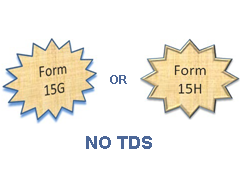
Form 15G and Form 15H are used to save TDS on interest income. Suppose you have taken fixed deposit with a bank and interest income from this fixed deposit is exceeding Rs.10000 in a year. In such case, a bank is liable to deduct TDS. But if your total income is below taxable limit, you can submit Form 15G and Form 15H to the bank requesting them not to deduct TDS on your interest income.

Also Read – Form 15G Form 15H Online Submission

Form 15G and Form 15H are valid only for one financial year. So you need to submit these form every year based on your eligibility. It is advisable to submit this form at the beginning of every financial year in order to ensure bank does not deduct any TDS on your income.

 Condition to fulfill in order to file form 15G

  1. You should be an individual or HUF.
  2. You must be a resident of India and hold valid PAN.
  3. Your age should be less than 60 years.
  4. Tax calculated on your total income is NIL.
  5. Total interest income for the year should not exceed minimum tax exemption limit.

Condition to fulfill in order to file form 15H

  1. You should be an individual.
  2. You must be a resident of India and hold valid PAN.
  3. Your age should be more than or equal 60 years.
  4. Tax calculated on your total income is NIL.

Also Read – Download New 15G – 15H Forms

Download Form 15G

Download Form 15H

Practical Examples to understand who can file Form 15G and Form15H

Form 15G 

How to submit Form 15G or Form 15H online?

Some banks like SBI, HDFC and ICICI allow these forms to be submitted online through the bank’s website.

  • In order to file Form 15G or Form 15H online on SBI website login using on SBI site using username and password.
  • On left side tab, you will find Form 15G/15H enquiry and Generate 15G/H link.
  • Click on generate 15G/H link and enter branch code. Click on button get branch name.
  • Once branch name is displayed click on Submit button.
  • The system will display Form 15G.
  • Fill up the form and click on submit button to complete the process.
  • Once a form is submitted online you need to take print out and submit three physical copy after authorization to the bank.

Also Read – Importance of 15G/15H form

Common misconception about Form 15G and Form15H

Although it is clear that Form 15G and Form 15H is used for saving tax on interest income, there are some common misconception about these forms.

Myth – Anyone who wishes to save tax can file Form 15G and Form 15H.

Reality – Only person with income below taxable limit and Nil Tax liability can file from 15G and form 15H to avoid TDS.

Myth – Once a form is submitted no need to declare the income in ITR.

Reality – You need to clear the income from interest in ITR although form 15G or 15H is filed.

Myth – Submission of this form once is sufficient.

Reality – This form needs to be submitted to a bank every financial year.

Hope your doubts about Form 15G and Form 15H are clarified. If you have any further question feel free to post it in the comment section.

10 Point checklist before Buying Property

buying property

Buying property is one of the biggest decisions of a lifetime. However, growing property prices, lack of money, refusal of home loan, and the title of the property are a few challenges that come across when you decide to purchase your dream home. In order to reduce the challenges and to help you in the house hunting process here is 10 point checklist before buying property. This checklist will surely help you save time, money, and energy.

10 Point checklist before buying property

  1. Property fitment in your budget

The first step towards buying property is deciding your budget. Along with the budget, you need to decide property type. Once you are through with that decide whether you will need a home loan or not. Mostly bank or home financing companies will finance up to 85% cost of the property. The balance of money you need to arrange on your own.

  1. The ratio of black money and white money

The second thing you need to check is the ratio of black money and white money. Although it is illegal to deal in black money. However, in a majority of states dealing black money while buying a property is quite common. You need to prepare yourself for dealing with black money.

Also Read – How RERA website helps you for home buying?

  1. Your Credit score and chance of getting a Home loan

The third thing you need to check is your CIBIL score. Your CIBIL credit score decides your chance of getting a home loan. You can get your free credit score online on the CIBIL site. A higher credit score means a better chance of getting a home loan.

  1. Pre-approved Home Loan

It is advisable to take approval of a home loan in advance. A pre-approved home loan will help you in deciding your budget. It will also give an idea about EMI payable for the loan amount. You can also save time and last-minute hassle of applying for a home loan.

  1. Tax exemption and your fitment

You should also ensure that what type of tax benefits are expected in case you opt for a home loan. There is a tax exemption of Rs.2 Lakh under section 24 for interest on home loans. You will also get tax exemption up to Rs.1.5 Lakh under section 80 C for principal repayment. Make sure to structure your EMI in such a way that you are able to make the best of these provisions.

  1. Location and Amenities of the property

It seems to be very basic, however, a bit of focus on this can surely help you in the future. You should ensure that basic requirements like grocery, vegetable, and household are in the close vicinity of the property. It is advisable to select a property near a bus stop or railway station, it will help you to save money on transportation. Also check basic amenities like water supply, sewerage, electricity, etc.

  1. Rental Value and Resale potential of the property

When you buy property, you should also evaluate property from the investment perspective. Two things you need to consider the rental value of property in the area and the resale potential and value of the property. This will help you when you decide to move away from the property.

  1. Know the actual cost of the property

Before entering into a buying agreement of property you should know the actual cost of the property. You should sum up the extra cost which you incurred on the property. This includes registration costs of about 1% of property value, stamp duty costs, estate agent fees, advocate fees, and any other additional charges imposed by the builder.

  1. Check for Title and other papers

This is the most important point. You must ensure that the title deeds of the property are clear. You can verify these documents with the help of an advocate or sub-registrar office. You must ensure that there is no pending legal case, property dispute, or lien on the property. In addition to this also check the plan clearance certificate/approval of construction from the municipality. Once you make the initial payment make sure to take the “Agreement of Sale” from the seller/builder.

Also Read – 10 Best Real Estate Apps on andriod smart phone

  1. Future cost of property

You should take possession of the property as soon as the sale deed is executed and registered. You should demand an Occupancy certificate and share certificate (allotment letter). Before buying a property you should also consider the future cost of the property which includes monthly maintenance costs and municipality tax.

I hope the above checklist will help you when you decide to buy your property. In addition to the above make sure to compare properties and estate agents before taking any buying decision. Make sure to compare and negotiate with the bank to get the best home loan offer.

Best performing funds – Up to 60% return in one year

Which are best performing funds in the financial year 2017? Before answering this question let’s take a look at stock market performance. A financial year 2017 was one of the best year for the stock market investors. BSE sensex rose 18% in FY 2017. Lot of stocks has turned out to be multibagger stocks in FY 2017.  In addition to that lot of funds has also given exceptionally high return to investor in FY 2017.

Chasing stocks is a difficult task especially if you are doing full time job. Hence, better alternative of stock market is mutual funds. If you are thinking that mutual funds cannot perform here are 10 best performing funds that gave 60% return last year.

Also Read – 7 Consistent Performer Stocks of last 3 Years

Best performing funds – Up to 60% return in one year

DSP BlackRock Natural Resources and New Energy Fund

The first best performing fund is DSP BlackRock Natural Resource and New energy fund.DSP BlackRock Natural Resources and New Energy Fund is thematic – infrastructure fund. This fund has given 60% return to the investor in last one year. Historically also this fund has given very good return to the investor.

ICICI Prudential Banking & Financial Services Fund

ICICI Prudential Banking & Financial Services is second best performing fund of FY 2017. In last Year this fund has given 53.7% return to the investor. It is a sectorial banking finance fund. This fund is yet not ranked by CRISIL. A historical performance of this fund is very good.

SBI Magnum Comma Fund  

The third best performing fund is also sectorial fund – SBI Magnum Comma Fund. SBI Magnum Comma Fund has given 51% return to the investor in last year. It is high risk fund. A historical performance of this fund is also very good.

Birla Sun Life Banking and Financial Services Fund

The next best performing fund in the list is Birla Sun Life Banking and Financial Services Fund. This fund has given 47% return to the investor in last year. As it is sectorial fund of banking and financial industry performance of this fund depends on all banking and finance stocks where a fund has invested the money.

Also Read – How to Switch from Regular Mutual Fund to Direct Mutual Fund?

Tata Banking and Financial Services Fund

The last best performing fund in the list is also sectorial fund from banking and finance sector. This fund has given 41% return to the investor last year. As it is newly launched fund historical performance detail of fund is not available.

best performing funds

Should you invest in the Fund mentioned above?

All mutual funds mentioned above are either thematic or sectorial fund. The return of these funds always depends on sectors where money is parked. The risk associated with these type of fund is very high. If you are risk adverse investor with the conservative view, you should not invest in any fund mentioned above. The better option for you is either debt fund or balance fund.

If your risk taking capacity is high and if you have surplus money you can invest in the fund mentioned above.