Blog Page 44

20 Best Machine Learning Courses in India to Launch Your Career

In today’s fast-paced digital world, machine learning has emerged as a game-changer across industries. From healthcare to finance, retail to transportation, companies are leveraging the power of machine learning to gain insights, automate processes, and drive innovation. As a result, there’s a skyrocketing demand for professionals who can develop and implement machine learning solutions. If you’re looking to tap into this exciting field, enrolling in one of the best machine learning courses in India is a fantastic way to get started or level up your skills.

India, with its thriving tech ecosystem and world-class educational institutions, offers a plethora of machine learning courses catering to various learning needs and preferences. Whether you’re a complete novice or an experienced data scientist, there’s a course out there that’s perfect for you. In this comprehensive guide, we’ve handpicked the 20 best machine learning courses in India that stand out for their quality, curriculum, and career impact. So, let’s dive in and explore how you can unlock your potential with these top-notch programs!

We’ve rounded up the 20 best machine Learning courses in India to help you get started or take your skills to the next level. Whether you’re a newbie who’s never coded a day in your life or a seasoned pro looking to sharpen your expertise, we’ve got you covered. These courses are offered by top-notch platforms, universities, and institutes across India, blending theory with hands-on practice. So, let’s dive into why machine learning rocks and how you can pick the perfect course to unlock your potential!

machine learning courses

What Is Machine Learning Anyway?

Before diving into the best machine learning courses in India, let’s brush up on the basics.

Machine learning (ML) is a subset of artificial intelligence (AI) where computers learn from data without being explicitly programmed. Instead of hard-coding rules, you feed them tons of data and let them spot patterns on their own.

Think of it this way:

  • Traditional programming = rules + data → answers
  • ML = data + answers → rules

Types of Machine Learning

Supervised Learning: Labeled data is used (e.g., predicting house prices).

Unsupervised Learning: No labels—just let the model find patterns (e.g., customer segmentation).

Reinforcement Learning: Learn by trial and error (like training a robot to walk).

Why Machine Learning is a Big Deal

Before we get to the good stuff, let’s chat about why machine learning is such a hot topic. In simple terms, it’s a branch of artificial intelligence (AI) that teaches computers to learn from data and make smart decisions—all without someone telling them exactly what to do. Imagine training your dog to fetch; you don’t explain every step, you just reward it when it gets it right. Machine learning works kinda like that.

So, why should you care? Well, for starters:

  • It handles crazy amounts of data: With data growing faster than weeds in a garden, machine learning digs through it all to find patterns humans would miss.
  • It saves time: Automating boring tasks? Yes, please! Machine learning can take over the grunt work so you can focus on the fun stuff.
  • It’s super accurate: The more it learns, the better it gets—think self-improving robots!
  • It’s everywhere: From healthcare breakthroughs to smarter shopping apps, machine learning is changing the game.

And here’s the kicker: India’s tech industry is booming, and companies are desperate for people who can wield this power. Jobs like machine learning engineer or data scientist come with fat paychecks and cool perks. So, hopping on one of these machine learning courses could be your ticket to a dream career!

How to Pick the Right Machine Learning Course

Okay, so you’re sold on learning machine learning—awesome! But with tons of options out there, how do you choose? Don’t worry, we’ve got some tips to help you pick a course that’s just right for you. Here’s what to look out for:

  • What’s on the Menu? Check the curriculum. Does it cover the basics like regression and clustering, or dive into fancy stuff like deep learning? Make sure it matches your goals.
  • Who’s Teaching? Good instructors make all the difference. Look for folks with real-world experience—someone who’s been in the trenches, not just read the textbook.
  • Hands-On Vibes: Theory’s great, but practice is where the magic happens. Courses with projects or labs? Goldmine!
  • Certifications That Pop: A shiny certificate from a big-name provider can jazz up your resume.
  • Fits Your Life: Online or offline? Full-time or part-time? Pick what works with your schedule.
  • Bang for Your Buck: Some courses are free, others cost a pretty penny. Weigh the price against what you’re getting.
  • What Others Say: Reviews from past students can spill the tea on whether it’s worth your time.

Keep these in mind, and you’ll be golden when picking from the 20 best machine learning courses in India we’re about to unpack!

Top 20 Machine Learning Courses in India

Now, the moment you’ve been waiting for—the list! We’ve split these beauties into categories to make it easier to find your perfect match. Buckle up, ’cause we’re diving into the top 20 machine learning courses in India!

Beginner-Friendly Machine Learning Courses

Starting from scratch? No sweat! These courses are perfect for newbies looking to dip their toes into machine learning.

#1 Intro to Machine Learning by IIT Madras

    • Provider: NPTEL
    • Key Features: Free, online, 12 weeks
    • What You’ll Learn: Basics like regression, classification, and clustering
    • Why It Rocks: Straight from IIT—top-tier teaching for free! Perfect if you’re curious but not ready to splurge.

#2 Machine Learning Basics by Simplilearn

    • Provider: Simplilearn
    • Key Features: Online, self-paced, certificate included
    • What You’ll Learn: Python, data prep, and ML fundamentals
    • Why It Rocks: Hands-on labs make it a breeze to practice what you learn.

#3 ML for Newbies by Udemy

    • Provider: Udemy
    • Key Features: Online, lifetime access, super affordable
    • What You’ll Learn: A bit of everything—tools, techniques, and more
    • Why It Rocks: Tons of content to get you comfy with ML, no pressure!

#4 Foundations of Machine Learning by UpGrad

    • Provider: UpGrad
    • Key Features: Online, 3 months, mentor support
    • What You’ll Learn: Core concepts plus some coding
    • Why It Rocks: Guidance from pros keeps you on track.

Intermediate Machine Learning Courses

Got the basics down and ready to step it up? These courses add more meat to your ML skills.

#5 Applied ML by Applied AI Course

    • Provider: Applied AI Course
    • Key Features: Online, 6 months, job-focused
    • What You’ll Learn: Real-world ML tricks and interview prep
    • Why It Rocks: It’s all about landing that dream job!

#6 PG Program in AI & ML by Great Learning

    • Provider: Great Learning
    • Key Features: Online, 12 months, industry projects
    • What You’ll Learn: Deep dive into ML, NLP, and more
    • Why It Rocks: Ties with big-name unis give it serious cred.

#7 Machine Learning with Python by Coursera

    • Provider: Coursera (IBM)
    • Key Features: Online, self-paced, certificate
    • What You’ll Learn: Python-powered ML techniques
    • Why It Rocks: IBM’s stamp makes it a resume booster.

#8 ML Practitioner by AnalytixLabs

    • Provider: AnalytixLabs
    • Key Features: Online/offline, 4 months, practical focus
    • What You’ll Learn: Algorithms and case studies
    • Why It Rocks: Flexible options for busy bees.

Advanced Machine Learning Courses

Ready to go pro? These courses are for folks who wanna master the nitty-gritty.

#9 Deep Learning Specialization by Coursera

    • Provider: Coursera (deeplearning.ai)
    • Key Features: Online, 5-course series, flexible
    • What You’ll Learn: Neural nets, CNNs, RNNs—fancy stuff!
    • Why It Rocks: Andrew Ng’s a legend in AI education.

#10 ML Engineer Nanodegree by Udacity

    • Provider: Udacity
    • Key Features: Online, mentor-led, project-heavy
    • What You’ll Learn: Advanced ML and deployment
    • Why It Rocks: Real projects you can show off.

#11 Advanced ML by IIT Delhi

    • Provider: NPTEL
    • Key Features: Free, online, 8 weeks
    • What You’ll Learn: Cutting-edge ML topics
    • Why It Rocks: Elite education without the price tag.

#12 Mastering Machine Learning by Jigsaw Academy

    • Provider: Jigsaw Academy
    • Key Features: Online, 6 months, certification
    • What You’ll Learn: Expert-level ML skills
    • Why It Rocks: Industry pros guide you to greatness.

Machine Learning Courses with Specializations

Want something specific? These courses zoom in on cool niches.

#13 NLP with Deep Learning by Stanford (via Coursera)

    • Provider: Coursera
    • Key Features: Online, self-paced, specialized
    • What You’ll Learn: Language models, sentiment analysis
    • Why It Rocks: Stanford’s research vibes are top-notch.

#14 Computer Vision by Udacity

    • Provider: Udacity
    • Key Features: Online, project-based, flexible
    • What You’ll Learn: Image recognition and more
    • Why It Rocks: Perfect for visual tech enthusiasts.

#15 Reinforcement Learning by edX

    • Provider: edX
    • Key Features: Online, self-paced, advanced
    • What You’ll Learn: Decision-making algorithms
    • Why It Rocks: Dive into AI’s decision-making brain!

#16 ML for Healthcare by Great Learning

    • Provider: Great Learning
    • Key Features: Online, 4 months, industry-specific
    • What You’ll Learn: ML in medical applications
    • Why It Rocks: Blend tech with saving lives!

Online vs. Offline Machine Learning Courses

Can’t decide between virtual or in-person? These options shine in both worlds.

#17 ML Bootcamp by IIIT Bangalore

    • Provider: IIIT Bangalore
    • Key Features: Offline, 3 months, intensive
    • What You’ll Learn: Full ML toolkit
    • Why It Rocks: Face-to-face learning with experts.

#18 Online ML Certification by Edureka

    • Provider: Edureka
    • Key Features: Online, live classes, 6 weeks
    • What You’ll Learn: Practical ML skills
    • Why It Rocks: Live support keeps you engaged.

#19 Hybrid ML Course by NIT Warangal

    • Provider: NIT Warangal
    • Key Features: Hybrid, 10 weeks, certificate
    • What You’ll Learn: Mix of theory and practice
    • Why It Rocks: Best of both worlds!

#20 ML Essentials by TalentSprint

    • Provider: TalentSprint
    • Key Features: Online, 5 months, career support
    • What You’ll Learn: End-to-end ML journey
    • Why It Rocks: Job help seals the deal!

FAQs

Got questions? We’ve got answers! Here’s the lowdown on some stuff you might be wondering about.

What’s machine learning all about, and why should I bother learning it?

It’s teaching computers to learn from data and make decisions—pretty neat, huh? You should learn it ’cause it’s a hot skill that can land you awesome jobs in tech!

Do I need to be a coding whiz or math genius to take these courses?

Nah, not really! Some courses start from zero and teach you the basics. A little Python or math know-how helps, but it’s not a dealbreaker.

How long do these machine learning courses take?

Depends! Short ones wrap up in weeks, while big programs might take months. Pick what fits your vibe.

Are online courses as good as offline ones?

Totally! Online ones are flexible and packed with resources. Offline ones give you that classroom feel—both can rock your world.

What jobs can I snag after finishing a course?

Oh, plenty! Think machine learning engineer, data scientist, or AI guru. The sky’s the limit, and the pay’s not bad either!

How much cash do I need to shell out?

It varies—some are free, others cost a chunk of change. Check what you’re getting for your bucks!

Conclusion

Wow, what a ride! Machine learning’s taking over, and India’s the place to learn it. With these 20 best machine learning courses in India, you’ve got everything you need to kickstart or supercharge your career. From beginner-friendly intros to advanced deep dives, there’s something for everyone. Picking the right one’s as easy as pie—just think about what you want, how you learn, and what you can afford.

So, don’t just sit there twiddling your thumbs! Whether it’s mastering algorithms or landing a killer job, these machine learning courses are your golden ticket. Take the plunge, and who knows? You might be the next big thing in tech.  

Steps to Take When Your Case Status Changes to Disposed

When you are involved in a criminal case, there are numerous stages that you go through before a final resolution. Among these stages, noticing that your case status has changed to “disposed” can be confusing. It is essential to understand what this means and what you should do next. Knowing the steps in the criminal case resolution process helps you avoid unnecessary stress and ensures you fulfill all your obligations.

Case Status Changes to Disposed

Understanding What “Disposed” Means

First, you need to know what “disposed” indicates. In legal terms, a disposed case is one that has been resolved. This does not always mean the charges were dismissed. It simply shows that the court has made a final ruling or decision regarding the case.

The disposition can include various outcomes such as conviction, acquittal, dismissal, deferred judgment, or even a plea deal. Each outcome carries different consequences and responsibilities for you.

Review the Final Court Decision

Once you see the status as disposed, obtain and review the final court order or judgment. This document contains essential details about what the court decided. You can get a copy from the court clerk’s office or online, depending on your jurisdiction.

Make sure you read it thoroughly to understand if you were convicted, if charges were dismissed, or if there are fines, probation, or other penalties imposed. Misunderstanding the outcome can lead to serious legal trouble in the future.

Consult Your Attorney

Your attorney should be the first person you contact after seeing the disposed status. They can clearly explain the court’s decision and what it means for you. If you do not have a lawyer, it is wise to consider hiring one to interpret the judgment, especially if it involves probation terms, fines, or appeal options.

Your attorney will also advise if you can seal or expunge the record, appeal the decision, or if there are any additional court dates you need to be aware of.

Check for Pending Obligations

Often, disposed cases come with obligations. You may need to pay court fees, fines, restitution, or attend counseling sessions or community service. Ignoring these obligations can result in additional penalties or even arrest warrants.

Write down all responsibilities mentioned in the court order and create a timeline to fulfill them within the deadline. Keep receipts or documentation of every payment and program completion as proof.

Determine If You Need to File an Appeal

In some cases, you may wish to challenge the court’s decision. Appeals are time-sensitive, with strict deadlines ranging from a few days to weeks. Speak to your attorney immediately if you believe there were errors in the judgment, unfair trial procedures, or other grounds for appeal.

Filing an appeal does not guarantee reversal, but it is a legal right you should consider if you disagree with the final outcome.

Understand How It Affects Your Record

Having your case disposed means it will appear in your criminal record with the outcome attached. This can affect future employment, housing applications, and other aspects of life.

Discuss with your attorney whether you qualify for expungement or record sealing. Each state has different laws about eligibility, and clearing your record can significantly benefit your future opportunities.

Notify Relevant Parties

If you were on bond or had employment restrictions due to your case, inform your bail bondsman or employer about the disposition. This ensures you comply with legal reporting requirements and maintain professional transparency.

Monitor Your Record

Finally, check your criminal record a few weeks after the case is disposed to ensure it accurately reflects the outcome. Mistakes can happen in court reporting systems, and incorrect information could cause future complications.

Final Thoughts

Seeing your case status as “disposed” marks the end of the court process, but it is not always the end of your legal responsibilities. By understanding the steps in the criminal case resolution process, reviewing your court documents, consulting your attorney, and fulfilling all obligations, you can move forward with clarity and confidence.

Being proactive after disposition is crucial. It protects your rights, keeps you compliant with the law, and helps you plan your future without lingering legal uncertainties.

What Is Offer for Sale (OFS) in IPO and Why Should You Care?

Ever wondered how companies raise money through IPOs? Or maybe what happens when existing shareholders want to offload their shares to the public? That’s where Offer for Sale (OFS) swoops in to save the day! If you’re scratching your head about what this term means or how it fits into the wild world of Initial Public Offerings (IPOs), don’t worry—we’ve got you covered.

So, what exactly is Offer for Sale in IPO? How does it differ from the traditional IPO process? And more importantly, should you as an investor be jumping in, treading cautiously, or steering clear?

Buckle up, because we’re about to break it all down—no jargon, no confusing finance-speak. Just a straight-up, friendly guide to help you wrap your head around OFS and how it fits into the bigger IPO picture.

What is an IPO?

First things first—let’s get the basics down. An IPO, or Initial Public Offering, is when a private company says, “Hey, world, we’re going public!” It’s the moment they start selling shares to everyday investors like us. Companies do this to raise money for all sorts of reasons—expanding their business, paying off debts, or just giving their brand a big, shiny spotlight. Going public’s a huge deal, and it’s often a sign a company’s ready to play in the big leagues.

Why Companies Go Public

So, why bother with an IPO? Well, for starters, it’s a cash cow! Companies can rake in millions (or billions!) to fuel their growth. Plus, it gives early investors and founders a chance to cash in on their hard work. And let’s not forget the bragging rights—being listed on a stock exchange like the NYSE or NASDAQ is a serious flex.

Types of IPOs

Not all IPOs are the same, though. There are two main flavors:

  • Fresh Issue: This is when a company whips up brand-new shares to sell. The money goes straight into the company’s pockets to fund whatever they’ve got cooking—new factories, more staff, you name it.
  • Offer for Sale (OFS): Here’s our star! In an OFS, existing shareholders—like founders or venture capitalists—sell their shares to the public. The company doesn’t get a dime; the cash goes to the sellers instead. It’s like passing the baton to new owners.

offer for sale

What is Offer for Sale (OFS) in IPO?

An Offer for Sale (OFS) is a nifty mechanism where existing shareholders of a company—like promoters or big institutional investors—sell their shares to the public. It usually happens during an IPO or even as a standalone event in listed companies.

Here’s the twist: no new shares are issued. Instead, it’s a way for current stakeholders to offload part of their stake and cash out, while still giving the public a shot at owning a slice of the company.

In simple terms, imagine you own a popular café with your friends. When business booms and customers start lining up, one of your friends decides to sell their share in the café to others. That’s OFS—selling from the existing pie, not baking a new one.

How It’s Different from a Fresh Issue

Still fuzzy on the difference? No sweat—let’s break it down. In a fresh issue, the company’s the one cashing in by issuing new shares. The total number of shares goes up, and the company uses that money for its own plans. With Offer for Sale, though, no new shares are born. It’s all about existing shares changing owners, and the cash lands in the sellers’ pockets—not the company’s. Here’s a quick rundown:

  • Fresh Issue: New shares, company gets paid.
  • Offer for Sale (OFS): Old shares, shareholders get paid.

How Does an OFS Work? Step-by-Step

Alright, let’s decode the workflow. Here’s what typically happens during an Offer for Sale:

1. Announcement

The company informs the stock exchange(s) about the OFS, at least two trading days prior. This includes the number of shares up for grabs and the floor price.

2. Designated Day for Bidding

Investors can place bids during market hours, usually from 9:15 AM to 3:30 PM.

3. Bidding Mechanism

  • Retail investors and institutions submit their bids.
  • They can bid at the floor price or higher.

4. Allocation

  • Shares are allocated based on price priority.
  • A certain percentage is often reserved for retail investors (typically 10%).

5. Settlement

Shares are credited to demat accounts, and funds go to the selling shareholders.  

Benefits of Offer for Sale (OFS)

So, why go with Offer for Sale? It’s not just a random choice—it’s got some serious perks for everyone involved. Let’s check ’em out!

For the Company

  • No Ownership Shake-Up: Since no new shares are made, the company’s ownership stays the same. Promoters don’t lose their grip.
  • Less Hassle: If the company doesn’t need cash, OFS lets them go public without raising extra funds they don’t want.
  • Bigger Spotlight: Even with OFS, an IPO boosts the company’s rep and visibility. Who doesn’t love a bit of fame?

For the Shareholders

  • Cashing Out: Early investors or founders can finally turn their shares into cold, hard cash. After years of faith, it’s payday!
  • Liquidity Boost: OFS makes it easy to sell shares without hunting for a private buyer. Quick and painless!

For Investors Like Us

  • A Shot at the Action: OFS lets us buy into cool companies we’ve had our eye on.
  • Fair Pricing: The bidding process helps figure out what the shares are really worth—score!
  • Mixing It Up: Snagging shares through OFS is a great way to spice up our investment portfolios.

Sounds like a sweet deal, doesn’t it? But hold up—there’s a flip side too.

Risks and Considerations

Offer for Sale isn’t perfect. Like anything in the stock market, it’s got some risks worth thinking about. Let’s dig in!

What Could Go Wrong?

  • No Cash for Growth: Since the company doesn’t get the money, OFS won’t fund new projects or expansion. That might bum out investors hoping for big growth.
  • Price Pressure: A flood of shares hitting the market can push prices down. Too much supply, not enough demand—yikes!
  • Mixed Signals: If big shareholders are selling, some folks might wonder, “Do they know something we don’t?” It’s not always true, but it can spook the market.

OFS vs IPO vs FPO: A Quick Comparison

Feature IPO OFS FPO
Purpose Raise fresh capital Existing shareholders sell Company issues more shares
Share Dilution Yes No Yes
Fund Recipient Company Existing shareholders Company
Timeline Long (weeks) Short (1 day bidding) Moderate
Regulatory Filing Heavy compliance Comparatively lighter Moderate

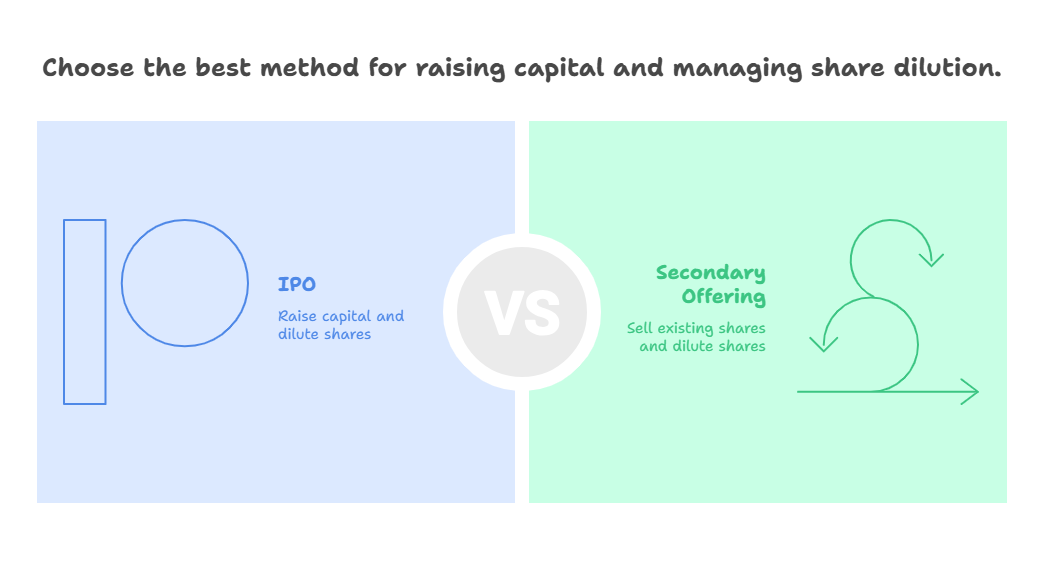
IPO Secondary Offering

Real-Life Examples of OFS

Let’s make things concrete with a few known names that used Offer for Sale:

  1. Coal India Ltd
  2. The government offloaded part of its stake to meet disinvestment targets.
  3. ONGC
  4. Another PSU example, where a sizable chunk was sold through OFS.
  5. Hindustan Aeronautics Ltd (HAL)
  6. Used OFS as a way to boost public shareholding and comply with norms.

These examples show that Offer for Sale isn’t just a theoretical idea—it’s widely used, especially by public sector undertakings (PSUs).

Tips for Investing in Offer for Sale

If you’re planning to dip your toes into an upcoming OFS, here’s how to play it smart:

Do Your Homework – Study the company’s fundamentals, check why the OFS is happening.

Don’t Chase Hype – If everyone’s jumping in, stop and think: are you buying quality or just following the herd?

Watch the Floor Price – Compare it with the market price—if it’s too close, gains may be minimal.

Use the Retail Quota Wisely – Sometimes retail investors get better pricing—take advantage of it.

Limit Your Bids – Don’t go overboard just because it’s cheaper.

FAQs

Q1. What is the main difference between Offer for Sale and IPO?

Ans: In an IPO, the company raises fresh capital by issuing new shares. In OFS, existing shareholders sell their shares—no fresh money goes into the company.

Q2. Can I apply for OFS via my regular trading app?

Ans: Yes! Most platforms like Zerodha, Groww, Upstox, and Angel One allow bidding for OFS under the “OFS” section.

Q3. Is there a minimum investment for OFS?

Ans: There’s no strict lower limit. However, the total bid amount must match or exceed the floor price.

Q4. What happens if I don’t get allocation?

Ans: If your bid doesn’t qualify, your money is refunded (or unblocked, if using UPI/ASBA).

Q5. Can OFS happen without an IPO?

Ans: Yes! OFS can be used by already listed companies to reduce promoter shareholding or meet SEBI regulations.

Conclusion

So, here’s the deal. Offer for Sale (OFS) in IPO is like a backstage pass for regular investors to grab shares directly from promoters or large investors. It’s fast, it’s transparent, and it’s often wallet-friendly. But just like any investment route, it comes with a few bumps and curves.

If you’re someone who enjoys exploring new stock opportunities beyond the regular IPO circus, OFS could be your secret weapon. That said, always keep your eyes open, do your research, and invest wisely. Because in the world of stocks, being smart beats being early—every time.

So, the next time someone throws around the term Offer for Sale, you can nod wisely and say, “Oh yeah, I know how that works!”

Miniratna Companies in India 2025

Ever heard the phrase, “Good things come in small packages”? Well, when it comes to Indian Public Sector Undertakings (PSUs), that couldn’t be more accurate! Say hello to Miniratna Companies — the efficient, profit-making, and autonomous little dynamos that are driving India’s industrial and economic growth.

These aren’t your average government-run enterprises. Nope! Miniratnas are PSUs that have earned their badge of honor by consistently turning a profit, maintaining financial discipline, and showing serious potential for autonomy and excellence. While they might not be as giant as the Maharatnas or Navratnas, they’ve carved out their own niche in the Indian economy.

Let’s dive deep into the world of Miniratna Companies in India in 2025 — what they are, how they’re chosen, their unique privileges, and most importantly, a full list to feast your eyes on!

Miniratna Companies in India

What Exactly is a Miniratna Company?

In simple terms, Miniratna Companies are profit-making Central Public Sector Enterprises (CPSEs) that enjoy a certain degree of operational and financial autonomy from the Government of India.

They’re categorized into two types:

Category-I Miniratnas

  • Consistently profitable for the last three years
  • Positive net worth
  • A pre-tax profit of ₹30 crore or more in at least one of the last three years
  • Eligible to invest up to ₹500 crore without government approval

Category-II Miniratnas

  • Consistently profitable for the last three years
  • Positive net worth
  • Eligible to invest up to ₹300 crore without government approval

These babies may be smaller than their “Ratna” siblings, but trust us—they pack a punch!

Eligibility Criteria: What Makes a PSU a Miniratna?

Before a PSU can wear the Miniratna crown, it must meet a few golden rules:

For Category-I:

  • Profit in the last three consecutive years
  • Pre-tax profit of ₹30 crore or more in at least one of those years
  • Positive net worth
  • Clear track record with no default to banks

For Category-II:

  • Profit in the last three consecutive years
  • Positive net worth
  • Good corporate governance standards

Once the Department of Public Enterprises (DPE) gives the nod, the PSU gets elevated to Miniratna status and earns some autonomy in investment decisions, joint ventures, and more.

Perks and Privileges of Being a Miniratna

Why’s everyone vying for Miniratna status? Because it opens up a world of possibilities! Here’s what these companies get once they’re in the club:

  • Investment Autonomy: Up to ₹500 crore (Cat-I) / ₹300 crore (Cat-II)
  • Joint Ventures: Freedom to enter domestic and international JVs
  • HR Freedom: Can hire and promote staff independently
  • Tech Upgrade: Faster modernization and tech collaboration
  • Brand Boost: Enhanced public and investor trust

Sounds like a sweet deal, right?

List of Miniratna Companies in India

Let’s get to the meat of the matter! Here’s your definitive list of Miniratna Companies in India as of 2025, updated with the latest data. We’ll separate them into Category-I and Category-II for better clarity.

Category-I Miniratna Companies (2025)

Here are the top-performing Miniratna Category-I companies, alphabetically arranged for ease of reference:

  1. Airports Authority of India
  2. Antrix Corporation Limited
  3. Balmer Lawrie & Co. Limited
  4. Bharat Coking Coal Limited
  5. Bharat Dynamics Limited
  6. BEML Limited
  7. Bharat Sanchar Nigam Limited
  8. Braithwaite & Company Limited
  9. Bridge & Roof Company (India) Limited
  10. Central Coalfields Limited
  11. Central Electronics Limited
  12. Central Mine Planning & Design Institute Limited
  13. Chennai Petroleum Corporation Limited
  14. Cochin Shipyard Limited
  15. Cotton Corporation of India Ltd.
  16. EDCIL (India) Limited
  17. Garden Reach Shipbuilders & Engineers Limited
  18. Grid Controller of India Limited (GRID-INDIA)
  19. Goa Shipyard Limited
  20. Hindustan Copper Limited
  21. Hindustan Steelworks Construction Limited
  22. Hindustan Organic Chemicals Ltd.
  23. HLL Lifecare Limited
  24. HSCC (India) Limited
  25. India Tourism Development Corporation Limited
  26. Indian Rare Earths Limited
  27. India Trade Promotion Organization
  28. KIOCL Limited
  29. Mahanadi Coalfields Limited
  30. MOIL Limited
  31. Mangalore Refinery & Petrochemical Limited
  32. Mineral Exploration Corporation Limited
  33. Mishra Dhatu Nigam Limited
  34. MMTC Limited
  35. MSTC Limited
  36. National Projects Construction Corporation Limited
  37. National Small Industries Corporation Limited
  38. National Seeds Corporation
  39. Northern Coalfields Limited
  40. North Eastern Electric Power Corporation Limited
  41. Numaligarh Refinery Limited
  42. Pawan Hans Helicopters Limited
  43. Projects & Development India Limited
  44. Security Printing and Minting Corporation of India Limited
  45. South Eastern Coalfields Limited
  46. Telecommunications Consultants India Limited
  47. THDC India Limited
  48. Western Coalfields Limited
  49. WAPCOS Limited

Category-II Miniratna Companies (2025)

These are the rising stars—solid, stable, and ready to grow bigger!

  1. Artificial Limbs Manufacturing Corporation of India
  2. Broadcast Engineering Consultants India Limited
  3. Engineering Projects (India) Limited
  4. FCI Aravali Gypsum & Minerals India Limited
  5. Ferro Scrap Nigam Limited
  6. HMT (International) Limited
  7. Indian Medicines & Pharmaceuticals Corporation Limited
  8. MECON Limited
  9. National Film Development Corporation Limited
  10. Rajasthan Electronics & Instruments Limited

Note: This list is dynamic and may evolve as new companies meet the criteria or undergo restructuring.

Why Miniratna Companies Matter in India’s Growth Story

These companies may not grab the limelight like the Maharatnas, but let’s not forget — they’re the quiet warriors working behind the scenes. They:

  • Promote regional development
  • Boost employment in niche sectors
  • Encourage tech innovation in PSU space
  • Contribute significantly to national GDP

Think of Miniratna Companies as the unsung heroes in India’s economic symphony!

Listed Miniratna Companies in India

1. Hindustan Organic Chemicals

Hindustan Organic Chemicals Limited (HOCL), founded in 1960 under the Ministry of Chemicals & Fertilisers as a Miniratna Category-I company, was created to foster self-sufficiency in essential organic chemicals. It produces important items such as phenol, acetone, and hydrogen peroxide, which are crucial for sectors like pharmaceuticals, dyes, paints, rubber, and pesticides, significantly impacting daily uses.

2. MSTC Limited

MSTC Limited, a Miniratna Category-I CPSE affiliated with the Ministry of Steel, focuses on e-commerce solutions in multiple sectors. It provides e-auctions, e-sales, e-procurement, and tailored software solutions. The firm additionally manages the trading and disposal of scrap, excess items, minerals, and agricultural-forest products for public sector undertakings, private companies, and government agencies.

3. Balmer Lawrie & Co. Limited

Established in Kolkata in 1867 by two Scottish individuals, Balmer Lawrie is currently a Miniratna Category-I CPSU under the Ministry of Petroleum and Natural Gas. It functions through eight business segments, such as packaging, lubricants, chemicals, travel, logistics, and refinery services, with operations in India and internationally.

4. India Tourism Development Corporation Limited

India Tourism Development Corporation (ITDC), a Miniratna Category-I Public Sector Undertaking under the Ministry of Tourism, was founded in 1966. It provides extensive services in travel, tourism, and hospitality, such as accommodations, transportation, duty-free stores, and visitor guides. It additionally offers engineering consulting and carries out infrastructure initiatives and Sound & Light Displays for central and state administrations

5. MOIL Limited

MOIL Limited, established in 1962 as a Miniratna Category-I enterprise, is the leading producer and supplier of manganese ore in India. It provides high, medium, and low-grade ore, such as manganese dioxide and chemical-grade types, being essential for fulfilling the requirements of the nation’s steel industry.

6. Mishra Dhatu Nigam Limited

Mishra Dhatu Nigam Limited (MIDHANI), founded in 1973 under the Ministry of Defence, is a Miniratna Category-I firm and a prominent maker of special steels, superalloys, and the sole manufacturer of titanium alloys in India. Its unit in Hyderabad assists crucial sectors such as Defence, Space, Energy, and Aerospace.

7. Chennai Petroleum Corporation Limited

Chennai Petroleum Corporation Limited, established in 1965, is involved in refining crude oil and manufacturing petroleum products and lubricating oil additives. It is a Miniratna Category-I firm, and its main products consist of LPG, petrol, diesel, kerosene, aviation fuel, naphtha, bitumen, and lube base stocks.

8. MMTC Limited

MMTC Limited, a Miniratna Category-I PSU under the Ministry of Commerce & Industry, was founded in 1963 to bolster India’s international trade. It deals in minerals, metals, precious metals, fertilizers, agricultural products, coal, and hydrocarbons. MMTC exports minerals, imports essential commodities, and engages in joint ventures in sectors like steel, retail, warehousing, and commodity exchanges.

9. KIOCL Limited

KIOCL Limited, a Miniratna Category-I PSU under the Ministry of Steel, was established in 1976. Located in Karnataka, it focuses on the extraction and processing of low-grade iron ore to produce superior BF and DR grade pellets. KIOCL has implemented measures such as coastal transport, local equipment production, and international ore procurement to enhance efficiency and sustainability.

10. BEML Limited

BEML Limited, a Miniratna Category-I PSU under the Defence Ministry, produces heavy machinery for the mining, construction, defence, and railway industries. It manufactures high-mobility defense vehicles, earth-moving equipment such as bulldozers and excavators, and provides rail coaches, metro cars, and wagons to Indian Railways and metro systems.

11. Mangalore Refinery & Petrochemical Limited

Mangalore Refinery and Petrochemicals Limited (MRPL), a Miniratna Category-I CPSE under the Ministry of Petroleum & Natural Gas, runs a refinery that manufactures a diverse array of products such as LPG, petrol, diesel, kerosene, aviation fuel, naphtha, bitumen, pet coke, and polypropylene.

12. Hindustan Copper Limited

Hindustan Copper Limited (HCL), a Miniratna Category-I CPSE under the Ministry of Mines, was established in 1967. It is the sole company in India engaged in the complete copper production process, from extraction to the marketing of copper products. HCL concentrates on exploring, mining, and processing copper ore to generate copper concentrate.

13. Garden Reach Shipbuilders & Engineers Limited

Garden Reach Shipbuilders & Engineers Ltd (GRSE), established in 1934, is a Miniratna Category-I CPSE and a prominent shipbuilding firm operating under the Ministry of Defence. It mainly caters to the Indian Navy and Coast Guard and is the first Indian shipyard to export military ships and provide 100 vessels. In addition to warships, GRSE constructs boats, barges, tugs, ferries, and various other maritime vessels.

14. Cochin Shipyard Limited

Cochin Shipyard Limited (CSL), established in 1972, is a prominent shipbuilding company focusing on the construction, repair, and refurbishment of different kinds of ships. It is a Category-I Miniratna CPSE. CSL has constructed and restored some of the largest ships in the world and has exported approximately 45 vessels. Its knowledge ranges from bulk carriers to sophisticated vessels such as Platform Supply Vessels and Anchor Handling Tug Supply Vessels.

15. Bharat Dynamics Limited

Bharat Dynamics Limited (BDL) was established in 1970 and is recognized as a Miniratna Category-I enterprise. It is a public sector unit under the Ministry of Defence. It produces guided missiles, underwater arms, aerial systems, and various defense gear for the Indian Armed Forces. BDL provides life cycle assistance, renovation, and service extension for current defense systems.

Key Sectors Where Miniratnas Shine Bright

Here’s where you’ll find most of these companies flexing their muscles:

  • Defence & Aerospace – HAL, BDL, GRSE
  • Telecommunications – BSNL, TCIL, RailTel
  • Mining & Minerals – HCL, MECL, CMPDI
  • Shipping & Infrastructure – Cochin Shipyard, GSL, IRCON
  • Energy & Power – THDC, IREDA, NHDC
  • Finance & Consultancy – RITES, EdCIL, MECON

Future Outlook: What Lies Ahead for Miniratnas in 2025 & Beyond?

With India gearing up for a $5 trillion economy, Miniratna Companies are expected to:

  • Play a bigger role in Make in India and Digital India
  • Attract global investments and joint ventures
  • Get upgraded to Navratna status as they grow
  • Serve as innovation hubs in specialized sectors

Government reforms in PSU policies have already given them the wings. It’s just a matter of time before many of them take flight!

FAQs on Miniratna Companies

1. What is the difference between Miniratna, Navratna, and Maharatna?

Miniratna companies are smaller PSUs with limited autonomy. Navratna and Maharatna are larger and more profitable PSUs with greater freedom in investments and strategic decisions.

2. Can Miniratna Companies become Navratna?

Absolutely! If they meet the required criteria (size, profits, global presence), they can be upgraded.

3. Are Miniratna Companies safe to invest in?

While many are stable and profitable, they still operate under market conditions. So, research is key before investing.

4. Who decides Miniratna status?

The Department of Public Enterprises (DPE), under the Ministry of Heavy Industries, grants Miniratna status.

5. How many Miniratna Companies are there in India in 2025?

As of 2025, there are around 55–60 recognized Miniratna Companies across both categories, with new ones joining the list periodically.

Final Thoughts 

Miniratna Companies might not always make headlines, but they’re the lifeblood of several strategic sectors in India. From railways to energy, education to aerospace, they’re silently scripting India’s growth story—one efficient operation at a time.

So next time someone talks about the bigwigs like ONGC or SBI, don’t forget to give a shout-out to the Miniratnas—the pocket-sized powerhouses of Bharat’s economic engine!

Want to stay updated with PSU reforms, investment ideas, or sectoral growth stories? Bookmark this article or subscribe to our newsletter—because there’s more to India’s economic magic than meets the eye!