

Blog Page 43

Best Mutual Funds 2026 Recommended by Gemini AI

Reaching the 85,580  mark (as of December 5, 2025) on the BSE SENSEX is a historic milestone, signaling a mature but potentially expensive market. Investing at an all-time high requires a shift in strategy from “momentum chasing” to “risk management” and “quality accumulation.”

With valuations likely stretched in late 2025/early 2026, the best mutual funds for the medium-to-long term are those with a track record of protecting downsides during corrections while capturing growth during rallies.

Here is a detailed guide and list of mutual funds for 2026, selected for a high-valuation environment.

Selection Methodology: The “Safe-Growth” Filter

Since the market is at a peak, we cannot rely solely on past 1-year returns (which are often misleading in bull runs). My selection is based on the “Downside Protection First” principle:

  1. Rolling Returns Consistency: Funds that have delivered consistent returns over 3, 5, and 10-year rolling periods, proving they perform well across market cycles (not just in a bull run).
  2. Downside Capture Ratio: I looked for funds with a ratio of <100. This means if the market falls 10%, these funds typically fall less than 10%.
  3. Alpha Generation: The fund manager’s ability to generate returns over and above the benchmark index.
  4. Expense Ratio: Lower costs over the long term compound into significant savings.
  5. Fund Manager Stability: Preference for funds where the manager has been at the helm for 5+ years.

Mutual Funds 2026 by Google

Recommended Mutual Funds for 2026 by Google Geimini AI

Flexi Cap Category

Best for: Investors who want the fund manager to decide whether to buy Large, Mid, or Small caps based on valuations.

Parag Parikh Flexi Cap Fund

Justification: This is the gold standard for high-valuation markets. It uses a “Value Investing” philosophy, meaning it avoids overhyped stocks. It has a unique advantage of investing up to 35% in foreign stocks (like US tech giants), providing geographical diversification if the Indian market corrects.

  • 5 Star rated fund by CRISIL.
  • Well-diversified fund for the investment period of 3-4 years.
  • Consistent performer fund with an annualized return of 20% over the last 3 years.
  • Very Low Expense Ratio.

HDFC Flexi Cap Fund

Justification: The HDFC Flexi Cap Fund is one of India’s largest and most veteran equity schemes, and its investment philosophy is perfectly suited for investors seeking a diversified, long-term, and actively managed solution.

  • Purely India-focused (Dynamic Domestic Growth) Fund
  • 5 Star Rating by CRISIL.
  • Moderately Aggressive Fund with very good performance track record.

Large Cap Category

Best for: Conservative equity investors. Large caps are safer when the Sensex is at 85k because institutional money flows here during volatility.

Nippon India Large Cap Fund

Justification: While many large-cap funds struggle to beat the index, this fund has consistently generated Alpha by taking slightly active calls within the top 100 companies. It balances growth with established market leaders.

  • Very good performance among peers. 5 Star Rating by CRISIL.
  • Low expense ratio and experienced fund manager.
  • Consistent performance with 18% annualized returns from last 3 years.

ICICI Prudential Bluechip Fund

Justification: The primary reason to choose this fund is Capital Safety and Stability in a high-valuation market. It is a Large Cap Fund, mandated to invest predominantly in the top 100 companies by market capitalization.

  • Delivered consistent rolling returns since past 10 years.
  • 5 Star rating by CRISIL.
  • Low Expense Ratio.

Mid Cap Category

Best for: Aggressive investors with a 5-7 year horizon. Mid caps are risky at 85k, so choose a manager who avoids low-quality names.

HDFC Mid-Cap Opportunities Fund

Justification: This is one of the largest mid-cap funds, which actually works in its favor during volatile times. It tends to hold larger, more liquid mid-cap stocks rather than illiquid risky ones. Its track record over 10 years is exceptionally consistent.

  • Fund for aggressive Investor with very good performance record of 24% annualized return in 3 years.
  • 4 Star rating by CRISIL.
  • Experience Fund Manager with proven track record.

Motilal Oswal Midcap Fund

Justification: Focuses on high-growth companies with a “Buy Right, Sit Tight” philosophy, often holding stocks for years to capture full compounding.

  • Focus on Quality, Growth, and Longevity (QGLP).
  • Concentrated/Conviction-Based Portfolio.
  • Buy Right, Sit Tight” Approach.
  • High Alpha Generation.

Small Cap Category

Best for: Investors with 7-10+ years horizon. Caution: Small caps can fall 20-30% quickly if the market corrects.

Nippon India Small Cap Fund

Justification: The undisputed leader in this space. The manager diversifies massively (often holding 150-200 stocks), which reduces the risk of a single stock blowing up the portfolio. They are excellent at exiting stocks before they crash.

  • 4 Star Rating by CRISIL.
  • Slightly aggressive fund with moderate chance of losses.
  • Very low expense ratio.

SBI Small Cap Fund

Justification: Strictly closes subscriptions when valuations get too high, protecting existing investors’ interests. Focuses on high-quality businesses.

  • Highly Experienced Fund Manager.
  • Top Performer in the Very Long Run.
  • Valuation-Based Inflow Control.

Balanced Advantage  

Best for: New investors or those worried about a market crash at Sensex 85,000.

ICICI Prudential Balanced Advantage Fund

Justification: This fund buys low and sells high automatically. When the market is expensive (like now), it reduces equity exposure and increases debt. When the market falls, it buys back equity. It is the perfect “autopilot” fund for 2026.

  • Dynamic Asset Allocation Good for new investors.
  • Capital Preservation comes with safety cushion.
  • Offers consistent, moderate, tax-efficient returns.

Summary Table: Quick Selection Guide

Category Primary Recommendation Risk Profile Ideal Time Horizon
Flexi Cap Parag Parikh Flexi Cap Fund Moderate 5+ Years
Large Cap Nippon India Large Cap Fund Low-Moderate 3-5 Years
Mid Cap HDFC Mid-Cap Opportunities High 5-7 Years
Small Cap Nippon India Small Cap Fund Very High 7+ Years
Hybrid ICICI Pru Balanced Advantage Low 3+ Years

Strategic Advice for 2026 (Sensex @ 85k)

  1. Avoid Lumpsum: Do not invest a large amount (e.g., ₹5 Lakhs) in one go at an all-time high. If the market corrects 10% next month, your capital erodes.
  2. Use STPs (Systematic Transfer Plans): If you have a lumpsum, put it in a Liquid Fund and transfer a fixed amount weekly/monthly into the equity funds above over the next 12 months.
  3. Review Asset Allocation: If your original plan was 60% Equity / 40% Debt, and the bull run has pushed Equity to 75%, rebalance now. Sell some equity profits and move them to debt to protect your gains.

What to Expect from Mutual Funds in 2026?

As we look at the year ahead with Sensex at ~85,580:

  1. Return Moderation: Do not expect the 20-30% returns seen in 2023-24. A realistic expectation for 2026 is 10-12% (in line with earnings growth).
  2. Volatility Spikes: With valuations high, even small global negative news can trigger sharp 5-10% corrections. This is normal.
  3. FII Comeback: Foreign Institutional Investors (FIIs) are expected to return in 2026 as the US Fed cuts rates and the dollar weakens. This will benefit Large Cap Banks and Tech stocks the most.
  4. Sector Rotation: The rally may shift from “Investment/Capex” heavy sectors (Power, Defence, Railways) to “Consumption” sectors (FMCG, Auto, Private Banks) as rural demand recovers.

Disclaimer by Google Gemini AI  – I am an AI, not a SEBI-registered financial advisor. Mutual fund investments are subject to market risks. Past performance (even of the best funds) is not a guarantee of future returns. Please consult a financial advisor before investing.
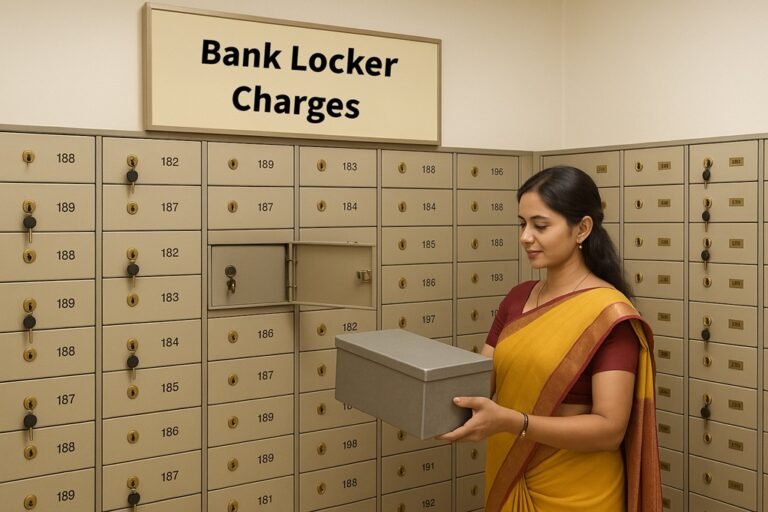
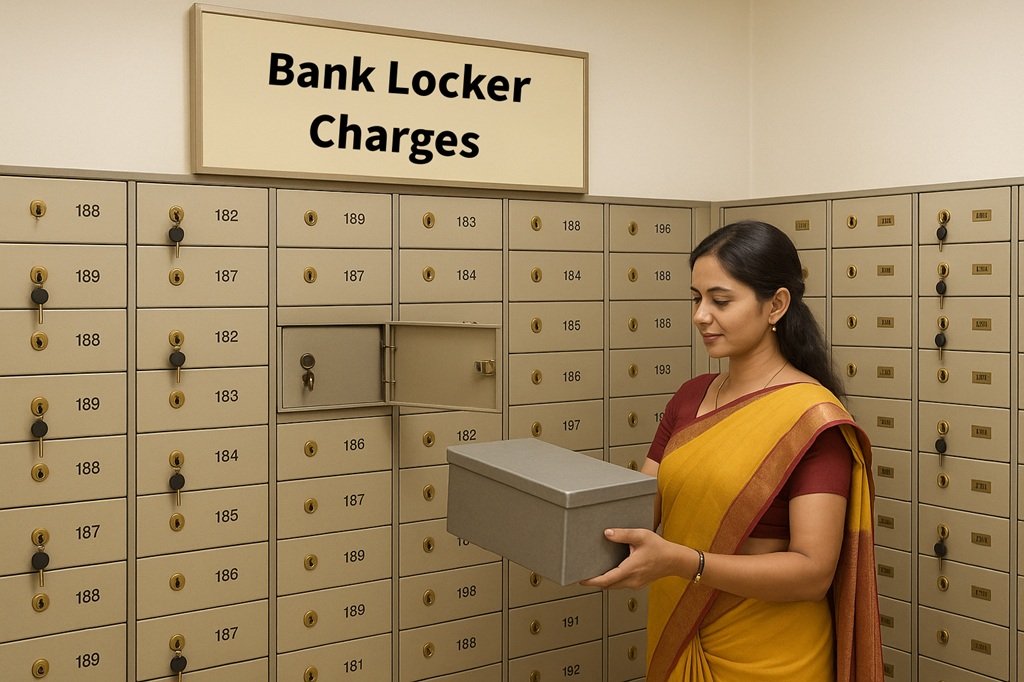
Bank Locker Charges: SBI, HDFC, ICICI & More

0

Let’s be real – most of us open a bank locker because we’ve seen too many Bollywood movies where the heroine hides the family jewels just before the villain barges in. Or, more practically, because gold prices are skyrocketing and keeping twenty-five sovereigns under the mattress suddenly feels like a terrible life choice.

Whatever your reason – wedding jewellery, property documents, that secret stash of old love letters – one thing is guaranteed: every year your bank will quietly deduct “Bank Locker Charges” and you’ll only notice when the SMS hits at 2 a.m.

So here we are in December 2025, rates have changed again (thanks, RBI guidelines and inflation), and I’ve done the dirty work of digging through circulars, visiting branches incognito, and arguing with customer care executives so you don’t have to.

We’re comparing the Bank Locker Charges of SBI, HDFC, ICICI, Bank of Baroda, Axis Bank, and Canara Bank – the six banks where 80 % of India’s lockers actually live. Ready? Let’s unlock the truth.

Bank Locker Charges

Bank Locker Charges 

Having written about personal finance for eight years, I can tell you one universal truth: no two banks charge the same for the exact same locker size. Shocking, right?

The RBI says banks can fix their own rents (with some loose guidelines), so every bank treats lockers like their personal side hustle. Add 18 % GST, late-payment penalties, breaking-open charges, and suddenly your “safe” deposit isn’t feeling very safe for your wallet.

How Locker Sizes Work  

Before the numbers, a quick cheat-sheet. Every bank uses slightly different names, but the sizes are roughly:

  • Small → A, B, AB, L1 (think shoe-box)
  • Medium → C, D, H1 (two shoe-boxes)
  • Large → E, F, G (suitcase territory)
  • Extra Large → H, L (basically a mini-almirah)

Got it? Good, because now the real drama begins.

SBI Bank Locker Charges  

State Bank of India still has the largest locker network – over 1 lakh branches and almost 10 lakh lockers. Translation: even your chacha in the village probably has one.

Latest Annual Rent (Rural & Semi-Urban Branches)

  • Small (A, B): ₹800 + GST
  • Medium (C, D): ₹1,800 + GST
  • Large (E, F): ₹3,500 + GST
  • Extra Large (H, L): ₹7,000–₹9,000 + GST

Metro & Urban Branches – Brace Yourself

Same sizes jump 50–100 % higher. A small locker in Mumbai or Delhi now costs ₹2,000–₹2,500 + GST per year. Yes, you read that right.

Concessions That Actually Exist

  • Senior citizens: 25 % off (real discount, not the fake “up to” nonsense)
  • Zero-balance account holders with ₹1 lakh FD: sometimes free locker (branch manager’s mood dependent)

Late payment? ₹100–₹500 + GST per quarter, depending on size.

HDFC Bank Locker Charges 

HDFC loves reminding you it’s a private bank. The branches smell nicer, the coffee is free, and the locker charges… well, you pay for the vibe.

Annual Rent (2025 revised)

  • Small: ₹2,000–₹3,500 + GST
  • Medium: ₹5,000–₹8,000 + GST
  • Large: ₹10,000–₹14,000 + GST
  • Extra Large: ₹20,000+ (yes, really)

In prime locations (Bandra, Gurgaon, Koramangala), they’ll happily quote the upper end without blinking.

The “Relationship” Discount Trick

Maintain ₹5 lakh average quarterly balance or a ₹10 lakh fixed deposit and you might get 25–50 % off. Otherwise, pay full whack.

Penalty for late payment: ₹250–₹1,000 + GST (they’re ruthless).

ICICI Bank Locker Charges  

ICICI used to be the “cheap private bank” option. Those days are gone, my friend. After merging with Bank of Rajasthan’s locker mess and upgrading vaults, prices shot up.

Current Rates

  • Small: ₹1,800–₹3,000 + GST
  • Medium: ₹4,500–₹7,500 + GST
  • Large: ₹9,000–₹12,000 + GST
  • X-Large: ₹18,000–₹22,000 + GST

They also introduced “one-time locker registration fee” of ₹2,000 (non-refundable) for new allotments. Sneaky.

Late fee: ₹150–₹800 per quarter.

Bank of Baroda Locker Charges  

BoB revised charges in July 2025 and almost nobody noticed because they buried the circular on page 47 of their website.

New Rates

  • Small: ₹1,200–₹2,800 + GST
  • Medium: ₹2,800–₹6,000 + GST
  • Large: ₹6,000–₹10,000 + GST

They still have the old “25 free operations per year” rule. After that, ₹100 per extra visit. Yes, they count.

Senior citizens and defence personnel get 25–50 % discount – one of the better public-sector deals.

Axis Bank Locker Charges  

Axis shocked everyone by actually lowering some charges in priority banking segments (blame competition from IDFC First).

Standard Rates

  • Small: ₹2,000–₹4,000 + GST
  • Medium: ₹5,000–₹9,000 + GST
  • Large: ₹12,000–₹18,000 + GST

But here’s the plot twist: Burgundy Private clients (₹5 crore relationship) get free lockers. Regular mortals pay full price.

Late fee: ₹300–₹1,200 + GST.

Canara Bank Locker Charges

After merging Syndicate Bank, Canara suddenly has lockers everywhere – including tiny taluk towns.

Latest Charges

  • Small: ₹900–₹2,000 + GST
  • Medium: ₹2,000–₹4,500 + GST
  • Large: ₹4,500–₹8,000 + GST

In many rural branches, small lockers are still ₹900 flat. That’s practically 2018 pricing!

They also waived one-time registration fee for account holders with ₹50,000 average balance. Sweet.

Side-by-Side Comparison Table 

Size SBI (Metro) HDFC ICICI BoB Axis Canara
Small ₹2,500 ₹3,500 ₹3,000 ₹2,800 ₹4,000 ₹2,000
Medium ₹5,000 ₹8,000 ₹7,500 ₹6,000 ₹9,000 ₹4,500
Large ₹9,000 ₹14,000 ₹12,000 ₹10,000 ₹18,000 ₹8,000
X-Large ₹15,000 ₹22,000+ ₹22,000 ₹18,000 ₹25,000+ ₹15,000

(All figures +18 % GST, approximate highest slab)

Hidden Charges Nobody Talks About

Having lost three lockers to “break-open” in the last decade (long story), here are the gotchas:

  1. Break-open charges: ₹3,000–₹15,000 + actual locksmith cost
  2. Lost key: ₹1,000–₹5,000 + new lock cost
  3. Lien marking (if you default on loan): they’ll freeze your locker without notice
  4. GST on every single penalty – because the government wants its cut of your misery

FAQs 

Q: Which bank has the cheapest locker in a metro city right now?

A: Canara Bank or SBI (rural/ semi-urban branches transferred to metro limits). In pure metro, SBI small at ₹2,000–₹2,500 still wins.

Q: Can I negotiate locker charges?

A: Public sector – rarely. Private banks – always try if you have decent relationship value. I once got HDFC down from ₹8,000 to ₹4,500 by threatening to move my home loan pre-payment.

Q: Are locker contents insured?

A: Nope. Banks insure the vault, not your diamonds. Buy separate insurance (ICICI Lombard and Bajaj Allianz have specific locker policies now).

Q: What if the branch runs out of lockers?

A: Waiting period can be 2–7 years in cities. Some banks (Axis, HDFC) let you book in upcoming branches for ₹5,000–₹10,000 “priority fee”. Total scam.

Q: Do NRI locker charges differ?

A: Yes, usually 20–50 % higher + mandatory NRE/NRO account linkage.

Pro Tips From Someone Who’s Paid Every Mistake Possible

  • Never pay for three years in advance (some branches push this). Rates can drop (rare, but happened with Axis this year).
  • Take photos of locker contents every visit – in case of theft/fire claim.
  • Link locker to a joint account with “Either or Survivor” – saves inheritance nightmare.
  • If you’re moving cities, transfer the locker instead of surrendering (most banks allow once free).

Conclusion 

Look, at the end of the day, Bank Locker Charges are like auto-rickshaw fares after 10 p.m. – nobody likes them, but we still pay because the alternative (keeping gold at home) feels riskier.

In 2025, SBI and Canara Bank remain your best bet if budget matters more than fancy branches. HDFC and Axis will charge you like you’re renting a safety deposit box in Switzerland, but they’ll at least send birthday cakes.

Choose based on three things only:

  1. Where you actually live (branch proximity beats everything)
  2. How much gold/documents you’re storing
  3. Whether you can sweet-talk the branch manager (still works in PSU banks)

Best Mutual Funds for Investment in 2026 as per Chat GPT

As we step into 2026, Indian investors are more excited than ever about wealth creation. With the BSE Sensex touching new highs, mutual funds have become the go-to choice for beginners and seasoned investors alike. But with thousands of schemes floating around, how do you figure out the Best Mutual Funds to Invest in India 2026? In this post, we have tried to get an answer from Chat GPT.

I have used the following prompt at Chat GPT to get the answer about the best mutual funds 2026.

“BSE SENSEX has reached 85,000 now. As per you, which are the Best Mutual Funds to invest in 2026 for medium to long term. Give me the list of mutual fund names diversified across largecap, midcap, smallcap, flexicap segment etc. Give a detailed Selection method and a detailed justification.”

Well, don’t worry—this guide simplifies everything. We’ll break down fund categories, top choices, risk profiles, and why certain funds shine brighter than others. We’ll also sprinkle in some informal expressions, examples, human-like insights, and a conversational flow to keep things lively. Whether you’re investing for long-term wealth, financial security, retirement, or simply because you don’t want your money lying idle—this article will help you make informed decisions.

Let’s dive right in!

Mutual Funds 2026

Best Mutual Funds for Investment in 2026 as per Chat GPT

Large-Cap Funds

ICICI Prudential Large Cap Fund (Direct)

  • One of the most consistent large-cap funds in India over 5, 7, and 10 years.
  • Follows a blend strategy (growth + value), reducing the risk of overvalued stocks.
  • 5 Star rating by CRISIL & VR.
  • Consistent Performer Last 3 years return 17.8% (Annualized)
  • Shows strong downside protection in market corrections.
  • Holds high-quality companies such as HDFC Bank, Infosys, ICICI Bank, Reliance.
  • Excellent risk-adjusted returns (Sharpe & Sortino ratios among category leaders).
  • Strong AMC with disciplined investment process (ICICI Pru is known for research-driven strategies).
  • Lower volatility than peers → ideal when Sensex is at 85,700 (high valuations).
  • Perfect as a core portfolio stabilizer.

HDFC Large Cap Fund – Direct Plan

  • Managed by experienced fund managers with a conservative, fundamentals-driven approach.
  • Focus on companies with strong earnings visibility and dominant market share.
  • Very stable performance during volatile years (2020 crash, 2022 corrections).
  • 3 Star Rating by CRISIL.
  • Last 3 years returns 15.4% (Annualized)
  • Well-diversified and avoids excessive concentration.
  • HDFC AMC has a proven long-term track record in large-cap investing.
  • Good pick for investors who prefer steadiness over aggressive alpha.

Mirae Asset Large Cap Fund

  • One of the best-performing large-cap funds during the last decade.
  • Uses a risk-managed growth style.
  • Maintains a strong and clean portfolio of top Indian bluechips.
  • Consistent outperformance vs NIFTY 100 TRI benchmark.
  • Good long-term CAGR + strong rolling returns.
  • Mirae AMC is known for disciplined risk management and cautious stock selection.
  • Good for long-term SIP compounding.

Mid-Cap Funds

HDFC Mid-Cap Fund

  • One of India’s oldest and most reputed mid-cap funds.
  • Follows a conservative mid-cap strategy (avoids very high-risk small-sized companies).
  • Excellent 10+ year track record with steady returns.
  • 4 Star Rating by CRISIL.
  • More stable compared to aggressive mid-cap funds.
  • Strong portfolio quality with focus on profitability + cash flows.
  • Ideal for investors wanting mid-cap returns without excessive volatility.

ICICI Prudential Midcap Fund

  • Well-diversified across sectors like industrials, finance, chemicals, auto ancillaries.
  • Blends bottom-up stock picking with risk filters.
  • Good performance consistency + strong risk-adjusted metrics.
  • Suitable for SIPs due to smooth return profile.
  • ICICI AMC’s disciplined risk processes help limit drawdowns.

Invesco India Midcap Fund

  • Focuses on mid-cap companies with proven business models and ROCE expansion.
  • Maintains a balanced portfolio without over-concentration.
  • 5 Star Rating by CRISIL.
  • Last 3 years annualized return 26%.
  • Solid long-term performance with relatively low volatility in mid-cap space.
  • Strong fund house pedigree (Invesco known for research depth).
  • Good pick for long-term investors who want stable mid-cap exposure.

Small-Cap Funds

Quant Small Cap Fund

  • Follows Quant’s dynamic, high-frequency rebalancing approach.
  • Very aggressive and opportunistic — high risk, high reward.
  • Top performer in many short- and medium-term timeframes.
  • Sector rotation + data-driven strategies capture fast-moving opportunities.
  • Suitable only for investors who can handle high volatility.
  • Acts as an alpha booster in a portfolio.

Nippon India Small Cap Fund

  • Best long-term performer in the small-cap category (10+ years).
  • Uses aggressive stock-picking in emerging sectors.
  • Very high alpha generation historically.
  • Good risk management despite aggressive style (well diversified).
  • Strong SIP returns even during volatile small-cap phases.
  • Suitable for investors with high risk appetite and long-term horizon.

Flexi-Cap / Multi-Cap Funds

Parag Parikh Flexi Cap Fund

  • Unique flexi-cap strategy with:
    • Indian equities
    • Foreign equities (US companies like Alphabet, Meta, Amazon)
    • Value investing philosophy
  • Excellent downside protection (global diversification helps).
  • 5 Star Rating by CRISIL.
  • Long-term CAGR among the best in flexi-cap category.
  • Very stable management + conservative investment methodology.
  • Ideal “core holding” for any long-term investor.

HDFC Flexi Cap Fund

  • Post restructuring, the fund is delivering consistent performance.
  • Follows bottom-up stock selection across all market caps.
  • Balanced allocation between large, mid, and small caps.
  • Good for investors who want a one-stop diversified fund.
  • Strong fund manager insights make it a stable long-term compounder.

How to Select a Mutual Fund for Investment in 2026?

Define objective & horizon

  • Medium term = 3–5 years (tilt to safer large/flexi); long term = 7+ years (can increase mid & small).
  • Solidify withdrawal timeline and liquidity needs.

Screen by category & fund universe

  • Use trusted screeners (ETMoney, Groww, Moneycontrol) to get the current ranked universe for each category.

Quantitative filters (apply these first)

  • Rolling 3- and 5-year annualized returns (not just 1-year). Prefer consistent outperformance vs. category benchmark.
  • Risk-adjusted returns: look at Sharpe ratio / standard deviation if available.
  • Downside protection: check maximum drawdown during past corrections (how badly it fell in 2020/2022 etc.).
  • AUM (Fund size): avoid extremely tiny AUM in actively managed mid/small funds (very small AUM sometimes indicates scalability/liquidity problems).
  • Expense ratio: lower is generally better for long-term compounding — check the direct plan expense ratio.

Qualitative filters (then apply these)

  • Fund manager tenure & team stability — same manager and stable team for 3+ years is a plus.
  • Investment process clarity — look at the scheme’s mandate, portfolio concentration rules, sector exposure limits.
  • Style consistency — confirm the fund hasn’t dramatically changed style (e.g., from value to growth).
  • Turnover & portfolio concentration — higher concentration increases single-stock risk. For small-cap funds, expect higher concentration but check top-10 holdings share.

Portfolio overlap & correlation

  • When picking multiple funds, check overlap of top holdings — avoid picking two funds that both hold the same 10 stocks at high weights (reduces diversification benefit).

Expenses & tax considerations

  • Prefer direct plans for lower expense ratio. For taxable events, know the capital gains treatment: equity funds >12 months = long-term capital gains (LTCG) taxed at 10% above ₹1 Lakh (India rules; verify current tax rules at time of investment).

Entry strategy

  • SIP for systematic accumulation, especially for mid & small caps to average volatility. Lumpsum only if you have conviction and time horizon.
  • Consider staggered lumpsum if market is at high levels (e.g., Sensex ~85k) — split across 3–6 months.

Ongoing monitoring

  • Quarterly/biannual check: performance vs category, AUM shifts, manager changes, major portfolio turnover. Replace if the fund consistently underperforms its category and has reason (manager departure, strategy change).

FAQs

  1. How much should I invest per month?

You can start with ₹500 per SIP, but ideally invest 10–20% of your monthly income.

  1. Which mutual fund gives the highest return?

Historically, small caps and mid caps offer the highest returns—but with higher risk.

  1. Are mutual funds safe in 2026?

They are safer than direct stock picking but still carry market risk. Safer categories include large caps, balanced advantage, and index funds.

  1. Can I invest in multiple mutual funds?

Yes, but don’t overdo it. 5–6 funds are enough for most investors.

  1. Should I choose SIP or lump sum in 2026?

SIP is better for most investors. Lump sum works during market corrections.

  1. Do I need a financial advisor?

Not mandatory, but helpful if you’re new or overwhelmed.

Conclusion

Choosing the Best Mutual Funds to Invest in India 2026 doesn’t have to be difficult. If you understand your goals, risk appetite, and time horizon, you’ll be far ahead of most investors. With India’s economic growth, rising equity participation, and strong corporate performance, mutual funds are set to play a massive role in wealth creation.

(The views content and recommendations expressed in this post are generated using ChatGPT. Please consult your financial adviser before making any investments.)

Emergency Fund – Importance & Investment Options

An emergency fund essentially refers to that fund of money which you set aside only for those “oh no” times. This fund doesn’t help you go on holiday, buy a new toy or gadget or make that impulse purchase during that fantastic sale you found in your city. Rather, it’s that financial buffer which enables you to be at ease knowing you don’t have to do any begging, borrowing or breaking down of your hard-earned long term investments just to pay off that unforeseen bill.

In this article, we will look in detail into why you simply must have one, how much of an amount is required to set aside for this fund (no, it’s not the same for all people), the ways in which you can build it without putting yourself through too much pain and what the best places to invest this money are.

Emergency Fund India

Why Emergency Fund

Isn’t it true that life in India is quite unpredictable? One day everything is going well, but in the next, floods in the city, sudden hospitalization of a loved one, or massive layoffs in your sector could happen to you. Haven’t you learned that from the pandemic itself? Emergencies don’t always notify us before they come.

Emergency funds save people from the necessity to use credit cards, which carry very high-interest rates and may become uncontrollable very fast. They ensure that all of the other goals, such as the acquisition of a house, saving money for their children’s education or for retirement, will not be disturbed. People tend to sell their stocks and incur penalties while using the provident fund without having any emergency fund.

There are several particular circumstances when people have to face emergencies. In India, the high cost of medical care, even in case of insurance and despite the government initiatives, is the main one. Other factors include job insecurity due to the growth of the gig economy, natural catastrophes, and many others.

Despite the exclamations, it is powerful! The fact that you have the safety net helps decrease the stress, makes your decisions easier to make when facing emergencies, and prevents you from getting into the debt trap. Conclusion: an emergency fund is not a luxury but rather a fundamental aspect of personal finance.

Importance of an Emergency Fund

Now, let us look at these examples from our daily lives in India – but with no drama, only a powerful story.

Think of Raj, a 32-year-old software engineer based out of Bangalore. He was unemployed during a tech slowdown period. Due to the monthly outflow of ₹60,000 for rent, EMIs, and family expenses, Raj ended up taking loans from relatives and exhausting all his credit card limits. The stress only increased and recovery took years.

Consider Priya, who is a school teacher with a single-income household of two kids. She needed ₹3 lakhs for an urgent operation done by her mother which partially came from the insurance cover. Her emergency savings fund helped her pay for the rest of the money without much hassle.

Consider, for example, the floods in parts of North India that occurred in 2023. Homes were damaged, and people’s sources of income were disrupted. People who had an emergency fund recovered faster compared to those who did not have one, and were forced to seek loans.

Such incidents occur regularly. From car break downs in the highway to unexpected marriages in your family (these, too, qualify as emergencies at times), you need an emergency fund that acts like a dependable friend.

How Much Should Your Emergency Fund Be?

The million-rupee question: What should be the size of this fund? There is no formula per se, but the industry recommends the 3-6-12 month rule, based on your circumstances.

First, find out how much money you will need every month for basic living expenses – rent/mortgage payments, grocery bills, utility bills, EMIs, health insurance premium, school tuition, and a little bit for transportation and other miscellaneous needs. Do not include luxury expenses such as fine dining or subscription services.

If you are a single person, settled in a government job with the support of family members: 3-6 months may do.
A married person with children, a single-income household, or someone working in the private sector: Plan for 6-9 months.
Freelance professionals, business owners, or have dependent parents to look after: Plan for 9-12 months or even more.

For a family of four spending around ₹50,000 a month on their basic needs, that makes a minimum of ₹3-6 lakhs. Consider rising costs due to inflation, especially the medical bill – health care has grown by 14% per year in recent times – and change in your lifestyle.

Smart Ways to Build Your Emergency Fund Without Stress

Creating an emergency fund may seem difficult considering rising prices but it is possible with discipline. What is important here is treating it as a non-negotiable bill payment.

Start with automating transactions – make a sweep of money from your salary account into a different one. Even Rs. 5,000-10,000 a month makes a significant difference.

Eliminate unnecessary expenses – that daily chai and OTT subscriptions, use them for this purpose. Check out your expenses in a month, there will be some leaks that can be plugged.

Use any windfall gains – bonuses, tax refunds and other sources of money should find its way into the emergency fund.

If you are at the beginning, then build up a sum of Rs. 50,000-1 lakh as a starter. With patience, in 12-18 months you would have accumulated a healthy emergency fund.

Where to Invest Your Emergency Fund 

Golden Rule of Emergency Fund: Should be safe, accessible within a few days or even immediately and have a reasonable rate of return without much risks. No stocks or real estate here, only low-risk and highly liquid assets.

Liquidity is far more important than earning high rates of return. You need your money as soon as possible.

Savings Accounts

Immediate accessibility, insured by DICGC up to ₹5 lakhs in each bank. Interest varies; the major banks like SBI/ICICI give 2.5%-3% interest whereas digital or small finance banks like IDFC FIRST or Kotak provide as high as 7%. Ideal for 1-2 months’ portion.

Liquid Mutual Funds

Best for majority of the fund. They invest in short term debts, provide interest ranging between 7-7.5% at present (higher than savings accounts). Redemption takes place within 1 day, instant redemption up to ₹50,000. Very low risk, from mutual funds like Axis, HDFC or Nippon India Liquid.

Fixed Deposits (FDs)

High interest rates 6%-8% but early redemption involves penalty. Partial FDs or ladder FDs can be used for some part of the fund.

Conclusion

In conclusion, having an emergency fund in India is not an option; it is your protective measure to face all life’s surprises. From loss of employment to unforeseen health issues, the fund gives you control over your finances without having to borrow from others.

All the above information has been discussed regarding the importance of this fund, its sizing (3 to 12 months), good financial habits, and prudent investments in saving bank accounts and liquid funds.

Do not wait until you are facing a difficult situation to realize the importance of such an emergency fund. Just start small by automating your money transfers, calculating your amount, and watching it grow.