

Blog Page 302

Income Tax for NRI in India

Income tax NRI

The NRIs (Non-Resident Indians) are confused when it comes to taxation issues especially related to rented income, a sale of real estate and other investments etc.  Here is a complete guide to explain about tax implication for NRIs.

One of my friends has recently moved to Canada. He has income from property in India. Apart from that, he has income from other sources in India. He wants to know about the applicability of income tax for NRI. He is also confused about filing Income tax return. So, in this post, let’s try to address common tax related queries asked by NRI.

Who is considered as NRI?

Residential rule for NRI is changed in Budget 2020.

An individual or manager of HUF who is non-resident in India in 7 out of 10 preceding years will be regarded as “not ordinary resident” in India.

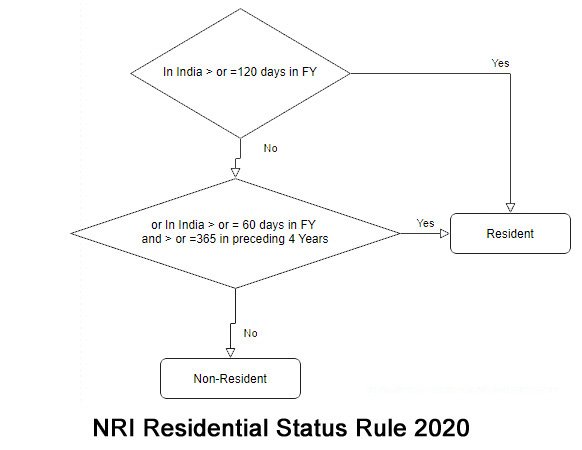
NRI who is a citizen of India if visiting India for more than 120 days in a year will lose his non-residential status (earlier this limit was of 182 days). In the simple words if Indian national wants to claim NRI status he cannot stay in India above 120 days. (4 months). This means you need to stay minimum 245 days abroad for claiming your NRI status.

For residential status only above condition is added, remaining conditions remain same.

In addition to above condition, if person is not staying in India for greater than 60 days in the financial year or 365 in preceding four financial year status can be claimed as NRI.

If these conditions do not get satisfied residential status will be ordinary Resident. The flow chart of explaining NRI status is given below.
NRI Status India

Also Read – RNOR Status NRI can save Tax up to 3 Years

Income Tax for NRI – Taxable Income of an NRI

Your resident status will decide your income tax liability in India. If your status is ‘resident’ your global income is taxable in India. If your status is ‘NRI’ your income earned in India is taxable in India.

Following incomes are taxable for NRI –

Income from Salary

If you are NRI and you receive a salary in India or someone receives it on your behalf, you are liable to pay income tax on such salary. This means if you render service outside India and accept a salary in India, you need to pay income tax on salary income.

E.g  Mr.Suresh Works in IT firm. IT firms take a project in Dubai and depute Mr.Suresh for project work. Mr.Suresh opt to take a salary at India. Mr.Suresh is liable to pay tax on salary income.

Rental Income

The most common source of income of NRI is rental income. Most of NRI rent out their properties and receive monthly rental income. Any income arising from rental property for NRI is taxable in India. This income is taxed as per income tax slab rates.

A tenant who pays rent to an NRI needs to deduct TDS at 30%. A tenant needs to prepare 15CA and submit it online to the income tax department. This is irrespective of payment is made in bank account located in India or at abroad.

Income from Other Sources

Income from any other sources in India is taxable for NRI. Few examples of other sources include interest income earned on NRO bank account, fixed deposit etc. The interest earned on NRE or FCNR account is not taxable.

In short as an NRI you need to sum up all income originated in India or received in India. If your total income in India is crossing income tax threshold limit you need to pay Income tax.

Also Read – To do list for NRI before leaving India

Income from Business and Profession

NRI is also liable to pay tax on any income arising due to business and profession in India. This means if you have business setup in India or controlled in India you are liable to pay tax.

Long term Short term capital Gain – Income from Capital Gain

NRI is also liable to pay long-term capital gain tax and short-term capital gain tax. This means any capital gain arising due to a transfer of capital asset which is situated in India shall be taxable in India. However, the certain special tax treatment is offered for specific investments.  The tax rate applicable on such investment is 20% provided NRI has no other income except special investment during the financial year. The special investment includes following investment type.

  • Shares in Indian companies
  • Debentures issued by a public-listed Indian company
  • Deposits with a bank and public companies
  • Central government securities

Deduction for such investment is not considered under 80C for NRI. However, in case of long-term capital gain, one can avail an exemption on the profit under section 115F.

Deduction and Exemptions Applicable to NRI

After looking at a taxable income of NRI, let’s take a look at deduction and exemptions applicable to NRI.

  • Most of the deductions under 80 C are allowed to NRI. Some examples are insurance premium, children tuition fees, principal repayment for a home loan, ULIP investment and Investment in ELSS.
  • NRI is also allowed to claim deduction under 80D for a premium paid for health insurance policy.
  • NRI can claim a deduction for the interest payment on education loan. The loan may be for the higher education of NRI or for spouse and children.
  • Another deduction which is allowed to NRI is under section 80G which is for the donation made under a social cause.
  • NRI can also take benefit of 80 TTA. It is towards interest income on saving bank account. The maximum limit is Rs.10000.

Also Read – Top 5 Best Investment Options for NRI in India

When NRI is required to file Income Tax Return?

One of the most frequently asked question by NRI is – Do I need to file Income tax return? Well, NRI needs to file Income Tax Return under following conditions –

  • If Total Income is crossing taxable limit during a financial year. This means as per current rule if total income of NRI in India is above 2.5 Lakh, one need to file Income tax return.
  • If TDS is deducted from your Income and you are looking for refund as your income is below taxable limit.
  • If you have Short term Capital Gain (STCG) or Long term Capital Gain(LTCG) from sale of assets or investments in India even if your income is below basic exemption limit.
  • Suppose you want to carry forward and set off any losses against gains.
  • If you want to claim tax benefit under tax treaty even though your income in India is below threshold limit.

How to Download Aadhaar Update History from UIDAI website?

You can now easily access Aadhaar Update History for download. UIDAI has introduced a new feature for downloading Aadhaar update details. At times, we modify our Aadhaar information such as address, mobile number, or other demographic data. To view the alterations made on your Aadhaar card, you can obtain Aadhaar Update history from the UIDAI site.

The Aadhaar Update history is helpful in many ways. Firstly when you apply for various services such as passport, visa and other sundry jobs you can use this facility to ascertain residence history for the past few years. Secondly, it also helps you to verify that if any unauthorized update has taken place or if someone has wrongly updated your Aadhaar.

It will also give you residence proof along with history. Suppose currently you are staying in Surat and after a few years you moved to Mumbai. You have an updated card with a Mumbai address, then with the help of downloading the Aadhaar update history, you can give proof that you were earlier living in another city.

Apart from this, if you have changed your name due to any specific reason you will be able to get proof online in update history.

This is a very good step to empower people. It will also eliminate a need for maintaining a physical copy of address proof. You can download history anytime online and use it for various services.

The update history shows date-wise update details made in address, name, and other demographic details. You can even see the addition and deletion of mobile or email. Here is step by step process to download the Aadhaar Update History from the UIDAI website.

How to Download Aadhaar Update History from UIDAI website?

Step 1

Visit UIDAI portal on the home page you will find the language selection. On selection of language you would be redirected to the page. In the top menu, you will find a link called “Aadhaar Update History”. Click on this link to download the history.

Step 2

On clicking this link you will be taken to a new page where you need to login using your Aadhaar number and captcha code. After entering Aadhaar and Captcha details click on “Send OTP” button. You will get OTP (one-time password) on your registered mobile number. The OTP is valid for 30 minutes. Enter the OTP and click on the submit button for validation.

Step 4

Upon successful login you will be able to see the service tab dashboard. One of the services on this dashboard is Aadhaar Update History.

Aadhar Update History Download

Step 3

On clicking Aadhaar update history you will be able to see all historical Aadhaar updates done by you at a single place. It will also show the date on which the modification was carried out. The update history screen looks like below.

download aadhaar update history

If your Aadhaar is seeded with an e-mail address, UIDAI will send an e-mail indicating update history is downloaded. It is an additional security feature to know who has viewed or downloaded updates.

Benefits of downloading Aadhaar Update History

The benefits of downloading the Update history are given below.

  1. Address History online which can be viewed as and when required with a click of the button.
  2. Along with address history, you will be able to see other demographic change detail.
  3. You can use this history as a proof for various services including passport, visa etc.
  4. You can verify if anyone has modified information wrongly or not.

Hope you will find this information useful. If you have any query about downloading Aadhaar Update History please post it in the comment section.

 If you find this article useful, do share it with your friends on Facebook and Twitter.

15 Types of Credit Cards in India and Usage

There are several types of credit cards available in India. The type of credit card is decided based on the benefits and rewards they offer on a specific category and spending requirements.

For example – If you love to do shopping online, then a “Shopping Credit Card” is best for you. You earn discounts, cashback, and rewards on these types of credit cards. Suppose you are a frequent traveler you can benefit a lot from a Travel credit card. These types of credit cards help you to earn air miles, access to airport lounges, etc. From the above examples, you must have understood that for specific requirements and usage, Credit Card Company offers a specific category of credit card. Too many credit card options create anxiety and you may end up taking wrong decision.

To help you out, I’ve compiled some basic explanations of credit cards, as well as types of credit cards and usage. You can select the type of credit card based on your requirements and usage.

Type of Credit Cards

There are various options for cash. Credit card is one of them. Credit card is a plastic money that makes life very simple. You can use a credit card to buy goods and services on credit. You need to return this money every month or at the latest before interest-free credit period else you need to pay interest on your outstanding balance. After understanding basics of credit cards let’s take a look at the types of credit cards available in India.

Also Read – Best Credit Cards in India – Review & Comparison

15 Types of Credit Cards in India and Usage

Business Credit Cards

Business Cards are designed for businessmen and corporates. It is one of the fastest ways to get finance to run your business. These types of cards is also known as corporate credit cards. Business credit card offers benefits such as expense monitoring and control, insurance, business saving plans, lucrative travel and accommodation deals, higher credit limit and advanced facilities. Few best credit card in this category is the SBI Corporate Platinum card, Business Money Back HDFC Card, and My Business Credit card from Axis Bank.

Balance Transfer Credit Cards

Balance Transfer credit cards or facility allows cardholders to transfer existing outstanding balances from one credit card to another. So, if you are worrying about massive credit card dues you can use these types of credit card facilities. The bank charges normal processing fees for balance transfers. Most of the balance transfer cards do not charge interest rates for the first three months.The few recommended banks for opting balance credit card/facility are ICICI, SBI, and Standard Chartered.

Cashback Credit Cards

Everyone likes to earn more money if you are one of them you should try a Cashback Credit Card. Cashback Credit cards allow you to earn money by spending money. The cashback amount and rewards depend on the issuer. The best Cash Back Credit Cards are the Citibank Cash Back Credit Card and Standard Chartered Manhattan Platinum Credit Card.

Also Read – 7 Best Free Credit Card India

Co-branded Credit Cards

Co-branded credit cards are offered by banks in association with a retail brand, online e-commerce website, or travel aggregator. This card is specially designed to offer privileges associated with co-brand. If you are married to a specific brand you can plan to opt for this type of card. A few examples of co-branded credit cards are the Yatra SBI Credit Card, IRCTC SBI Platinum Credit Card, and HDFC Snapdeal Credit Card.

Credit Cards for Women

Few Credit cards are exclusively designed for women. These credit cards mainly focus on shopping rewards, and cash back as women are fond of doing extensive shopping. Apart from that, this card also offers extra benefits such as shopping vouchers, surcharge waivers, insurance, etc. A few examples of credit card for women are HDFC Bank Solitaire – Premium Women’s Credit Card, Citibank Rewards credit card, and ICICI Bank Coral card.

Credit Cards for Online Shopping

If you are fond of shopping you can surely go for the following best credit card for online shopping in India. This type of credit card is designed to offer online shopping benefits. You can avail discounts, e-vouchers, and options for shopping on EMI via these types of cards. A few popular online shopping cards are SBI Simply Click and Axis Bank Buzz credit card.

Classic Credit Cards

The main features of Classic Credit Card are global acceptance, cash advance, interest-free credit period, supplementary card benefit, card loss insurance, and dedicated customer support. Few examples of classic credit cards is the IOB Classic Credit card, Indian Bank Global Classic Credit Card, and ICICI Bank British Airways Classic Credit Card.

Entertainment Credit Cards

If you are spending a lot of money on entertainment such as movies, dramas, shows and events you can opt for an entertainment card. This type of card is mainly designed to offer amazing entrainment benefits.  It also offers extra benefits such as reward points and discounts on dining. Best Entertainment credit cards are the HDFC Titanium Times Card and Kotak PVR Gold Credit Card.

Fuel Credit Cards

Fuel Credit Cards are specially designed to offer benefits on fuel including discounts, cashback, and surcharge waivers. You can make use of a fuel credit card and bring down the cost of fuel expense from the household budget. If you spend heavily on petrol and diesel you can use this card. A few recommended fuel credit cards are Standard Chartered Super Value Titanium Card, ICICI Bank HPCL Coral American Express Credit Card, and Indian Oil Citi Platinum Credit Card.

Life Style Credit Cards

Life Style Credit Card as the name suggest is a credit card that offers benefits on changing lifestyle and income of cardholder. These type of cards offers shopping, dining, travel, and other exclusive benefits on lifestyle. One such card is the Axis Bank Signature Credit card with Lifestyle benefits.

Prepaid Credit Card

A prepaid credit card as the name indicates is a preloaded credit card with a specific amount. There are two types of credit cards in the prepaid category namely domestic currency and forex credit cards. A prepaid card is as good as a debit card. You need not worry about clearing dues and interest rates as usage is allowed only based on money deposited by you.

Premium Credit Cards

A premium credit card as the name suggests, is a credit card for premium customers. These types of cards are designed to provide extraordinary premium services such as club membership, concierge services, dining privileges, etc. High income and high spending are requirements for premium credit cards. If you have high income level and capacity to spend. The best premium credit cards are the HDFC Regalia Credit Card and Citi Prestige Credit Card.

Also Read – Best Cashback Credit Cards with Best Cashback Offers

Students Credit Cards

A student credit card are card that is offered to students at the college level. There are very few banks that offer student credit cards in India. The main requirement of this credit card is students should be above 18 years of age. This type of credit card is offered against employment documents, Income tax returns or income proof.

Secured Credit Cards

A Secured Credit Card is a card offered by the bank against a fixed deposit. This deposit serves as a credit limit for the cardholder. If you don’t have a good credit history and you are facing problems getting a credit card you can use this option. In this card if the cardholder default on payments, the bank can deduct the amount from the deposit.

Travel Credit Cards

Travel Credit card is best suitable for the person who is traveling frequently. The travel credit card offers multiple benefits like air miles, free access to the airport lounge, benefit on accommodation, travel insurance benefits, etc. A few recommended travel credit cards are Citibank PremierMiles Credit Card, American Express Platinum Travel and JetPrivilege HDFC Bank World Credit Card.

The above list includes the most popular credit card types. However, there are a few other credit card types and names that are defined by banks such as contactless credit cards, lifetime free credit cards, virtual credit cards, credit cards for low-income groups, gold credit cards, Platinum credit cards, signature credit cards, etc.

A credit card can be a very good tool that provides multiple benefits. However, you have to use credit cards wisely. Excessive usage of credit cards leads to a huge financial burden. If you decide to use a credit card and trying to find the best credit card here are few important credit card tips for selection and usage.

  • Know your payment habits and spending habits before making a selection of a credit card.
  • Compare features and get information about annual fees, interest rate applicable, and Interest-free grace period before taking a credit card.
  • Get complete information about credit limits and interest-free credit days before opting credit card.
  • It is advisable not to keep multiple credit cards.
  • Always choose a credit card that has excellent customer care support.
  • Keep track of all your purchases. If possible, maintain all receipts of purchase.
  • Don’t get carried away by doing impulsive shopping.
  • Use the credit card for needs not wants.
  • Pay off your bill every month. If possible set up Auto Debit Facility
  • Take maximum benefit of rewards and cashback.

I hope the above credit card tips and types of credit cards help you in making a selection of credit cards. If you are still facing issues in the selection of credit cards post your query in the comment section given below.

How to Find Best Child Education Investment and Saving Plan?

I want to invest money for child education and marriage. He is 1-year-old. Please suggest some best child education and saving plan. This question was asked on Zee News program “Money Guru” recently. An advice given by expert was purchase term plan and invest in child plans like ICICI Childcare plan and HDFC Child gift fund. Well, it was very easy for an expert to identify and advice on Best Child Education Investment and Saving plan. However, do you think that this advice is making sense?

Rather than making an investment on ad-hoc basis based on advice by so-called expert, it is better to put a plan in place to meet your child education need. In this post, I will try to show you approach that can be used to identify Best Child Education Investment Option.

Why it is important to plan for child education?

The cost of education is skyrocketing in India. It is a big reason to worry for the middle-class parents.

Data shows that fees of premier institute IIT for engineering have increased by five times in last 10 years. IIT (B.Tech) fee was 2.28 Lakh in 2008 and now it is 10 Lakh. Similarly, fees of IIM for PGP course has nearly doubled. A fee of PGP course in IIM Ahmedabad was 11.5 Lakh in 2008 and today it is costing 19.5 Lakh.

Forget premium institute like IIM and IIT, an average fee of Engineering course is roughly Rs 6 Lakh today, five years down the line it would be close to double meaning Rs 12 Lakh. In 10 years’ time, it’s likely to cost around Rs 20 Lakh.

Child Education Investment

The growing cost of education has no dead end. The options left with you succumb to the situation by taking education loan or plan for child education.

How to Find Best Child Education Investment and Saving Plan?

  1. Plan for Higher Education program

First step is to plan for higher education program. Identify two-three good career options for your child. I know it is difficult to zero down to education option at this stage. Still, for the planning purpose select career option based on your wish and your child interest.

  1. Find out Target Year

The second step is to find out target year by when you are likely to spend this money. It is very easy to find out this. If your child age is 1 year then he will enter in graduation year after 18 years. This means if you are planning for engineering target age would be 18 years. If you are planning for MBA after graduation target age would be 22 years.

Also Read – Cost of Child Education – Planning and Calculator

  1. Find Current Education Cost

Now based on education option selected by you try to find out current cost. It is very easy to find this cost. First decide educational institute and location where you are planning education of your child. You have various options such as government college, self-finance collage, deemed university, REC, IIT etc. Now find out current education cost applicable to course and institute. You can get this information from website or from institute itself.

  1. Find Future Education Cost

Next step is to find future education cost. It is very difficult to predict future education cost. There are various methods to do so. First is consider roughly 8-10% inflation every year and find out future education cost. Another method is use simple excel formula of FV (Future Value).

If you are not familiar with excel you can use following formula to calculate future value.

Future Value (FV)= Present Value (PV) (1+r/100)n

where; 
FV= Future value of your goal
PV= Present value or current cost of your goal
r= annual rate of inflation
n= time left to reach your goals (in years)

  1. Discover Yearly or Monthly Investment Amount

Now discover yearly or monthly investment amount required for reaching the target amount. It is a difficult exercise and you need to assume expected returns from investment options where you will be investing money.

You can use simple excel formula PMT for doing this. PMT is a financial function that calculates investment required for an option based on constant payment and constant rate of return. It may not be a full proof method but you can get an idea about the amount required for investment. You can use simple calculator developed by us for calculating child education cost.

Download Child Education Calculator

  1. Discover Best Investment Option

Once you are done with above exercise, you need to find out investment option which can generate a return as per your expectation. I suggest not to invest in fixed deposit, term plan or ULIP for child education.

As per me, a mutual fund is one of the best investment options for child education planning. You should select 2-3 good equity oriented mutual funds and start SIP. Make sure you select mix of a large-cap and mid-cap fund for investment. Select the mutual fund with good historical return matching with your expected return. Keep on increasing SIP on your salary increment or on child’s birthday. If you are a high-risk investor you can try equity also.

If you are a conservative investor and don’t want to invest in mutual fund. I would advise considering PPF as next investment option. PPF is a 15-year scheme that helps you to generate tax –free corpus for your child education. You can partially withdraw money from PPF account after the sixth year and you can close the account after 15 years. However, please note that expected return of PPF is lower compared to mutual funds.

Also Read – 7 Things you must do for your child

Important Points to Consider for Child Education investment planning

  • Start Investment at an early stage. It is easy to achieve the target if an investment is started at an early stage. Power of compounding plays an important role when it comes to investment.
  • Select best investment options with higher returns. Track your portfolio at regular interval and make appropriate changes.
  • Select Tax efficient investment options. Don’t invest in fixed deposit. Also, avoid endowment plan or money back plan. The expected return of these type of plans is nearly 6-7%.
  • Make sure to create a separate portfolio for child education. Identify and tag fund or portfolio. This will help you for tracking the performance of the fund.

In the end, I would like to say that don’t invest your money blindly. Invest only if you are sure about investment scheme and returns.