
Blog Page 21

Gold Overdraft Facility – How Does It Work?

0

Ever felt stuck between payday and expenses, wondering how to get quick money without selling your gold? You’re not alone! In India, millions of people rely on their gold jewelry—not just for beauty or tradition but also as a powerful financial backup. And now, thanks to banks modernizing their lending methods, there’s a new, flexible credit option that’s gaining momentum fast: Gold Overdraft.

Unlike the traditional gold loan where you borrow a lump sum and pay EMIs, a Gold Overdraft lets you borrow, repay, and borrow again—anytime, just like a credit line. It’s super flexible, easy to apply for, and perfect for people who need money on the go without jumping through complicated hoops.

Gold Overdraft

What is Gold Overdraft?

So, you’re scratching your head, asking, “What’s gold overdraft, anyway?” Fair question! In simple terms, gold overdraft is a banking facility where you deposit your gold jewelry or coins as collateral and get an overdraft account in return. Unlike a traditional loan where you get a lump sum and start paying interest right away, this setup lets you withdraw money only when you need it, paying interest just on what you’ve used. It’s genius, right?

In India, where gold holds sentimental and investment value, this option has become a go-to for folks needing quick cash without liquidating their treasures. Banks like SBI, HDFC, and ICICI offer it, often under names like “Gold Overdraft Loan” or similar. Dangling modifiers aside, offering flexibility that’s hard to beat, gold overdraft stands out in a sea of rigid borrowing options.

But why the buzz? Well, with gold prices soaring—hitting record highs lately—your old earrings could unlock thousands in credit. It’s not just for emergencies; think funding a wedding, expanding a shop, or even bridging a salary gap. And get this: No lengthy approval processes like with personal loans. You walk in with gold, get it valued, and boom—overdraft ready!

Of course, it’s not all sunshine. The bank holds your gold until you repay, so if you’re attached to that ancestral chain, think twice. Still, for many Indians, it’s a lifeline, blending tradition with modern finance.

How Does Gold Overdraft Work in India?

Alright, let’s cut to the chase—how does gold overdraft work in India, step by step? It’s simpler than you might think, but knowing the drill can save you headaches.

First off, you head to a bank that offers gold overdraft. Not every branch does, so check online or call ahead. Once there, you’ll need to bring your gold—purity matters, usually 18-22 karats. The bank’s appraiser weighs and tests it, determining its value based on current market rates. Say your gold’s worth ₹5 lakhs; they might offer 70-80% as your overdraft limit. Why not 100%? Banks build in a buffer for price fluctuations—smart, huh?

Next, you sign some papers, linking the overdraft to your savings or current account. Voilà! You can now overdraw up to that limit. Interest kicks in only on the withdrawn amount, calculated daily or monthly, often at rates lower than credit cards—around 10-15% per annum. Repay as you like: Partial payments, full settlement, whatever floats your boat.

But here’s the kicker—renewal time. Gold overdraft facilities usually last 6-12 months, renewable after revaluation. If gold prices dip, your limit might shrink; if they rise, jackpot! And if you default? The bank auctions your gold to recover dues. Ouch, but fair warning.

Transitionally speaking, let’s sprinkle in an example. Imagine Raj from Delhi pledges 50 grams of gold at ₹6,000 per gram. Valued at ₹3 lakhs, he gets a ₹2.4 lakh overdraft (80% LTV—loan to value). He draws ₹1 lakh for his kid’s tuition, paying interest only on that. Months later, he repays with business profits, gets his gold back. Easy peasy!

One more thing: Documentation. You’ll need ID proof, address proof, and sometimes income details, though it’s lighter than unsecured loans. In rural India, where gold’s abundant but cash flow’s iffy, this has revolutionized farming finance—overdrawing for seeds, repaying post-harvest.

Benefits of Choosing Gold Overdraft

Why bother with gold overdraft when there are zillion other loans out there? Oh boy, the benefits are a game-changer!

For starters, it’s lightning-fast. Approval in hours, not days—perfect for those “I need cash yesterday” moments. No endless paperwork; your gold speaks for itself.

Then there’s the interest savings. Only pay on what you use, unlike term loans where interest accrues on the whole shebang from day one. Idiomatic expressions like “pinching pennies” fit here—gold overdraft helps you do just that!

Flexibility? Off the charts. Draw, repay, redraw—it’s like a revolving door of credit. And since it’s secured, rates are friendlier than unsecured options. Exclamation time: Imagine slashing your borrowing costs by half!

In India-specific perks, it preserves your gold ownership. No selling means no capital gains tax worries. Plus, for businesses, it’s a boon—overdraft against gold keeps operations humming without dipping into savings.

Don’t forget cultural fit. In a country where gold’s passed down generations, this lets you honor traditions while tackling modern woes. And hey, with RBI regulations ensuring fair play, you’re protected from shady lenders.

Bullet points for quick wins:

  • Quick Access: Funds in your account same day.
  • Lower Rates: Often 1-2% above gold loan rates.
  • No Prepayment Penalties: Pay early, save more!
  • Tax Perks: Interest might be deductible for business use.
  • Build Credit: Timely reps boost your score.

Sure, it’s not for everyone, but if you’ve got gold lying idle, why not let it work for you?

Eligibility and Requirements for Gold Overdraft

Wondering if you qualify for gold overdraft in India? Good news—it’s pretty inclusive, but there are hoops to jump through.

Age-wise, you’re golden if 18-70 years old. Salaried, self-employed, or even housewives? Most banks welcome all, as long as the gold’s yours.

Gold quality: 18-24 karat jewelry or coins (no stones, usually). Quantity? Starts from as little as 10 grams—democratizing access!

Documents? Standard stuff:

  1. Photo ID (Aadhaar, PAN, passport).
  2. Address proof (utility bill, rent agreement).
  3. Gold ownership proof (bill, if available—though not always mandatory).
  4. Bank account details.
  5. Income proof for higher limits.

Credit score? Helpful but not a deal-breaker, since it’s asset-backed. Bad credit? Gold overdraft might still smile on you.

Banks vary—public ones like SBI might be stricter on purity, private like Axis more flexible on limits. Pro tip: Shop around for best LTV ratios.

Informal language alert: Don’t sweat if your gold’s a bit worn; as long as it’s pure, you’re set. And remember, joint ownership? Get co-owner consent.

Top Banks Offering Gold Overdraft in India

State Bank of India (SBI)

SBI’s gold overdraft, dubbed “Gold Loan Overdraft,” is a crowd-pleaser. Limits up to ₹20 lakhs, interest from 8.5%, tenure 36 months. Rural branches galore—ideal for villagers.

HDFC Bank

Fancy digital ease? HDFC’s gold overdraft shines with online tracking. LTV up to 75%, rates 9-12%. Quick disbursal, but watch processing fees.

ICICI Bank

ICICI offers “Overdraft Against Gold” with flexible reps. Min gold 10g, max ₹1 crore. Interest daily—saves bucks if you repay fast.

Axis Bank

For urbanites, Axis’s gold overdraft boasts 80% LTV, rates 10-14%. App-based monitoring, insurance on pledged gold.

Muthoot Finance (Non-Bank)

Not a bank but a powerhouse. Their gold overdraft-like schemes offer higher LTV (up to 85%), but rates steeper at 12-18%. Great for quick, no-fuss needs.

Gold Overdraft vs Traditional Gold Loan

Feature Gold Overdraft Traditional Gold Loan
Loan Type Revolving credit Fixed loan
Repayment Flexible, anytime EMI or bullet repayment
Interest Charged only on amount used Charged on entire loan amount
Best For Ongoing cash needs One-time large borrowing
Tenure Usually 12–24 months 6–36 months
Withdrawals Multiple withdrawals allowed Only one-time disbursal

How Does a Gold Overdraft Work in India?

This is the part most people are curious about: How does it actually work?
Let’s break it down step-by-step.

Step 1: You deposit your gold with the bank

Your jewelry or ornaments are evaluated based on purity and weight.
Banks usually accept 22K gold, though some accept 18K with lower valuations.

Step 2: The bank sets your overdraft limit

Your limit usually ranges from 60% to 85% of gold value depending on RBI rules and bank policy.

Example:

  • Gold value: ₹5,00,000
  • LTV (Loan-to-Value): 75%
  • Your overdraft limit: ₹3,75,000

Step 3: You withdraw money anytime

You may withdraw:

  • Through app
  • Using cheque
  • At the branch
  • Through internet banking

Use as much as you need, whenever you need it.

Step 4: Interest is charged only on what you use

If your limit is ₹3,75,000 but you withdraw only ₹50,000, interest applies only to ₹50,000.

Step 5: Repay anytime and borrow again

Pay back in parts or full; borrow again without fresh paperwork.
This is the beauty of a Gold Overdraft—pure flexibility.

Risks and Considerations

No rose without thorns, right? Gold overdraft has risks worth mulling over.

Market volatility: Gold prices crash? Your limit shrinks, or worse, margin calls force top-ups.

Interest creep: Forget to repay? Compounding turns small draws into big debts.

Auction fear: Default, and bye-bye gold. Emotional hit, especially heirlooms.

Hidden fees: Processing, valuation, renewal—add up!

Storage: Bank holds it, but what if theft? Most insure, but confirm.

Regulatory shifts: RBI tweaks could alter terms.

Dangling modifier: Weighing pros and cons carefully, gold overdraft suits disciplined borrowers.

Proceed with eyes open—budget repayments, monitor gold rates.

FAQs

What is a Gold Overdraft in India?

It’s a credit line where gold is pledged and money is withdrawn as needed.

How is Gold Overdraft different from a gold loan?

Gold loan is a one-time disbursal, while Gold Overdraft is revolving credit.

How much interest do banks charge?

Usually 7.5% to 10.5%, depending on the bank.

Can I repay the Gold Overdraft anytime?

Yes! Repay in parts or in full—anytime.

Is my gold safe?

Absolutely. Banks store it safely and insure it.

What if I don’t repay?

Banks may auction the gold after sending notices.

Can I renew the Gold Overdraft?

Yes, you can renew after 12 months or 24 months depending on bank policy.

Can students apply?

Yes, if they are 18+ and have gold to pledge.

Is CIBIL score required?

No. It’s a secured overdraft, so CIBIL isn’t a problem.

Conclusion

A Gold Overdraft in India has emerged as one of the smartest, easiest, and most flexible credit options for people who want quick access to money without rigid EMIs or heavy paperwork. It gives you a revolving credit line backed by your own gold—something every Indian household already has!

If you’re someone who deals with irregular cash flow, business cycles, seasonal needs, education fees, medical expenses, or simply wants a safety net, the Gold Overdraft is definitely worth considering. It saves interest, reduces stress, and gives you unmatched flexibility.

Instead of letting your gold just sit idle in a locker, you can use it to strengthen your financial stability—without selling even a gram.

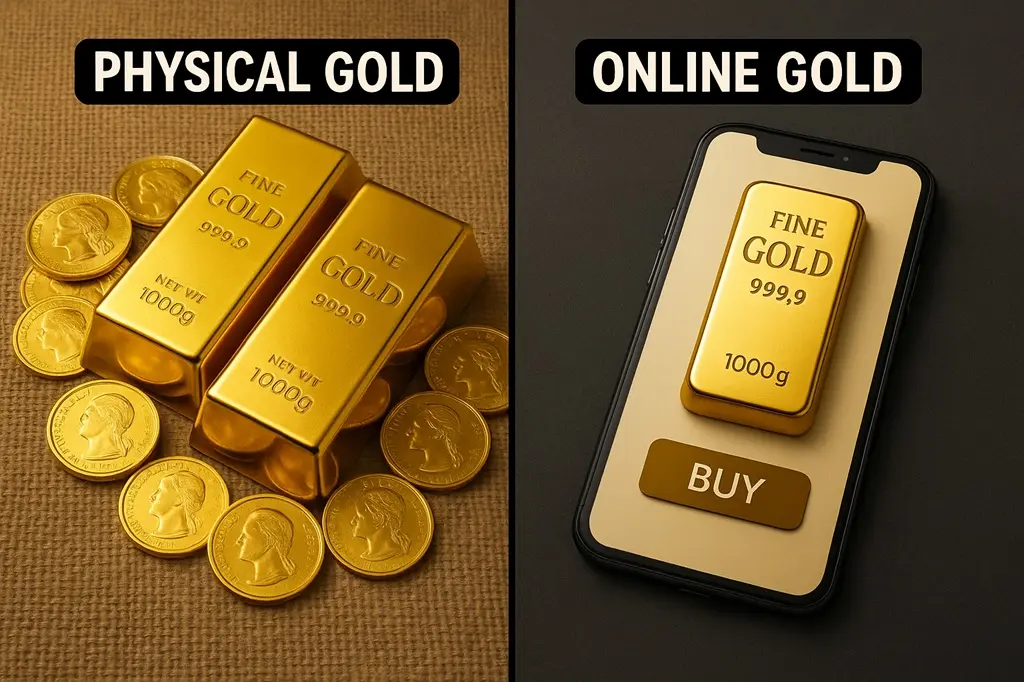
Physical or Digital Gold? How to Pick the Right Investment  

0

Gold has always held a special place in Indian hearts. Think about it—during Diwali or weddings, families rush to buy gold jewelry or coins. It’s not just about looking good; it’s a symbol of wealth and safety. Women slip on bangles that sparkle under the lights, and men sport simple chains that whisper of stability. For generations, gold has been our go-to “safe-haven” when the world feels shaky. But here’s the twist: with apps on our phones and quick online buys, many folks are ditching the old-school gold bars for something called digital gold. It’s like having gold in your pocket without the weight.

Fast forward to November 2025, and gold prices are soaring. Right now, 24-karat gold costs about ₹15,785 per gram, pushing a 10-gram bar past ₹1.57 lakh. That’s a big jump from last year, thanks to global tensions and festive demand kicking into high gear. Yet, choosing between physical gold—like those shiny coins from a trusted jeweler—and digital gold from an app isn’t straightforward. Physical feels real; you can touch it. Digital? It’s all numbers on a screen, promising ease but hiding some risks.

Physical or Digital Gold

The Securities and Exchange Board of India (SEBI) is sounding alarms again. Just last week, on November 8, they warned folks to steer clear of unregulated digital gold platforms. Instead, they push for safer bets like Gold Exchange-Traded Funds (ETFs) or Sovereign Gold Bonds (SGBs). These are backed by rules, so if things go wrong, you’ve got someone to call. Digital gold? Not so much. It’s grown huge—transactions shot from 21 million to nearly 1 billion in a year and a half, grabbing about 10% of the gold investment pie. But without SEBI or RBI oversight, you’re on your own if a platform flakes out.

So, if you’re scratching your head over physical versus digital, let’s break it down. I’ll walk you through five key factors. These aren’t just buzzwords; they’re real things that can make or break your investment. We’ll look at both sides, toss in some examples, and keep it simple—no fancy jargon. By the end, you’ll have a clearer path. Remember, gold’s a long game. It’s about steady growth, not get-rich-quick schemes.

physical gold or digital gold

Factor 1: Regulation and Legal Protection  

Let’s start with the basics: safety nets. Imagine buying a bike without brakes. Scary, right? That’s digital gold in a nutshell right now. SEBI’s fresh caution in November 2025 hammers this home—they say skip unregulated apps selling “digital gold” because of risks like fraud or platform shutdowns. No rules mean no quick fixes if your gold vanishes into thin air.

Physical gold shines here. Buy from a hallmark-certified jeweler, and you’re covered. If it’s fake or stolen, file a police report or hit up the Bureau of Indian Standards (BIS). Harshwardhan Roongta, a certified financial planner, puts it bluntly: “With physical gold, you can take legal action. Digital? Forget SEBI; it’s a gray area.” Take my neighbor’s story—he bought a gold necklace for his daughter’s wedding last Diwali. Turned out the purity was off. A quick BIS check, and the shop refunded him without a fight.

In 2025, with cyber scams on the rise, this factor tips toward physical—or at least SEBI-approved options like SGBs, which offer 2.5% extra interest on top of gold’s price gains. Bottom line: If peace of mind matters, go regulated. It’s like wearing a helmet; you hope you never need it, but it’s there.

 Factor 2: Convenience and Accessibility  

Who doesn’t love one-tap shopping? Digital gold wins big on this. Forgot to hit the gold shop before a holiday? No sweat—apps like Paytm or Groww let you buy tiny amounts, say ₹100 worth, anytime. It’s fractional gold, perfect for beginners dipping toes without diving deep. Renisha Chainani from Augmont Gold notes the boom: “It’s built trust over eight years, and transactions exploded to 1 billion.” In festive 2025, with prices at record highs, this ease helped folks stack gold steadily without the hassle.

Physical gold? It’s old-world charm meets modern grind. You trek to a store, haggle over purity, and lug it home. Sure, online jewelers like Tanishq deliver, but that’s not pure physical—it’s still tied to a brand. And for small buys? Forget it; minimums start high, like ₹10,000 for a coin.

But here’s a flip: Physical feels personal. Holding that cool metal bar? It’s satisfying, like planting a tree you’ll watch grow. During 2025’s Dhanteras rush, many stuck to physical for that ritual vibe, even as digital sales spiked 20%. If you’re tech-savvy and busy, digital’s your pick. Otherwise, physical’s touchable appeal might sway you. Think of it as Netflix versus a bookstore—both get you stories, but one’s instant, the other’s immersive.

Factor 3: Costs and Fees

Money talks, and hidden fees shout. Physical gold’s upfront hit is making charges—up to 10-15% on jewelry. Buy a necklace for ₹50,000? You might lose ₹5,000-7,500 on resale due to “wastage.” Coins and bars fare better, with 3-5% premiums, but add GST at 3%. Then there’s locker rent: ₹2,000-5,000 yearly for a bank safe. Over time, these nibble away.

Digital gold seems cheaper at first—no making charges on pure holdings. But watch out: Platforms tack on 0.5-1% buy/sell spreads, plus delivery fees if you want physical (₹500-1,000 flat). Free storage? Often just 6-12 months; after that, it’s ₹100-200 per gram annually. And with caps at ₹2 lakh per buy, you’re splitting transactions, racking up extra fees.

Experts in 2025 say digital edges out for small, frequent buys—tax perks too, like no TDS on sales under ₹2 lakh. But for big investments, physical’s lower long-term costs shine, especially SGBs with zero storage hassle. Picture this: You invest ₹1 lakh. Physical might cost ₹3,000 extra yearly; digital, similar if you deliver. Crunch numbers—apps like Excel can help. The winner? Depends on your buy size and hold time.

Factor 4: Security and Storage  

Nothing ruins a good investment like a break-in. Physical gold’s biggest headache is theft. Hide it under the mattress? Risky. Bank locker? Secure, but what if fire hits or you forget the key? Insurance adds another ₹500-1,000 premium. Surendra Mehta from IBJA warns of fakes too—gold-plated junk sold as pure. In urban India, with rising burglaries, this keeps many up at night.

Digital gold flips the script: No home storage needed. It’s vaulted by the provider, insured against loss. Hackers? Platforms use bank-level encryption. But SEBI’s 2025 alert flags “custody risks”—what if the company goes bust? Remember the 2023 platform scare? Users panicked, even though funds were safe. Still, for most, digital’s hands-off security beats physical’s worries.

Factor 5: Liquidity and Returns  

Gold’s charm is turning it to cash quick. Physical? Coins sell fast at market rate minus 1-2%, but jewelry? Ouch—deduct 10-20% for melting. In 2025’s hot market, resale’s easy, but rural spots lag. Returns? Steady 8-10% yearly long-term, beating inflation.

Digital gold? Sell in seconds via app, funds in your bank next day. No haggling, full value minus tiny fees. But limits bite—can’t sell over ₹2 lakh easy. Returns match spot prices, plus easy tracking. Thakkar says most convert to physical eventually, blending liquidity with tangibility.

Taxes matter too: Physical jewelry over three years gets indexation perks; digital’s LTCG at 12.5% post two years. For short-term flips, digital’s smoother. Imagine needing cash for a car down payment—digital wires it overnight; physical means a jeweler visit. In volatile 2025, with gold up 15% YTD, liquidity’s king for traders, tradition for holders.

Pyscial Gold vs Digital Gold Quick Comparison

Feature Physical Gold Digital Gold
Form Jewellery, coins, bars Electronic form backed by physical gold
Ownership Physically held by you Stored by a third-party vault on your behalf
Minimum Investment High (usually ₹5,000–₹10,000+) Very low (starts from ₹1)
Purity Varies (18K, 22K, 24K) 24K (99.9% pure)
Storage Locker or home storage needed Stored securely in insured vaults
Safety Risk Risk of theft or loss No theft risk for the investor
Making Charges Applicable (especially for jewellery) No making charges
Liquidity Moderate (selling takes time & effort) High (easy online buy/sell)
Ease of Buying Requires visiting a jeweller Fully online via apps/websites
Price Transparency Depends on jeweller Live market-linked prices
GST & Charges 3% GST + making charges 3% GST, no making charges
Redemption Options Sell or exchange at jeweller Sell for cash or convert to physical gold
Best For Long-term holding, jewellery use Small investors, short-to-medium term investing
Regulatory Status Traditional, unregulated pricing Not regulated by RBI/SEBI

Wrapping It Up 

So, physical or digital? It’s not black-and-white. If you’re after that heirloom feel, legal muscle, and big buys, grab physical—maybe via SGBs for extras. Love apps, small steps, and zero storage? Digital’s calling, but stick to trusted ones till SEBI steps in fully.

Minor PAN Card – Guide to Applying for a Minor PAN Card

0

Ever wondered if your child really needs a Permanent Account Number (PAN) before turning 18? Surprisingly, yes! In India, the Minor PAN Card has quietly become more important than ever. Whether you’re opening a bank account for your child, investing in their future, or receiving funds in their name, the Minor PAN Card is now a necessity rather than an optional document.

But here’s the catch—most parents feel overwhelmed when they hear the words “PAN card application process”. Forms, documents, digital signatures—it feels like stepping into a maze without a map. That’s exactly why this comprehensive guide exists.

This article breaks everything down in simple, friendly language so you can understand the entire process to apply PAN card for a child—step by step, without any confusion. From eligibility to documents, from online application to offline submission, from FAQs to expert tips—you’re about to get a full 360° walkthrough.

Minor PAN Card

What Exactly is a Minor PAN Card?

Picture this: a tiny version of that all-important plastic card adults carry around for tax stuff. That’s basically what a Minor PAN Card is—a PAN card issued to anyone under 18 years old. Issued by the Income Tax Department in India, it’s not mandatory for kids, but boy, it comes in handy! Unlike the regular PAN for grown-ups, the Minor PAN Card doesn’t require the child’s photo or signature if they’re really young. Instead, it uses the parent’s or guardian’s details to link everything up.

Why call it a “Minor PAN Card”? Well, it’s tailored for minors, ensuring their financial activities are tracked properly without them having to deal with the grown-up hassles. Once the child turns 18, they can easily update it to a full-fledged adult PAN. Neat, right? This card helps in scenarios where kids might receive income, like from gifts or investments, keeping everything above board with the tax folks.

Why Bother Getting a Minor PAN Card for Your Child?

Now, you might be scratching your head, wondering if it’s worth the effort. Trust me, it is! For starters, a Minor PAN Card lets your child open a savings account in their own name. Banks often ask for it these days, especially for minor accounts. Imagine your kid stashing away birthday money and watching it grow—talk about teaching financial responsibility early!

Moreover, if you’re planning to invest in mutual funds, stocks, or even fixed deposits under your child’s name, a Minor PAN Card is a must. It helps in claiming tax benefits or avoiding those pesky deductions at source. And hey, in a world where education costs are skyrocketing, having a Minor PAN Card can smooth the way for scholarships or educational loans later on.

But wait, there’s more! It protects against identity theft by establishing an official financial identity from a young age. Parents who’ve gone through this swear by it, saying it simplifies things like property transfers or inheritances down the line. Sure, not every family needs one right away, but if you’re forward-thinking, grabbing a Minor PAN Card could save you tons of trouble later. Exclamation-worthy, isn’t it?

Who Can Apply for a Minor PAN Card? Eligibility Basics

Alright, let’s get down to brass tacks. Eligibility for a Minor PAN Card is pretty simple—no rocket science here. Any child below 18 years, whether Indian citizen or not, can get one, as long as they’re residing in India or have financial interests here. The catch? The application has to be filed by a parent, legal guardian, or even a representative if needed.

If the kid’s under 5, no photo is required, making it even easier. For older minors, a photo might be asked, but it’s still the parent’s signature that seals the deal. Oh, and foreign nationals? They can apply too, using Form 49AA instead of the usual 49A. Basically, if your child could benefit from financial tools, they’re eligible. No age floor either—even newborns can have a Minor PAN Card if you want to plan that far ahead!

Documents Required

Here’s a quick rundown in a numbered list to keep things organized:

  1. Proof of Identity for the Child: Something like a birth certificate, school ID, or passport. Easy peasy if you’ve got the birth cert handy.
  2. Proof of Address: This can be the parent’s Aadhaar, voter ID, or utility bill. Since the kid might not have their own, parent’s details work just fine.
  3. Proof of Date of Birth: Again, birth certificate is king here, but a hospital discharge summary or immunization card could do in a pinch.
  4. Parent’s PAN Card: Yep, you’ll need to attach a copy of the applying parent’s PAN. It’s like linking the accounts.
  5. Photographs: Two recent passport-sized photos of the child if they’re over 5, but skip this for tiny tots.

And don’t forget the application form itself! Make sure everything’s clear and copies are attested if required. Pro tip: Scan them digitally if going online—it speeds things up. With these in hand, applying for a Minor PAN Card becomes a walk in the park.

Step-by-Step: How to Apply for a Minor PAN Card Online

 Step 1: Visit the Official PAN Portal

You can apply through:

  • NSDL (Protean) portal
  • UTIITSL portal

Both are authorized by the Government of India.

Step 2: Choose the Application Type

Select:

“New PAN For Minor”
Application Type: FORM 49A

Step 3: Fill in the Basic Details

You’ll be asked to enter:

  • Child’s full name
  • Date of birth
  • Gender
  • Parents’ names
  • Aadhaar number (if available)
  • Address

Make sure the Aadhaar details match exactly with the submission.

Step 4: Upload Documents

Upload scanned copies of:

  • Child’s ID proof
  • Parent’s ID + address proof
  • DOB proof
  • Photos (if applicable)

Pro Tip: Use clear, high-resolution scans.

Step 5: Payment of Fees

Fees typically range between ₹107 – ₹110 for Indian communication addresses.
(Extra charges if PAN is dispatched abroad.)

Step 6: Submit the Application

After payment, you’ll receive:

  • 15-digit acknowledgment number
  • Form preview
  • Document checklist

Step 7: Send Physical Documents (If Required)

Depending on whether you opted for:

  • e-KYC
  • e-Sign
  • Digital mode

You may or may not need to physically send documents to the processing center.

Step 8: Track PAN Application Status

Use the acknowledgment number to track status online.

Step 9: PAN Card Dispatch

Once approved:

  • You’ll receive an e-PAN via email
  • Physical PAN card arrives in 7–15 working days

That’s it—your Minor PAN Card is done!

The Offline Way to Apply for Minor PAN Card

Not everyone loves clicking around online, and that’s okay! The offline route for a Minor PAN Card is just as reliable. Start by downloading Form 49A from the Income Tax website or grabbing it from a nearby UTI or NSDL center.

Fill it out carefully—same details as online: child’s info, parent’s PAN, and all that jazz. Attach the documents, photos if needed, and head to the nearest authorized center. They’ll take your application, give you a receipt, and process it.

Fees are similar, payable in cash or demand draft. Waiting time? About the same, two to three weeks. The beauty of offline? You can ask questions face-to-face if you’re unsure. However, in this digital age, online might save you a trip. Either way, securing that Minor PAN Card feels rewarding!

Fees, Timings, and What to Expect After Applying

Speaking of fees, let’s clear the air. For a Minor PAN Card delivered in India, it’s roughly ₹107, including processing and GST. If you want it fancy with a plastic card or sent abroad, tack on extra—up to ₹1,000 or so. Payments? Net banking, cards, or drafts.

Processing time usually clocks in at 15 days, but hey, sometimes it drags to a month if there’s high volume. Track your status using that acknowledgment number on the portal. Once approved, the card ships via post. If corrections are needed, they’ll notify you—don’t ignore those emails!

And after? Your child now has a financial ID! Update it when they hit 18 by adding their photo and signature. Simple transitions like that make the Minor PAN Card a long-term win.

Common Pitfalls: Mistakes to Dodge When Applying for Minor PAN Card

Even the best of us slip up, but forewarned is forearmed! One big no-no? Mismatched names on documents. Make sure the child’s name spells the same everywhere—typos can lead to rejections.

Another? Forgetting to sign as the parent. The form needs your signature, not the kid’s if they’re minor. Also, uploading blurry scans—yikes, that delays everything. Double-check file sizes too; portals have limits.

If applying for a non-resident child, don’t mix up forms—49AA is your friend. And lastly, don’t apply multiple times thinking it’ll speed things up; it just creates duplicates. Stick to one, track it, and breathe easy. Avoiding these keeps your Minor PAN Card journey smooth sailing.

Beyond the Basics: Advanced Tips for Minor PAN Card Holders

Once you’ve got the Minor PAN Card, what’s next? Well, link it to Aadhaar if possible—it’s becoming essential. Use it wisely for investments; consult a financial advisor to maximize benefits without tax woes.

For parents of adopted kids or those in joint custody, ensure guardianship proofs are solid. And if the child moves abroad? The PAN stays valid, but update addresses promptly.

In rare cases, if income accrues to the minor, file returns using this card. It’s all about staying compliant. Pretty empowering, huh?

FAQs  

Is a Minor PAN Card mandatory for children?

No, it’s not! But it’s super useful for banking and investments.

Can a newborn get a Minor PAN Card?

Absolutely! As long as you have the birth proof.

What if I make a mistake in the application?

No worries—just apply for corrections later with Form CSF.

How long is a Minor PAN Card valid?

Lifetime, but update at 18.

Do I need to pay taxes for my child with this card?

Only if they have taxable income—rare for kids!

Can NRIs apply for a Minor PAN Card?

Yes, using Form 49AA.

Conclusion

Wrapping it up, getting a Minor PAN Card for your child isn’t just paperwork—it’s a thoughtful step toward their secure future. From easing bank accounts to smart investments, the perks are plenty. We’ve covered the whys, hows, and what-ifs, so you’re all set to apply without breaking a sweat. Remember, whether online or offline, keep those documents ready and double-check everything. Your kid will thank you someday! If you’ve got more queries, hit up the official sites. Cheers to proactive parenting!

How to Start a Successful Business in 2026 – Step-by-Step Guide

Hey there, aspiring entrepreneur! If you’re dreaming about launching your own venture in India, 2026 is shaping up to be an incredible year to make it happen. With the economy bouncing back stronger than ever post-pandemic, digital transformations accelerating, and government schemes like Make in India and Startup India evolving, the opportunities are endless. But let’s be real – starting a successful business isn’t just about having a killer idea; it’s about navigating the chaos, dodging pitfalls, and building something that lasts. In this guide, we’ll walk you through how to start a successful business in India 2026, step by step, with practical advice that’s grounded in reality. Whether you’re a fresh grad with stars in your eyes or a seasoned pro switching gears, we’ve got you covered. Buckle up, because by the end, you’ll feel ready to turn that dream into a thriving reality. And remember, success doesn’t come overnight – it’s all about persistence, smart moves, and a dash of luck!

How to Start a Successful Business in 2026?

India’s business scene in 2026? It’s buzzing! Projections show GDP growth hitting around 7-8%, thanks to tech booms in AI, e-commerce, and green energy. Urbanization is ramping up, creating niches in everything from sustainable fashion to health tech. But hey, don’t jump in blind – understanding the landscape is key to building a successful business. We’ll cover market research, legal stuff, funding, and more. Let’s get started!

start successful business

Indian Business Landscape in 2026

Before you even sketch out your first plan, you’ve gotta grasp what’s happening on the ground. India’s economy is like a rocket ship, fueled by young demographics and policy pushes. But with competition fierce, knowing the trends can make or break your successful business.

Economic Trends Shaping Opportunities

Picture this: By 2026, India’s digital economy is expected to touch $1 trillion, up from today’s figures. E-commerce giants like Flipkart and Amazon are expanding, but there’s room for niche players in rural markets. Inflation might cool down, making it easier to price products competitively. And with sustainability on everyone’s mind, green businesses – think solar-powered gadgets or organic farming – are set to explode.

Transitional phrases aside, let’s not forget the challenges. Supply chain disruptions from global events could linger, so building resilience is crucial. Unemployment rates among youth might push more folks into entrepreneurship, flooding the market with ideas. But that’s where innovation shines! For your successful business, focus on sectors like fintech, edtech, or agritech, where government incentives are pouring in.

Government Initiatives You Can’t Ignore

Oh man, the government’s got your back if you play it right. Startup India, revamped for 2026, offers tax breaks, easier funding, and mentorship hubs. Atmanirbhar Bharat pushes local manufacturing, so if your idea involves making stuff in India, you’re golden. PLI schemes for electronics and pharma are extending, potentially saving you big bucks on setups.

Dangling modifiers? Well, excited about these perks, entrepreneurs often overlook compliance. Don’t be that guy! Register early to tap into funds like the Credit Guarantee Scheme. And with digital India initiatives, online registrations are a breeze – no more endless queues at offices.

In short, aligning your successful business with these trends isn’t just smart; it’s essential for long-term growth.

Step 1: Brainstorming Your Killer Business Idea

Alright, let’s kick things off with the fun part – finding that idea that’ll set your successful business apart. Ideas don’t just pop out of thin air; they come from spotting gaps in the market or solving everyday problems.

Start by asking yourself: What bugs you in daily life? Maybe it’s unreliable delivery services in tier-2 cities, or the lack of affordable eco-friendly packaging. Jot down 10-15 ideas, no matter how wild. Then, narrow them using simple criteria:

  • Passion Check: Do you love it enough to hustle 24/7?
  • Market Demand: Is there a crowd willing to pay?
  • Feasibility in 2026: With AI tools cheap and accessible, tech-integrated ideas are hot.

For instance, a app-based service for personalized nutrition plans could thrive amid rising health awareness. Or a subscription box for regional handicrafts, tapping into cultural tourism booms.

Exclamations? Heck yeah! Imagine turning your hobby into a successful business – that’s the dream!

Step 2: Diving Deep into Market Research

You’ve got the idea? Great! Now, don’t rush ahead without research. Skipping this is like driving blindfolded – risky and dumb.

Tools and Methods for Effective Research

Use free tools like Google Trends to see search volumes for your keywords. Survey potential customers via social media polls – LinkedIn and Instagram are goldmines in India. Check competitors on platforms like Crunchbase or just browse their websites.

In 2026, with data privacy laws tightening under DPDP Act, be ethical about gathering info. Analyze reports from NITI Aayog or RBI for economic insights.

Identifying Your Target Audience

Who are your buyers? Break it down:

  1. Demographics: Age, location, income.
  2. Psychographics: Interests, values.
  3. Pain Points: What problems does your successful business solve?

For example, if targeting millennials in Mumbai, focus on quick, app-based solutions. Informal language? Yeah, talk to real people – hit up local markets or online forums. You’ll uncover gems like “I hate waiting for repairs,” sparking service ideas.

Transitional phrases help: Once you’ve got data, pivot if needed. Better now than after investing!

Step 3: Crafting a Solid Business Plan

Now we’re talking strategy! A business plan isn’t some dusty document; it’s your roadmap to a successful business.

Key Components to Include

Outline these essentials:

  • Executive Summary: Quick overview.
  • Market Analysis: From your research.
  • Operations Plan: How you’ll run things.
  • Financial Projections: Revenue forecasts for 2026-2030.

Use templates from SCORE or Indian sites like YourStory. Project conservatively – assume 20-30% growth yearly in booming sectors.

Common Mistakes to Avoid

Overestimating sales? Classic blunder! Or ignoring risks like regulatory changes. Dangling modifiers, underestimating competition, can tank your plan. Keep it realistic and flexible.

Idiomatic expressions: It’s not rocket science – just be thorough, and your successful business will have a strong foundation.

Step 4: Tackling Legal and Registration Hurdles

Bureaucracy in India? It’s improved, but still a maze. Get this right early to avoid headaches.

Choosing the Right Business Structure

Sole proprietorship for starters? Easy, but limited liability. Go for LLP or Pvt Ltd for protection in a successful business.

Register on MCA portal – it’s online now. Get PAN, TAN, and GST if turnover exceeds thresholds.

Licenses and Compliances for 2026

Depending on your field:

  • Food business? FSSAI license.
  • Tech? Data protection compliance.
  • Manufacturing? Environmental clearances.

With digital signatures mandatory, it’s faster than ever. Exclamations! Phew, no more paper trails!

Informal language: Chat with a CA buddy – they’ll save you from fines.

Step 5: Securing Funding for Your Successful Business

Money makes the world go round, right? Funding your successful business in 2026 has more options than ever.

Bootstrapping vs. External Funding

Start small with savings? Smart if low-risk. But for scale, seek angels or VCs via platforms like Indian Angel Network.

Government grants under SIDBI or Mudra loans are lifesavers for MSMEs.

Pitching to Investors

Craft a deck highlighting your unique value. Practice your elevator pitch: “My app revolutionizes rural healthcare, targeting 50 million users by 2028.”

Crowdfunding on Ketto? Trending big time. Transitional: Once funded, manage cash flow wisely – burn rate kills dreams.

Step 6: Setting Up Operations Smoothly

Idea funded? Time to build the engine of your successful business.

Location and Infrastructure

Co-working spaces in Bengaluru or Delhi? Affordable and networked. Go virtual if online-based.

Hire talent via Naukri or LinkedIn – India’s got a skilled pool.

Technology Integration in 2026

AI for automation? Must-have! Tools like Zoho or Tally for ops. Cloud services keep costs low.

Bullet points for suppliers:

  • Vet multiple vendors.
  • Negotiate terms.
  • Build backups.

Contractions: Don’t skimp on quality – it’ll bite you later!

Step 7: Mastering Marketing and Sales Strategies

No customers, no successful business. Simple as that.

Digital Marketing Essentials

SEO, social media, content – king in 2026. Use Instagram Reels for virality.

Paid ads on Google? Target precisely.

Building a Brand That Sticks

Storytelling sells. Share your journey on YouTube. Partnerships with influencers? Game-changer.

Numbered list for sales funnel:

  1. Awareness: Ads and posts.
  2. Interest: Email newsletters.
  3. Decision: Discounts.
  4. Loyalty: After-sales support.

Idiomatic: Word of mouth spreads like wildfire – encourage reviews!

Step 8: Scaling Your Successful Business for Long-Term Growth

Launched? Congrats! Now scale without crashing.

Expansion Tactics

Franchise? If replicable. Enter new cities via e-commerce.

Hire managers to delegate – you can’t do it all.

Monitoring and Adapting

Use analytics tools like Google Analytics. Pivot based on data – maybe add AR features if tech trends shift.

Sustainability: Go green to attract conscious consumers.

Exclamations: Wow, watching your successful business grow? Priceless!

FAQs

Got questions? We’ve got answers. Here are some common ones about how to start a successful business in India 2026.

What’s the best sector for a successful business in 2026?

Renewable energy, health tech, and e-commerce are hot, but pick what aligns with your skills. Research demand!

How much money do I need to start?

It varies – a small online store might need Rs 50,000, while manufacturing could hit lakhs. Bootstrap if possible.

Do I need a degree?

Nope! Passion and hustle matter more. But courses on Coursera can help.

What if my idea fails?

Learn and iterate. Most entrepreneurs pivot multiple times.

How to handle taxes?

Consult a CA. GST is straightforward online now.

Is 2026 a good year?

Absolutely! With economic recovery, yes – but stay agile.

Can foreigners start here?

Yes, via FDI routes, but check regulations.

Best funding source?

Depends: Angels for early, banks for stable.

Conclusion

Whew, we’ve covered a lot, haven’t we? From ideation to scaling, this step-by-step guide on how to start a successful business in India 2026 equips you with the tools to succeed. Remember, every big name started small – think Flipkart or Zomato. Stay persistent, adapt to changes, and focus on value. Your successful business could be the next big thing! If you hit roadblocks, network, learn, and keep going.