

Stepping into the derivatives market marks an exciting milestone for retail wealth builders searching for sophisticated strategic tools. Immediately following a successful demat account opening sequence, a beginner faces massive amounts of real-time market metrics. Among these data pools, few structural instruments are as universally significant as a modern option chain matrix. Learning to read these financial grids protects your hard-earned capital from unguided, emotionally driven trading mistakes.
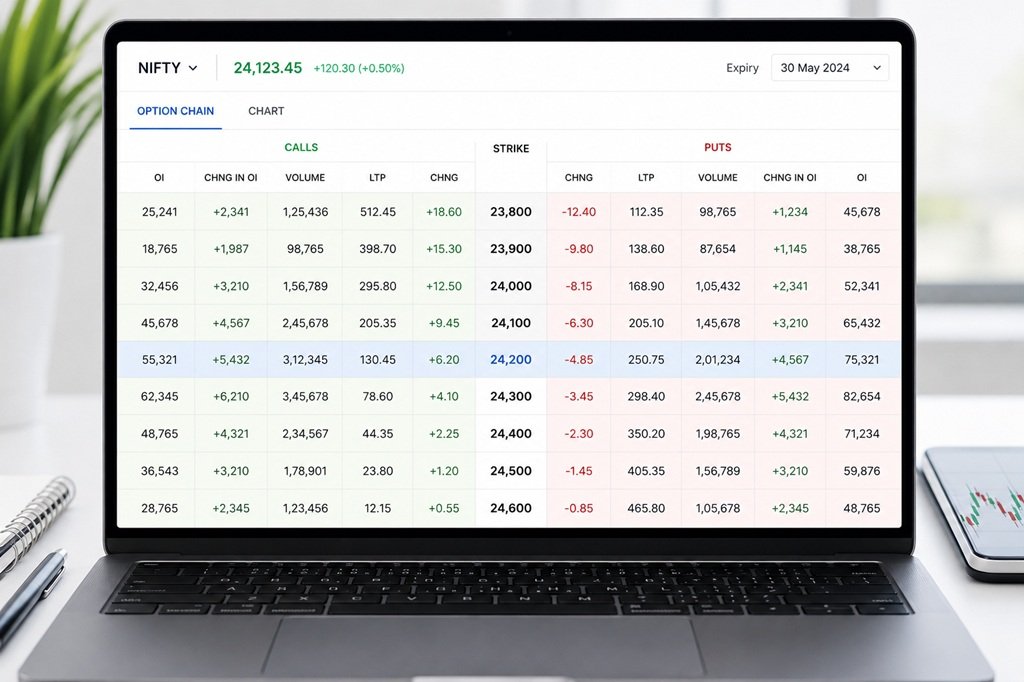
Understanding the Basics: What Is an Option Chain?
An option chain is a comprehensive, structured data table listing all available options contracts for an asset. It provides a clean, side-by-side view of call and put options arranged around central strike prices.
Key Components of an Option Chain
- Strike Price: The predetermined mathematical rate at which the underlying stock contract can be actively exercised.
- Option Premium: The current market price paid by buyers or collected by sellers to secure an open position.
- Open Interest (OI): The total aggregate volume of outstanding derivative contracts that remain live and unexercised.
- Implied Volatility (IV): A percentage metric showcasing the market’s expected speed of near-term underlying asset fluctuations.
Why Investors Use Option Chains
Traders inspect this synchronized table to gauge immediate consumer sentiment, evaluate trading volume, and identify potential market turning points. It transforms disjointed numbers into an explicit map showing strong zones of directional support and overhead price resistance.
Why Reliance Industries Is Popular in the Options Market
High Liquidity and Trading Volume
Reliance Industries options consistently display massive institutional and retail participation across the National Stock Exchange. This heavy trading volume ensures exceptionally tight bid-ask spreads for single derivative contracts. High liquidity guarantees that a retail saver can enter or exit option positions rapidly without facing bad execution slippage.
Strong Market Presence
As a heavyweight corporate component in major indexes, Reliance significantly dictates broad public market movements. Institutional managers frequently buy its options to hedge massive, underlying stock portfolios against sudden down cycles.
Regular Market Movements
The stock frequently exhibits clear technical trends driven by major corporate adjustments, earnings cycles, and macroeconomic factors. This steady, predictable price activity creates regular trading opportunities for derivative strategists looking to tap into structural trends.
Important Terms Every New Investor Should Know
- Open Interest (OI): Measures total outstanding market contracts to show where large institutional participants are parking capital.
- Change in Open Interest: Tracks the daily net shifting of contracts, confirming if a trend is strengthening or fading.
- Volume: Represents the cumulative number of option contracts executed within a single active trading session.
- Implied Volatility (IV): Dictates premium inflation; elevated IV levels signal upcoming risk and cause option premiums to swell.
- Option Premium: The shifting cash price a trader pays to buy contract rights before their official expiration.
Common Mistakes New Investors Make
- Treating Options Like Lotteries: Buying cheap, deeply out-of-the-money options assuming a massive sudden price spike will occur.
- Ignoring Implied Volatility: Buying overvalued premiums right before major earnings announcements, only to face severe IV crush drops.
- Overlooking the Expiration Calendar: Forgetting that stock options expire completely worthless on the final Thursday of their month.
- Misinterpreting High Open Interest: Assuming heavy open interest implies a bullish breakout, ignoring that sellers dominate those zones.
Risk Factors to Consider Before Trading Reliance Options
Time Decay (Theta): Options are wasting assets; your contract values erode daily even if stock prices stay completely flat.
Volatility Risk: Sharp shifts in market fear levels can cause premium values to collapse suddenly despite accurate direction picks.
Liquidity Considerations: Distant strike prices suffer from low trading volume, trapping users in illiquid positions with wide spreads.
Sudden News and Event Risks: Unscheduled policy announcements or geopolitical adjustments can instantly trigger massive, unexpected gapping against your positions.
Capital Management: The leverage embedded within option lots can quickly multiply losses if risk metrics are completely ignored.
Tips for Investors After Demat Account Opening
- Master Virtual Trading Tools: Utilize free paper trading screens to understand premium fluctuations safely before deploying cash.
- Focus on Liquid Strikes: Stick strictly to at-the-money contracts where high trading volumes guarantee effortless trade exits.
- Deploy Strict Stop Losses: Implement hard systematic exit targets on your active dashboard to automate risk protection.
- Keep Your Records Updated: Complete your comprehensive demat account opening authentication steps to avoid unexpected back-office settlement holds.
Conclusion
Navigating a live reliance option chain transforms options trading from a guessing game into a calculated technical science. New investors must prioritize platform safety and comprehensive data tracking over fast, short-term speculative gains. Complete your seamless demat account opening procedures, practice proper position sizing rules, and approach the options market with discipline.

