

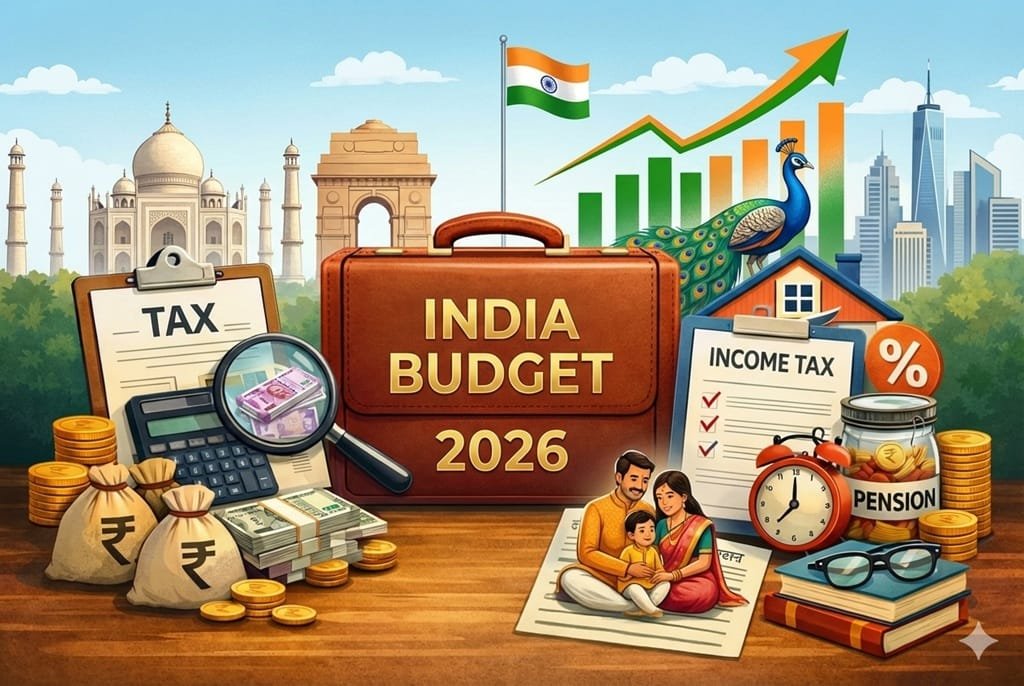
Union Budget 2026 is now announced. Hey there, if you’re like most people in India, taxes can feel like a big puzzle. Every year, the Union Budget comes along and shakes things up a bit, or sometimes a lot. This time, on February 1, 2026, Finance Minister Nirmala Sitharaman stood up in the Lok Sabha and laid out the plans for the 2026-27 financial year. The big theme? “Yuvashakti,” which basically means empowering the youth. It’s all about building the nation, growing the economy, and making sure social justice is front and center. But let’s get real – what most folks want to know is how this affects their wallet, especially when it comes to income tax.
You might have heard the buzz: no huge overhauls in tax rates this year, but plenty of tweaks to make life easier. Think simpler rules, fewer headaches with paperwork, and some nice breaks for everyday people. The star of the show is the brand-new Income Tax Act that’s set to kick in soon. It’s replacing the old 1961 law that’s been around forever. The goal? Cut down on confusion, reduce court battles over taxes, and help everyone file without pulling their hair out. In this article, we’ll break it all down step by step. We’ll look at what exactly changed, who stands to gain the most, and how you can make the most of it. We’ll even throw in some real-life examples to make it clearer. Stick around – by the end, you’ll feel like a tax pro.
Understanding the New Income Tax Act
Okay, let’s start with the basics. The government has been talking about updating the income tax laws for a while now. The current one, the Income Tax Act of 1961, is over 60 years old. Imagine using a phone from the 1960s today – it works, but it’s clunky and outdated. That’s kind of how the old act feels to many taxpayers. It has tons of sections, exemptions, and rules that lead to mix-ups and lawsuits. So, enter the New Income Tax Act, 2025. This fresh version is designed to be straightforward. Fewer clauses mean less room for arguments, and that should cut down on the number of cases clogging up the courts.
When does this all happen? Mark your calendar for April 1, 2026. That’s the start of the new financial year, and from then on, the new act takes over. But don’t worry if you have old tax issues – the government says those won’t be touched. They’re keeping the focus on the future, encouraging more people to switch to the newer, simpler tax system. One big plus? Redesigned Income Tax Return (ITR) forms. Forms like ITR-1 and ITR-2, which are for regular folks with salary or pension income, are getting a makeover. They’ll be easier to fill out, with clearer instructions and maybe even some auto-fill options based on your data.
Speaking of filing, the deadline for your regular ITR stays the same: July 31. But here’s a handy change – if you mess up or forget something, you can file a revised return all the way up to March 31. That’s three extra months compared to the old December 31 cutoff. Why does this matter? Life happens. Maybe you find an old investment slip or realize you claimed the wrong deduction. This extension gives you breathing room without penalties piling up right away.
On the legal side, appeals are getting streamlined. If you’re disputing a tax notice, the process should be faster and less bureaucratic. Small taxpayers – think freelancers or shop owners with modest incomes – will have an easier time getting “nil TDS” certificates. TDS stands for Tax Deducted at Source, which is when tax is cut from your payments before you get them. A nil certificate means no deduction if your income is low enough. Companies can now handle Forms 15G and 15H (self-declarations to avoid TDS) directly through depositories, cutting out middlemen.
All this is part of a bigger push to make taxes less scary. The government wants to promote the new tax regime, which has lower rates but fewer deductions. By cleaning up the system, they’re hoping more people opt in. Think about it: fewer lawsuits mean less money spent on lawyers, and easier compliance means you spend less time on paperwork. For the average person, this could save hours every tax season.
Income Tax Slabs in Budget 2026: Comparing New and Old Regimes
Now, the part everyone flips to first: the tax slabs. If you were hoping for a big slash in rates, well, no luck this year. The slabs are staying put, just like they were set in last year’s Budget 2025. The idea is to keep things stable while making the new regime more appealing. Stability is good, right? It means you can plan your finances without surprises.
Let’s look at the new tax regime first. This is the one the government is pushing hard. It’s simpler – no hunting for deductions on everything from insurance to home loans. Instead, you get flat rates and a couple of built-in breaks. Salaried folks get a standard deduction of ₹75,000 right off the bat. That’s money subtracted from your income before tax is calculated. Plus, there’s a rebate under Section 87A of up to ₹60,000. Combine that, and income up to ₹12.75 lakh is basically tax-free. That’s a sweet deal for young professionals just starting out.
New Tax Regime Slabs
- 0 to ₹4 lakh: No tax at all. Perfect for low earners or part-timers.
- ₹4 lakh to ₹8 lakh: 5% tax. So, on ₹5 lakh, you’d pay 5% on the ₹1 lakh over ₹4 lakh – that’s just ₹5,000.
- ₹8 lakh to ₹12 lakh: 10%. Building up gradually.
- ₹12 lakh to ₹16 lakh: 15%. This hits the middle class.
- ₹16 lakh to ₹20 lakh: 20%. For higher salaries.
- ₹20 lakh to ₹24 lakh: 25%. Getting steeper.
- Above ₹24 lakh: 30%. The top rate for big earners.
Why choose this? It’s hassle-free. No receipts to save, no complex calculations. But if you have a lot of investments or a home loan, you might save more in the old regime.
The old regime? It’s the classic one with all the deductions. Standard deduction is ₹50,000, and the rebate is ₹12,500, making up to ₹5 lakh tax-free. You can claim under Section 80C for things like provident fund or life insurance (up to ₹1.5 lakh), HRA if you rent, and interest on home loans. Slabs here are:
Old Tax Regime Slabs
- 0 to ₹2.5 lakh: Nil.
- ₹2.5 lakh to ₹5 lakh: 5%.
- ₹5 lakh to ₹10 lakh: 20%.
- Above ₹10 lakh: 30%.
For seniors (60-80 years), the new regime starts exemption at ₹4 lakh, old at ₹3 lakh. Super seniors over 80 get ₹5 lakh in the old one. There was talk about pushing the 30% slab to ₹35 lakh or even ₹40 lakh, but that didn’t happen. Maybe next year? For now, if you’re in the ₹15-20 lakh bracket, compare both regimes. Use online calculators – plug in your numbers and see which saves you more.
Take an example: Suppose you’re a 30-year-old software engineer earning ₹10 lakh a year. In the new regime, after ₹75,000 deduction, taxable is ₹9.25 lakh. Tax: Nil up to ₹4 lakh, 5% on next ₹4 lakh (₹20,000), 10% on next ₹1.25 lakh (₹12,500). Total ₹32,500, but rebate might wipe some out. In old, with deductions like ₹1.5 lakh 80C and ₹2 lakh home loan interest, you could drop taxable to ₹4.5 lakh and pay almost nothing. It depends on your situation.
Big Relief Measures That Go Beyond Just the Slabs
Tax Collected at Source
Slabs are important, but Budget 2026 packs in relief elsewhere. These are the nuts-and-bolts changes that could put real money back in your pocket. First up: Tax Collected at Source (TCS). This is like tax paid upfront on certain spends, which you can claim back later. For foreign education, medical treatment abroad, and overseas tour packages, TCS drops from 5% to 2%, with no minimum threshold. Same for the Liberalised Remittance Scheme (LRS), which lets you send money abroad for things like investments.
Why the cut? To make global opportunities more affordable, especially for youth. Education abroad is pricey enough without extra tax hits. Similarly, if you’re sending a family member for treatment, every rupee counts.
Motor Accident Claims
Another win: Money from Motor Accident Claims Tribunals is now fully tax-free, including any interest earned. No TDS on these payments either. If you’ve been in an accident, this means your compensation isn’t nibbled away by taxes. It’s a compassionate move – accidents are traumatic, and this eases the financial pain.
NRI and TDS
For Non-Resident Indians (NRIs) selling property in India, TDS is now based on your PAN, not needing a TAN (Tax Deduction Account Number). That’s less paperwork and faster deals. Manpower supply services fall under Section 194C now, with TDS at 1-2%. But employee hiring services get 2% TDS, up from 1%. It’s a mixed bag for businesses.
Penalties
Penalties are softening too. If you hide assets worth less than ₹20 lakh, it’s just a fine – no jail time. Serious stuff could still mean up to two years behind bars. There’s immunity from penalties for misreporting income in some cases. Plus, safe harbour rules for IT services (margins where tax is presumed fair), exemptions on dividends for cooperatives under certain conditions, and a six-month window to disclose foreign assets without harsh penalties.
MAT
Don’t forget the Minimum Alternate Tax (MAT) – it’s down to 14% from 15%, treated as final tax. This helps companies. Securities Transaction Tax (STT) on futures and options is hiked: futures to 0.05% from 0.02%, options maybe higher too. It’s to curb speculative trading. Buyback of shares? Taxation shifts to make it fairer, treating it like dividends.
Who Benefits the Most and How Much Can They Save?
This budget isn’t about flashy cuts for the rich; it’s targeted relief for everyday folks, especially the young and middle class. Salaried employees? You’re in luck with higher standard deductions and easier forms. Take that ₹10 lakh earner – savings of ₹5,000-10,000 a year compared to old rules. For ₹15 lakh, tax under new regime is zero after rebates? Wait, close – liability might be low.
Youth and students: TCS cut on education remittances. Sending ₹20 lakh abroad? TCS now ₹40,000 vs. old ₹1 lakh – save ₹60,000. That’s tuition for an extra semester! Overseas tours: A family vacation costing ₹10 lakh saves ₹30,000 in TCS.
NRIs: Selling a ₹50 lakh flat? Skip TAN hassle, save ₹5,000-10,000 in fees and time.
Small taxpayers and seniors: Easier TDS waivers. A freelancer on ₹4 lakh avoids ₹20,000 deduction upfront.
Accident victims: Huge. A ₹5.5 lakh claim? Old tax ₹1.65 lakh; now zero. Peace of mind priceless.
Businesses: Less litigation saves ₹50,000+ in legal fees. IT sector benefits from safe harbours.
Overall, 70% of new regime users could save 10-20%. Middle class gets the bulk – think families planning kids’ education or overseas jobs.
But high earners with F&O trading? Higher STT might sting, adding costs to trades.
Looking Ahead
Budget 2026 keeps rates steady but delivers smart relief. TCS/TDS cuts help the middle class chase global dreams. The new act promises simpler taxes, less stress.
If you earn under ₹12 lakh, new regime might be best. Higher? Crunch numbers on old vs. new. Use the tax department’s online calculator – it’s free and easy. Chat with a CA if needed.
These kick in for FY 2026-27 (Assessment Year 2027-28). Start planning: Update your investments, check foreign spends.
Taxes aren’t fun, but these changes make them fairer. Who knows, next budget might bring more surprises. For now, breathe easier – your tax bill just got a little friendlier.

