

An emergency fund essentially refers to that fund of money which you set aside only for those “oh no” times. This fund doesn’t help you go on holiday, buy a new toy or gadget or make that impulse purchase during that fantastic sale you found in your city. Rather, it’s that financial buffer which enables you to be at ease knowing you don’t have to do any begging, borrowing or breaking down of your hard-earned long term investments just to pay off that unforeseen bill.
In this article, we will look in detail into why you simply must have one, how much of an amount is required to set aside for this fund (no, it’s not the same for all people), the ways in which you can build it without putting yourself through too much pain and what the best places to invest this money are.
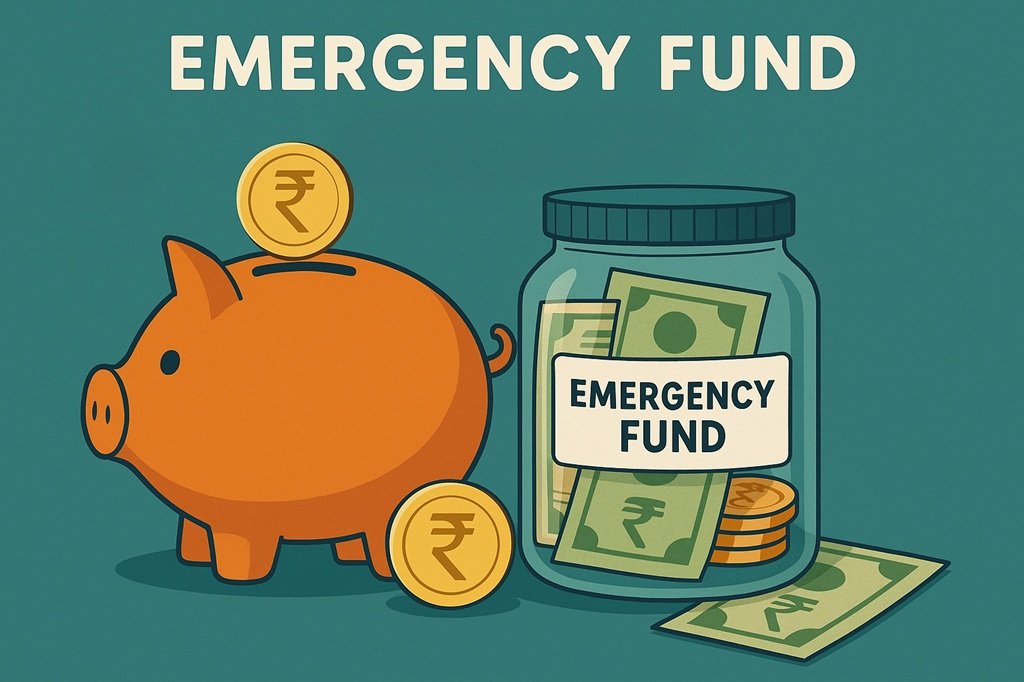
Why Emergency Fund
Isn’t it true that life in India is quite unpredictable? One day everything is going well, but in the next, floods in the city, sudden hospitalization of a loved one, or massive layoffs in your sector could happen to you. Haven’t you learned that from the pandemic itself? Emergencies don’t always notify us before they come.
Emergency funds save people from the necessity to use credit cards, which carry very high-interest rates and may become uncontrollable very fast. They ensure that all of the other goals, such as the acquisition of a house, saving money for their children’s education or for retirement, will not be disturbed. People tend to sell their stocks and incur penalties while using the provident fund without having any emergency fund.
There are several particular circumstances when people have to face emergencies. In India, the high cost of medical care, even in case of insurance and despite the government initiatives, is the main one. Other factors include job insecurity due to the growth of the gig economy, natural catastrophes, and many others.
Despite the exclamations, it is powerful! The fact that you have the safety net helps decrease the stress, makes your decisions easier to make when facing emergencies, and prevents you from getting into the debt trap. Conclusion: an emergency fund is not a luxury but rather a fundamental aspect of personal finance.
Importance of an Emergency Fund
Now, let us look at these examples from our daily lives in India – but with no drama, only a powerful story.
Think of Raj, a 32-year-old software engineer based out of Bangalore. He was unemployed during a tech slowdown period. Due to the monthly outflow of ₹60,000 for rent, EMIs, and family expenses, Raj ended up taking loans from relatives and exhausting all his credit card limits. The stress only increased and recovery took years.
Consider Priya, who is a school teacher with a single-income household of two kids. She needed ₹3 lakhs for an urgent operation done by her mother which partially came from the insurance cover. Her emergency savings fund helped her pay for the rest of the money without much hassle.
Consider, for example, the floods in parts of North India that occurred in 2023. Homes were damaged, and people’s sources of income were disrupted. People who had an emergency fund recovered faster compared to those who did not have one, and were forced to seek loans.
Such incidents occur regularly. From car break downs in the highway to unexpected marriages in your family (these, too, qualify as emergencies at times), you need an emergency fund that acts like a dependable friend.
How Much Should Your Emergency Fund Be?
The million-rupee question: What should be the size of this fund? There is no formula per se, but the industry recommends the 3-6-12 month rule, based on your circumstances.
First, find out how much money you will need every month for basic living expenses – rent/mortgage payments, grocery bills, utility bills, EMIs, health insurance premium, school tuition, and a little bit for transportation and other miscellaneous needs. Do not include luxury expenses such as fine dining or subscription services.
If you are a single person, settled in a government job with the support of family members: 3-6 months may do.
A married person with children, a single-income household, or someone working in the private sector: Plan for 6-9 months.
Freelance professionals, business owners, or have dependent parents to look after: Plan for 9-12 months or even more.
For a family of four spending around ₹50,000 a month on their basic needs, that makes a minimum of ₹3-6 lakhs. Consider rising costs due to inflation, especially the medical bill – health care has grown by 14% per year in recent times – and change in your lifestyle.
Smart Ways to Build Your Emergency Fund Without Stress
Creating an emergency fund may seem difficult considering rising prices but it is possible with discipline. What is important here is treating it as a non-negotiable bill payment.
Start with automating transactions – make a sweep of money from your salary account into a different one. Even Rs. 5,000-10,000 a month makes a significant difference.
Eliminate unnecessary expenses – that daily chai and OTT subscriptions, use them for this purpose. Check out your expenses in a month, there will be some leaks that can be plugged.
Use any windfall gains – bonuses, tax refunds and other sources of money should find its way into the emergency fund.
If you are at the beginning, then build up a sum of Rs. 50,000-1 lakh as a starter. With patience, in 12-18 months you would have accumulated a healthy emergency fund.
Where to Invest Your Emergency Fund
Golden Rule of Emergency Fund: Should be safe, accessible within a few days or even immediately and have a reasonable rate of return without much risks. No stocks or real estate here, only low-risk and highly liquid assets.
Liquidity is far more important than earning high rates of return. You need your money as soon as possible.
Savings Accounts
Immediate accessibility, insured by DICGC up to ₹5 lakhs in each bank. Interest varies; the major banks like SBI/ICICI give 2.5%-3% interest whereas digital or small finance banks like IDFC FIRST or Kotak provide as high as 7%. Ideal for 1-2 months’ portion.
Liquid Mutual Funds
Best for majority of the fund. They invest in short term debts, provide interest ranging between 7-7.5% at present (higher than savings accounts). Redemption takes place within 1 day, instant redemption up to ₹50,000. Very low risk, from mutual funds like Axis, HDFC or Nippon India Liquid.
Fixed Deposits (FDs)
High interest rates 6%-8% but early redemption involves penalty. Partial FDs or ladder FDs can be used for some part of the fund.
Conclusion
In conclusion, having an emergency fund in India is not an option; it is your protective measure to face all life’s surprises. From loss of employment to unforeseen health issues, the fund gives you control over your finances without having to borrow from others.
All the above information has been discussed regarding the importance of this fund, its sizing (3 to 12 months), good financial habits, and prudent investments in saving bank accounts and liquid funds.
Do not wait until you are facing a difficult situation to realize the importance of such an emergency fund. Just start small by automating your money transfers, calculating your amount, and watching it grow.

